
 EN
EN
 ar
ar bg
bg hr
hr cs
cs da
da nl
nl fi
fi fr
fr de
de el
el hi
hi it
it ko
ko no
no pl
pl pt
pt ro
ro ru
ru es
es sv
sv tl
tl iw
iw id
id lv
lv lt
lt sr
sr sk
sk sl
sl uk
uk vi
vi et
et hu
hu th
th tr
tr fa
fa ms
ms hy
hy ka
ka ur
ur bn
bn mn
mn ta
ta kk
kk uz
uz ku
ku
Understanding the 9 Types of Load Cells: An Engineering Selection Guide
The Type of Load Cell Is Not a Product Choice—It Is an Engineering Decision
In bridge pile foundations, tunnel support systems, dam safety projects, and deep foundation pit monitoring, the cost of choosing the wrong sensor even once far exceeds the savings from a lower procurement price. Selecting a load sensor is not simply about “which brand to buy,” but rather “which physical principle matches my load-bearing structure.” This article reviews nine sensor products from Kingmach, covering both vibrating wire (VW) and differential pressure technologies, to help engineers accurately match equipment based on the actual measured physical parameters—such as concentrated force, distributed stress, pore water pressure, and water level—and avoid the common mistake of choosing sensors that merely “look similar.”
Product Quick Reference (Rapid Locator)
| Measured Physical Quantity | Recommended Sensor | Core Technology |
|---|---|---|
| Concentrated Force — Rod / Cable Through-Hole | Hollow Load Cell JMZX-3XXXHAT | VW, Multi-string Annular Structure |
| Concentrated Force — Direct Compression | Solid Load Cell JMZX-35XXHAT | VW, Multi-string Solid Structure |
| Axial Force — Long-term Monitoring of Rods / Cables | Axial Force Meter JMZX-38XXAT | VW, Strain Isolation |
| Axial Force — Construction Stage | Formwork Axial Force Meter | VW, Construction-durable |
| Distributed Earth Pressure | Earth Pressure Cell JMZX-50XXAT / 51XXAT | VW, Large-area Pressure-bearing Surface |
| Pore Water Pressure — Deep Layer | Piezometer JMZX-55XXHAT | VW, Embedded Type |
| Water Level — Wired Observation Tube | Water Level Meter JMYC-67XXAD | Differential Pressure, RS485 |
| Water Level — Wireless / Remote Area | Water Level Meter JMYC-67XXAWL | Differential Pressure, 4G |
The Sensing Technologies Behind the Range
Two distinct sensing technologies cover this comprehensive range of nine products. Vibrating wire (VW) technology provides the foundation for all structural force sensors and piezometers. Inside a VW sensor, a tensioned steel wire vibrates at a natural frequency. Deformation of the surrounding elastic element under load shifts the wire's tension, which alters its vibration frequency. This measurable frequency-to-force relationship forms the basis of the measurement. VW technology dominates geotechnical and structural health monitoring (SHM) applications. Its frequency-based output remains completely immune to cable resistance variations, moisture ingress, and electromagnetic interference (EMI). These exact conditions frequently invalidate resistive strain-gauge sensors in buried, submerged, and long-run field installations.
The second family utilizes differential pressure sensing technology. A pressure-sensitive diaphragm deflects under hydrostatic liquid pressure. A built-in CPU and a 16-bit AD converter transform this physical deflection into a digital water level value. This technology is ideally suited for open water level monitoring. A vented cable design eliminates atmospheric interference so the sensor operates accurately in the presence of barometric variation. These sensors output 4G wireless or RS485 digital signals for unattended remote stations and achieve millimeter-level resolution in water level tubes. Vibrating wire piezometers simply are not designed to meet these specific open-water performance requirements. Ultimately, the core technology provides the platform, but the specific force configuration of the project determines the exact product type required.
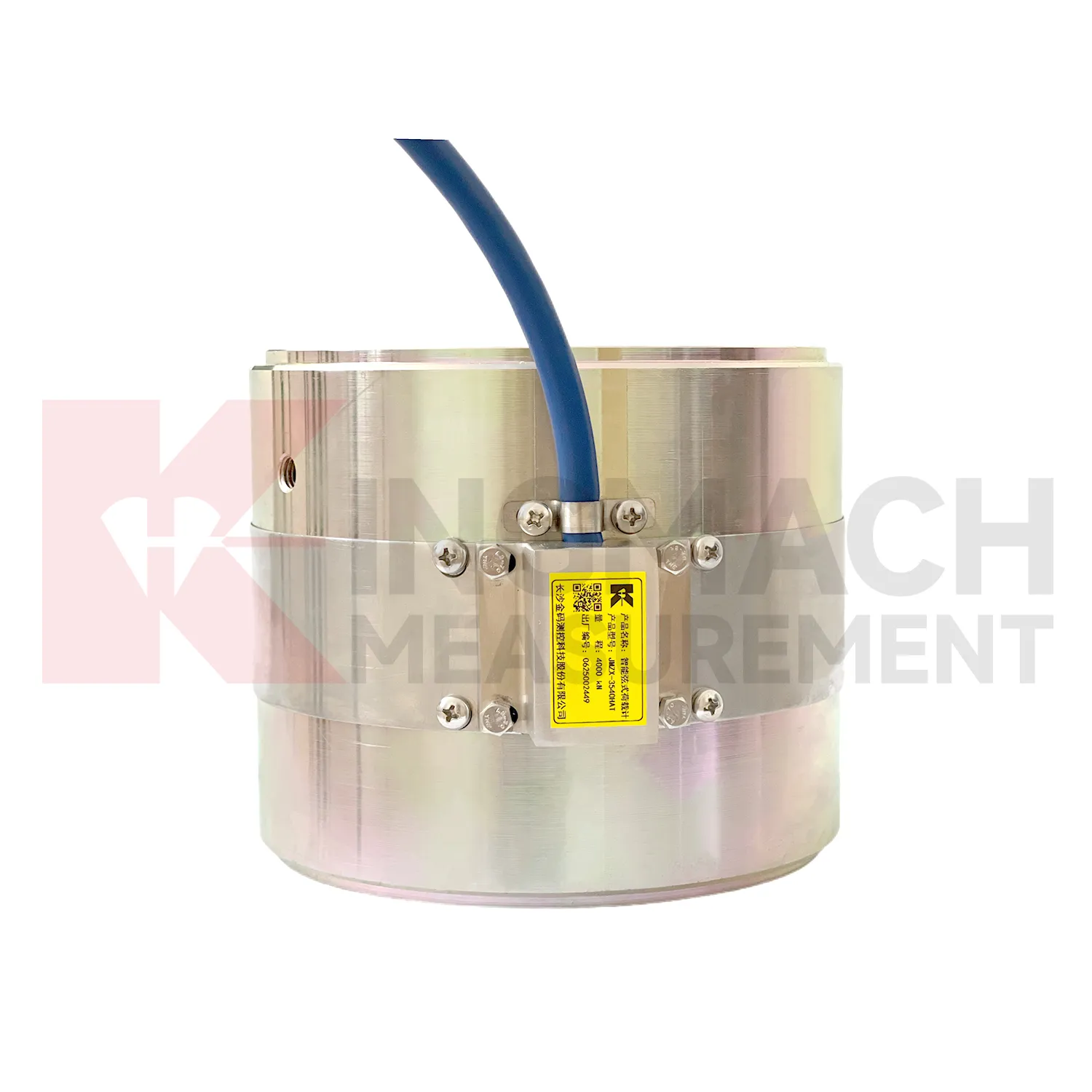
Type 1 — Solid Load Cell: The Structural Compression Insert
The solid load cell carries structural load directly rather than just sensing it.
Load Path: Force enters the top bearing face of the sensor. The force then travels through the full cross-sectional area of the solid elastic steel body. Finally, the force exits through the bottom bearing face.
Applications: Engineers use this type for bridge pier bearing seat monitoring and pile load testing. In pile testing, the full test load passes completely through the cell body. It also serves hydraulic jack force verification in post-tensioning operations and temporary works compression monitoring.
Key Specifications: Capacities range from 1,000 to 10,000 kN with a strict resolution of 0.1 kN across the full range. Models feature a 3-string configuration for lower ranges and a 6-string configuration for higher ranges. The operating temperature spans from −30°C to +80°C. The unit tolerates an overload of 300 to 400% of its rated capacity. An onboard HAT chip stores calibration coefficients, automatically corrects for temperature, and saves 600 measurement records. The sensor carries GB/T 13606-2007 certification.
Hard Boundary: This cell features a solid design with no central bore. Users cannot install it on any rod or cable that must pass through the sensor. Attempting this adaptation creates eccentric loading that invalidates all recorded measurements.
Type 2 — Hollow Load Cell: The Through-Rod Anchor Monitor
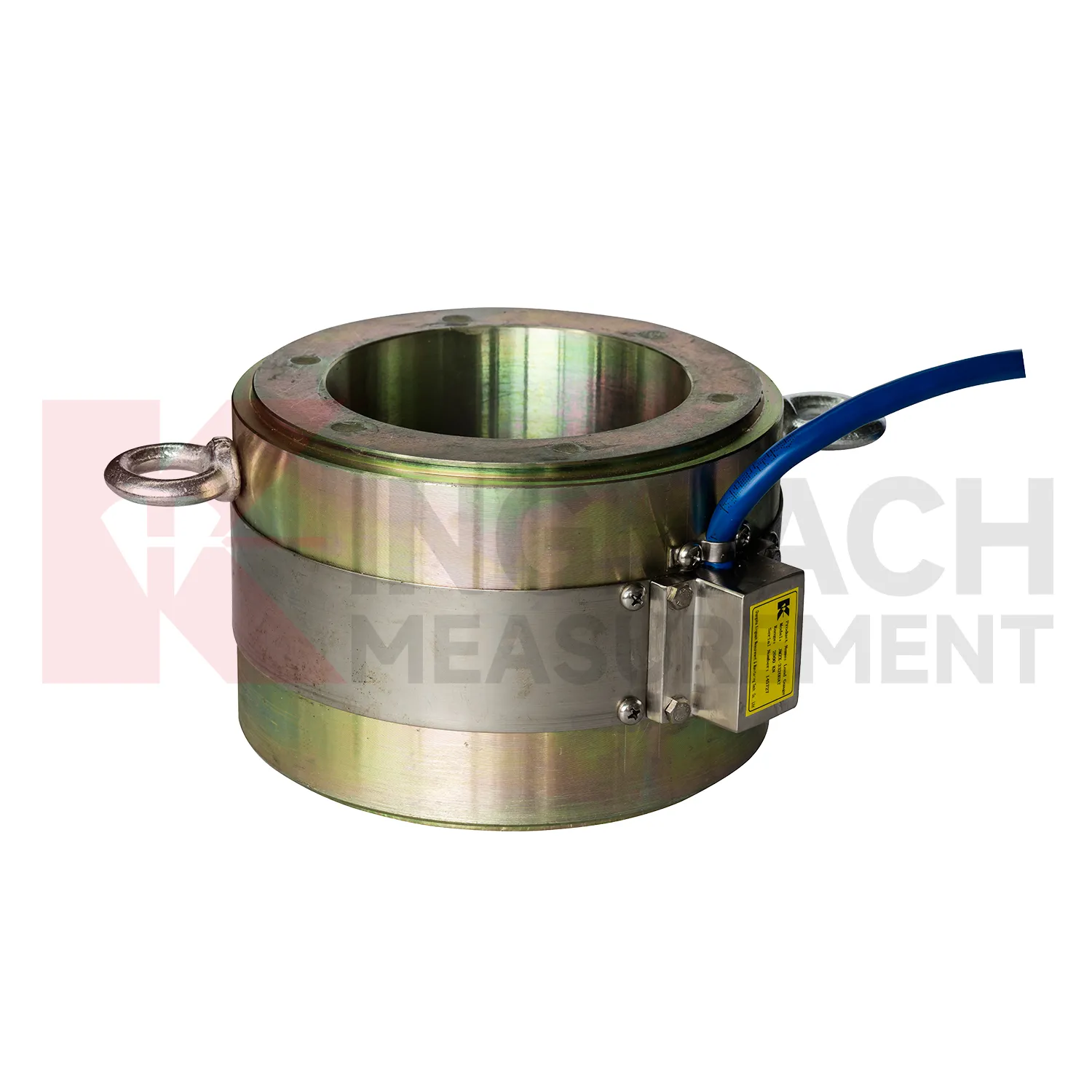
The hollow load cell provides an annular design with a 50-year service life.
Load Path: The sensor features an annular, or ring-shaped, body with a central bore. A rod, bolt, or tendon passes through this bore without ever contacting the internal wall. The structural nut or anchor plate bears directly on the annular face. The ring body compresses uniformly around its circumference, and multiple VW chords average the signal across the entire ring.
Applications: Common applications include pre-stressed anchor and rock bolt monitoring. It effectively measures cable force in bridges and retaining walls. Engineers rely on it for dam and hydropower anchor force monitoring. It is ideal for retrofit monitoring on existing structures because it requires no disassembly of the structural member.
Key Specifications: Standard capacities range from 500 to 8,000 kN, though custom models remain available. It uses a 3-chord to 6-chord measurement configuration. The designed service life spans 50 years. This longevity relies on a multi-stage stability-treated elastic steel body, ultra-high-strength VW wires, and international-standard anchor welding. The onboard HAT chip actively saves 800 measurement records. It holds dual certification under GB/T 13606-2007 and DL/T 269-2022. The latter is a hydraulic engineering standard that is strictly mandatory for dam and hydropower project compliance.
Hard Boundary: The annular geometry requires a correctly sized through-rod. Placing a hollow cell in a flat compression stack without a through-member produces a non-uniform stress field and generates highly unreliable readings.
4. Type 3 — Axial Force Load Meter: Measuring Cable and Strut Force Over Time
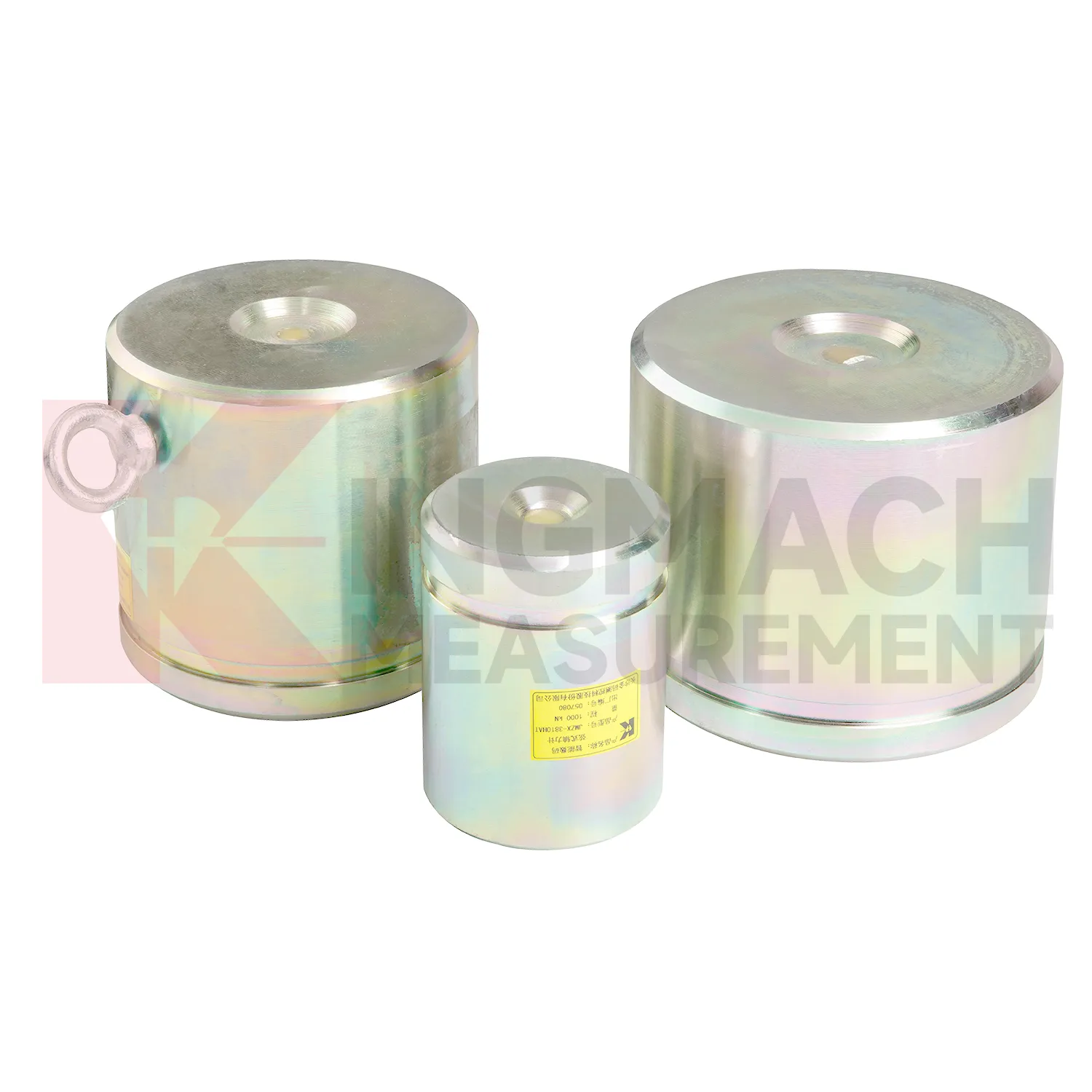
The axial force meter occupies a distinct measurement niche between solid and hollow cells.
Load Path: The sensor directly attaches to or clamps around an elongated structural element. It actively measures the axial force component along the primary axis of the member. The design deliberately isolates axial force from any bending moment. A standard compression cell cannot provide this critical isolation capability.
Applications: It provides long-term cable force monitoring in cable-stayed bridges, suspension bridges, and advanced slope stabilization systems. It monitors strut and tie-back force in retaining walls and deep excavations. It also detects pre-stress relaxation and load redistribution in cable-supported structures over their operational service life.
Key Specifications: The sensor utilizes vibrating wire sensing paired with an onboard HAT intelligent chip. Buyers can select either conventional VW output or smart RS485 digital output variants. The selection simply depends on cable run lengths and whether the site utilizes automated data collection.
Why This Type Matters: In cable-supported structures, progressive load redistribution caused by cable fatigue or anchor deterioration remains invisible to routine visual inspection. The axial force meter generates quantitative trend data. This data tells engineers precisely when a cable approaches its replacement threshold years before any visible defect appears on the structure.
5. Type 4 — Smart Formwork Axial Force Meter: Construction-Phase Load Safety
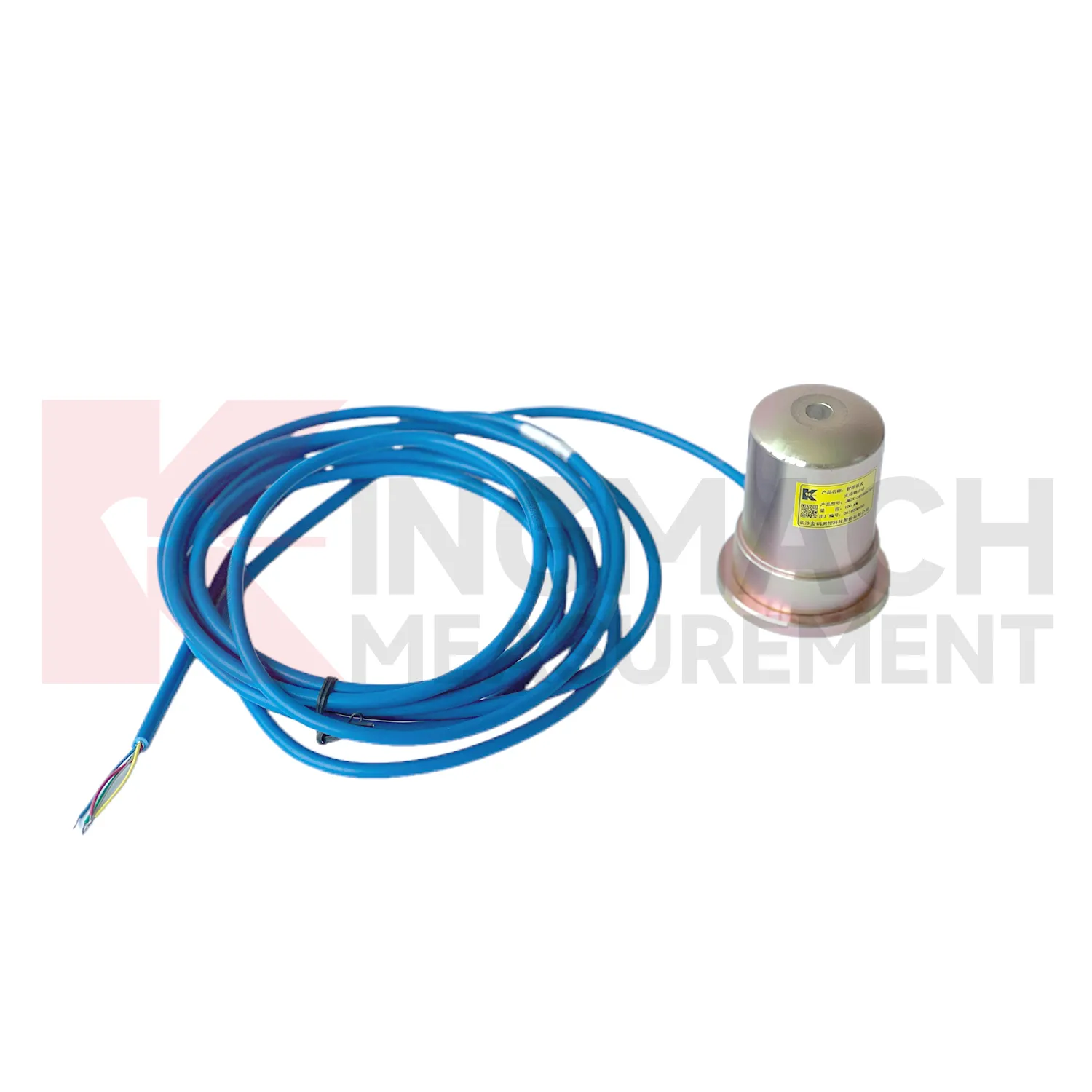
The smart formwork axial force meter serves a completely different project phase and user profile.
Load Path: It utilizes the identical axial force measurement principle as the JMZX-38 model. However, engineers optimized this version specifically for temporary formwork props, shoring, and falsework. Site teams install and remove the sensor repeatedly as construction progressively advances through different floors or sections.
Applications: It provides active concrete formwork prop load monitoring during major pours. It delivers shoring force monitoring in deep excavations situated adjacent to vulnerable existing structures. It also provides essential falsework monitoring for bridges and elevated structures during their construction phase.
Why Construction-Phase Monitoring Matters: Formwork and falsework failures rank among the most common causes of fatal structural collapse during building construction. Real-time axial force data in support props instantly identifies dangerous load redistribution. This dangerous redistribution often stems from uneven concrete placement, adjacent heavy crane loads, or sudden underpinning settlement. The sensor detects these anomalies well before the structure reaches a catastrophic failure threshold.
Key Advantage: The manufacturer purpose-designed this sensor for incredibly fast installation cycles and extremely rugged handling on active construction sites. The smart HAT output safely enables real-time display directly on site without requiring a dedicated data logger system.
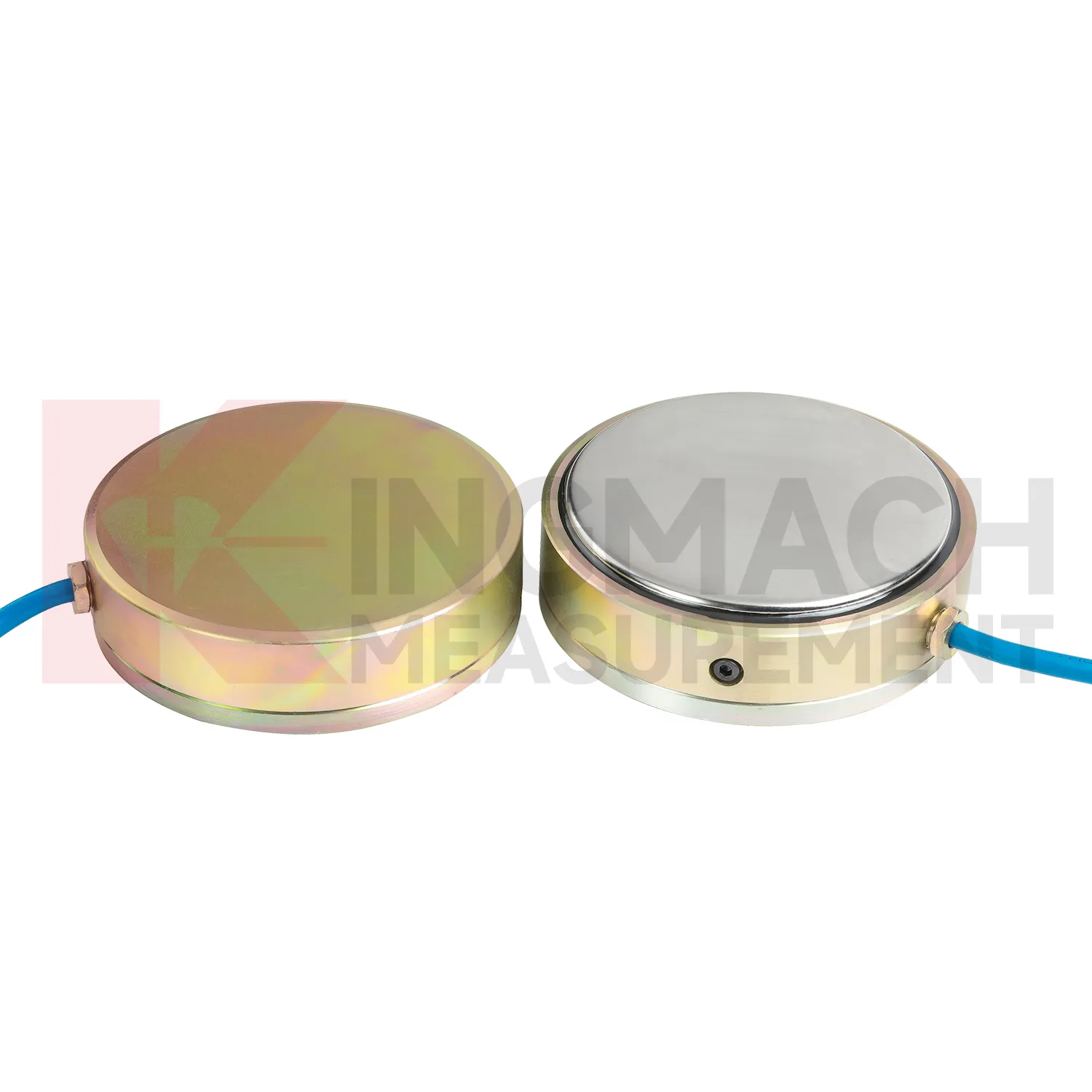
6. Type 5 — Earth Pressure Cell: Measuring Distributed Soil Contact Stress
Earth pressure cells solve a complex measurement problem that no other sensor type can address.
The Measurement Problem: Soil applies a distributed contact stress across a wide surface, rather than acting as a singular point load. A conventional load cell placed at a single point only reads the highly localized stress exactly at that point. This local reading may be significantly higher or lower than the true average structural load. The earth pressure cell features a exceptionally large flat face. This large face effectively averages out stress concentrations caused by severe particle size variation, compaction non-uniformity, and random aggregate clustering.
Two Variants:
The JMZX-50XXAT serves as the standard model. It actively monitors retaining walls, underground structures, tunnel linings, embankments, and foundation slabs. It precisely measures how soil or fill material loads the structure over the entire monitoring life.
The JMZX-51XXAT serves as the large model designed for high-load applications. Engineers deploy this model in major dam embankments, large-diameter caissons, and heavily loaded structural fill zones. In these extreme environments, the standard cell's face area would significantly underrepresent the true stress distribution at depth.
Smart ATM Suffix Variant: This variant includes an onboard HAT chip for fully automated temperature correction and reliable digital output. This technology remains absolutely essential for deep-buried cells that require long cable runs. It is also critical on sites experiencing high EMI from heavy dewatering pumps or active excavation equipment.
Critical Installation Note: Technicians must explicitly orient the cell face perpendicular to the primary principal stress direction. A cell installed at an incorrect angle measures an irrelevant stress component rather than the specific stress the designer intended to monitor. This mistake remains one of the most common earth pressure cell misapplication errors in the field.
7. Types 6 — Fluid Pressure Monitoring: Piezometer and Water Level Meters
Water and pore pressure function as physical forces per unit area. Measuring them is essentially load cell measurement applied directly to a fluid medium. This process relies on the identical physical principle but utilizes a different elastic element and distinct sensing geometry.
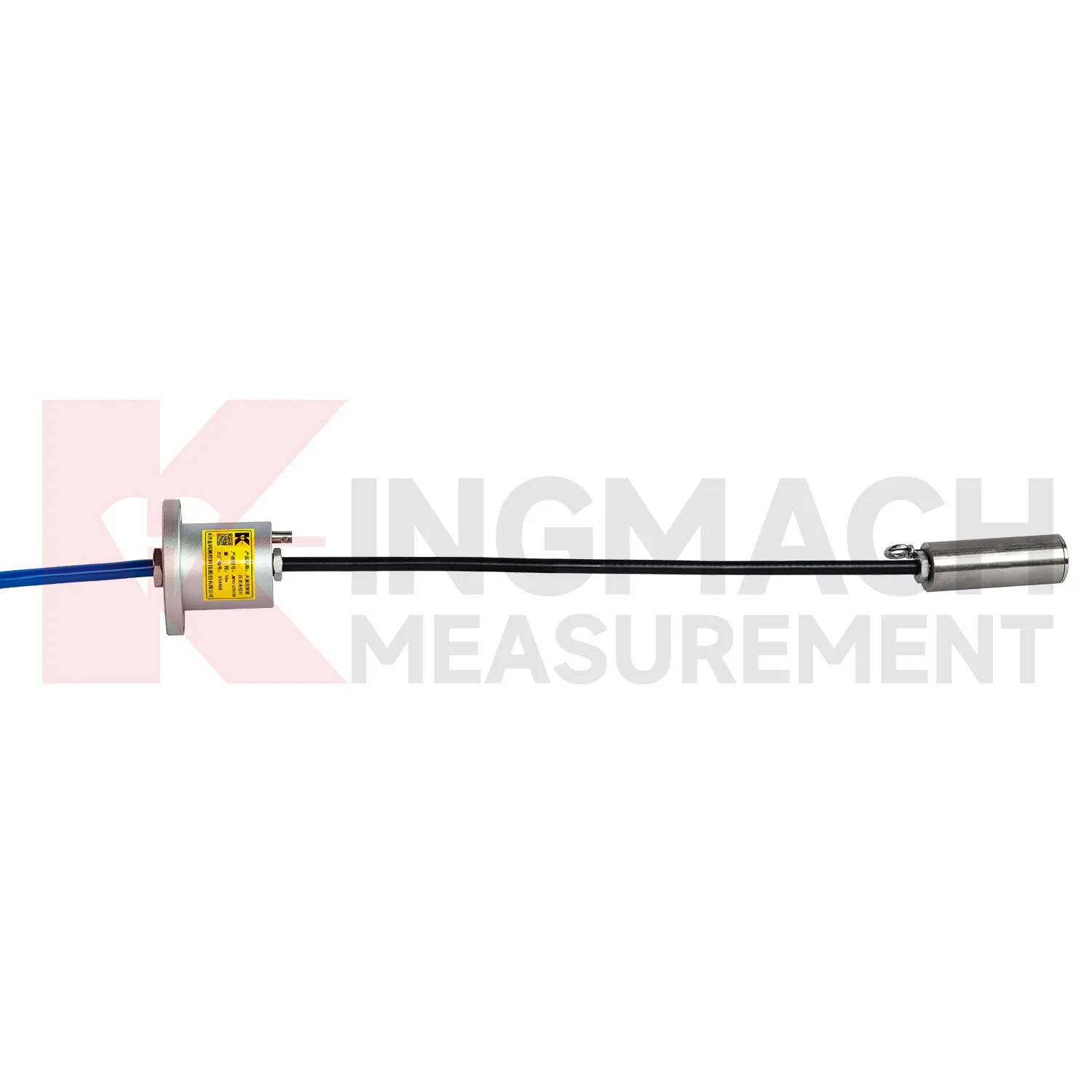
Sub-type A — Smart Vibrating Wire Piezometer (JMZX-55XXHAT): This instrument measures pore water pressure and dynamic groundwater head in boreholes and standpipes using proven VW sensing. Engineers design it for permanent embedded installation deep within geotechnical formations like dam foundations, embankments, slopes, and tunnel inverts. It features an onboard HAT chip complete with automatic temperature compensation and RS485 digital output. This is the absolute primary choice when teams will bury or grout the sensor permanently in place for monitoring over years or even decades. Rising pore pressure often acts as the earliest measurable precursor to catastrophic slope instability or dam foundation failure. This critical warning appears in the data days or weeks before any visible surface deformation occurs.
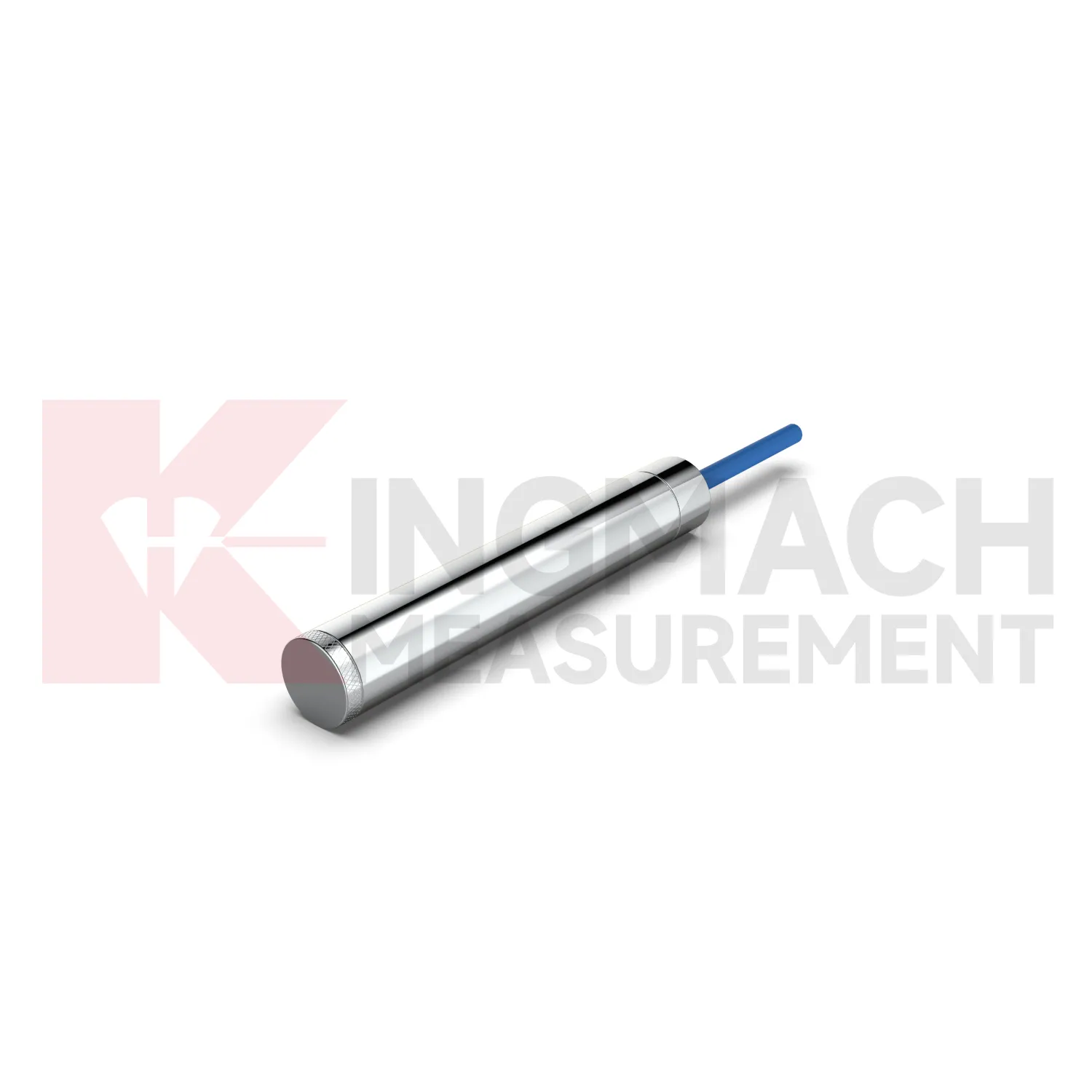
Sub-type B — Wide-Range Smart Differential Pressure Water Level Meter (JMYC-67XXAD): This highly specialized sensor measures deep seepage pressure and accurate water level. Teams install it in pre-installed piezometer tubes, pressure relief pipe outlets, and soft foundation boreholes. It utilizes advanced differential pressure technology paired with a vented cable. Its compact dimensions of φ24mm × 71.5mm ensure it is small enough to be smoothly lowered into any standard observation tube. It delivers an exceptional resolution of 0.1mm and an accuracy rating of 0.2% FS. It operates on RS485 digital output (DC 9-24V) and functions across a temperature range of −20°C to +80°C. Engineers choose this model when an installation strictly requires sub-millimeter water level resolution within a tube and the site already possesses wired power alongside RS485 data infrastructure.
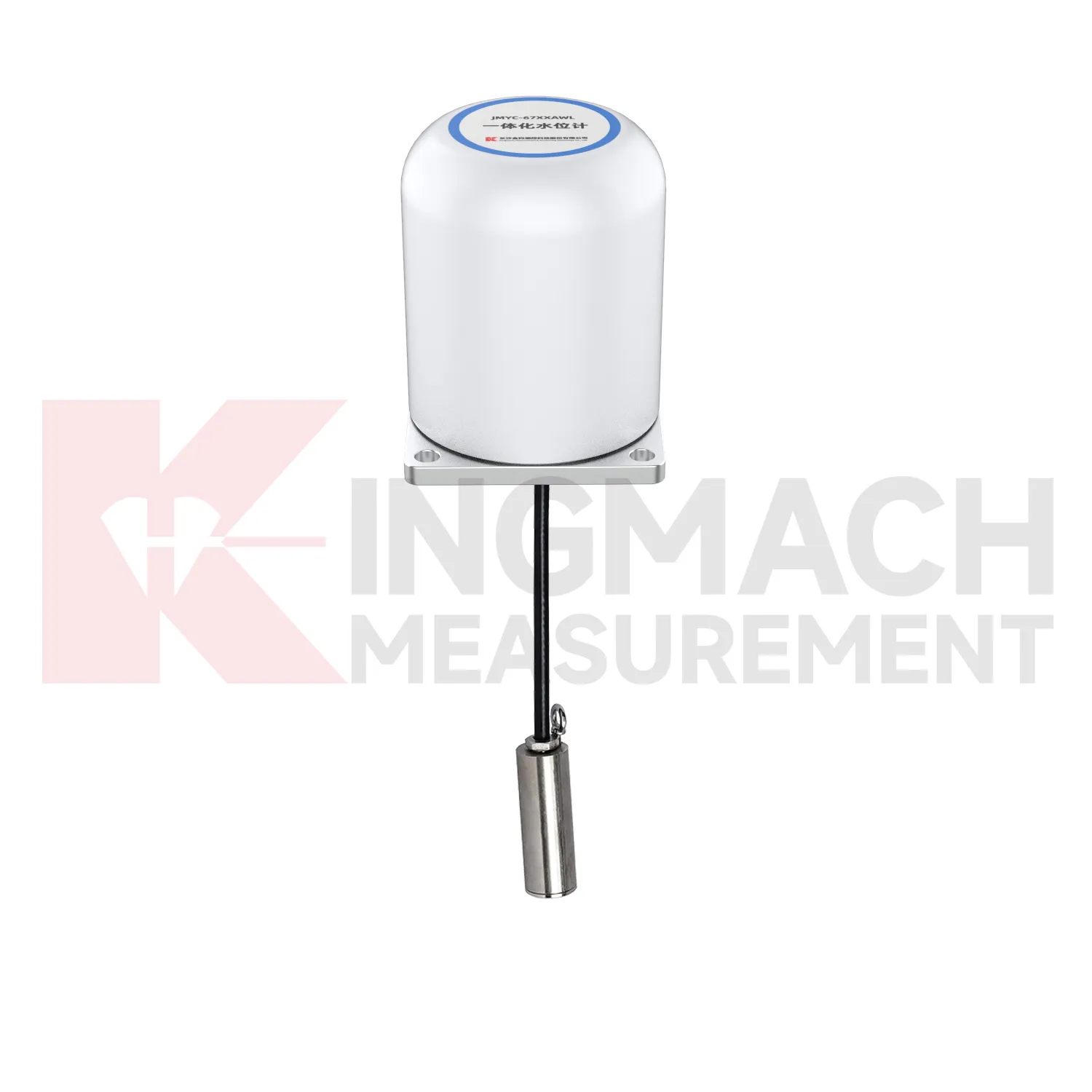
Sub-type C — Integrated Wide-Range Differential Pressure Water Level Meter with 4G (JMYC-67XXAWL): This model represents the ultimate autonomous field deployment variant. It seamlessly integrates a 4G wireless DTU, a high-capacity 3.6V/38Ah non-rechargeable lithium battery, and a dedicated mobile app display into a highly compact 85mm × 85mm × 106mm unit. It provides a reliable resolution of 1mm and a strict accuracy of ±0.1% FS. It holds official certification to GB/T 11828.2-2022 standards. Battery life aggressively spans from 5 months at rapid 20-minute intervals to well over 3 years at 6-hour intervals. It is the perfect choice for unattended hydrological monitoring stations, remote reservoir surveillance, and vast surface/groundwater observation networks where traditional grid power and cable infrastructure remain completely unavailable.
Product Selection Decision Table
| Selection Condition / Project Requirement | Recommended Model | Reason for Recommendation | Models Not Recommended & Reason |
|---|---|---|---|
| Need to monitor pore water pressure inside soil | JMZX-55XXHAT | The vibrating wire piezometer is specifically designed for monitoring pore water pressure in soft soil foundations, deep soil masses, dams, and similar applications. | JMYC-67XXAD / JMYC-67XXAWL are mainly intended for water level or liquid level measurement, not typical pore pressure monitoring. |
| Need to monitor dam seepage pressure, uplift pressure, or water pressure at pressure relief pipe outlets | JMZX-55XXHAT | Suitable for monitoring dam anti-seepage performance, seepage around dams, leakage conditions, and phreatic lines. | Differential pressure water level meters can measure water level, but they are less suitable than vibrating wire piezometers for engineering seepage pressure monitoring. |
| Need to measure water level changes in piezometer tubes, and an existing data acquisition system is available | JMYC-67XXAD | RS485 output and 0.1 mm water level resolution make it easy to integrate into existing automated monitoring systems. | JMYC-67XXAWL can also be used, but its integrated 4G and battery functions may be redundant if power supply and data acquisition systems already exist. |
| Need millimeter-level water level monitoring | JMYC-67XXAD or JMYC-67XXAWL | JMYC-67XXAD offers 0.1 mm resolution, while JMYC-67XXAWL offers 1 mm resolution. Both can meet millimeter-level monitoring requirements. | JMZX-55XXHAT can measure water level changes in some applications, but its primary purpose is seepage pressure / pore pressure monitoring. |
| Need higher water level resolution | JMYC-67XXAD | Water level resolution is 0.1 mm, higher than the 1 mm resolution of JMYC-67XXAWL. | JMYC-67XXAWL has 1 mm resolution, suitable for standard millimeter-level remote water level monitoring. |
| Need remote wireless transmission where cabling is inconvenient | JMYC-67XXAWL | Built-in 4G DTU eliminates the need for an external communication module. | JMYC-67XXAD uses RS485 and requires an external data logger or communication gateway. |
| Site has no mains power or stable external power supply | JMYC-67XXAWL | Built-in 3.6V / 38Ah lithium battery with low-power design. | JMYC-67XXAD requires external DC 9–24V power supply. |
| Need to build an unattended hydrological monitoring station | JMYC-67XXAWL | Built-in battery, 4G communication, and mobile App real-time display make it suitable for outdoor unattended monitoring. | JMYC-67XXAD requires supporting data acquisition equipment, power supply, and communication devices. |
| Need to connect to an existing RS485 automated monitoring system | JMYC-67XXAD | Standard RS485 digital output is convenient for networking and system integration. | JMYC-67XXAWL mainly uses 4G communication and is not designed primarily for RS485 bus deployment. |
| Need long-term embedding in soft soil foundations or dam bodies | JMZX-55XXHAT | Vibrating wire structure is suitable for long-term embedded observation, with strong anti-interference capability and good stability. | JMYC-67XXAD / JMYC-67XXAWL are more suitable for water level tubes, piezometer tubes, or liquid level applications. |
| Need a compact sensor installed inside a water level tube | JMYC-67XXAD | Compact size: φ24 mm × 71.5 mm. | JMYC-67XXAWL has a larger integrated structure, 85 mm × 85 mm × 106 mm. |
| Need real-time water level viewing via mobile App | JMYC-67XXAWL | The product page specifies support for real-time water level display via mobile App. | JMYC-67XXAD requires an external platform or system to achieve this function. |
| Need a cost-effective single-point water level sensor connected to an existing system | JMYC-67XXAD | As a sensor-type product, communication and power supply can be handled by the existing system, which may reduce overall cost. | JMYC-67XXAWL integrates 4G and battery, making it more suitable for independent stations but potentially more costly. |
| Need a water level meter with complete remote transmission capability | JMYC-67XXAWL | Integrates sensor, data acquisition, communication, and battery power in one unit. | JMYC-67XXAD is an RS485 sensor and requires external acquisition and communication equipment. |
On major dam safety programs, engineering teams routinely deploy all three fluid pressure types simultaneously. They place VW piezometers deep within the foundation grouting curtain. They install RS485 water level meters securely inside the inspection gallery piezometer tubes. Finally, they position 4G water level meters precisely at the surface reservoir gauge stations. Each distinct sensor serves a highly specific measurement point within the same comprehensive safety monitoring network.
8. Conventional vs. Smart HAT: The Decision Within Every Type
Every VW-based type previously mentioned comes in both conventional and advanced smart HAT variants.
Conventional VW output produces a raw frequency signal. This raw signal absolutely requires an external readout unit or a dedicated data logger to meticulously convert the frequency into usable engineering units. It offers the lowest initial unit cost and boasts proven reliability established over several decades. It represents the right choice for small sensor counts, short cable runs, and older sites that already possess existing VW readout infrastructure.
Smart HAT output utilizes an onboard chip that delivers fully calibrated RS485 digital values directly to the user. This eliminates any need for intermediate signal conditioning. Temperature compensation happens automatically. Onboard storage effectively buffers critical data if the main logger connection drops or is interrupted. It is the right choice for large sensor arrays exceeding 20 instruments. Taking a project with 50 sensors over 10 years as an example, the Smart HAT solution compared with a traditional standalone system can achieve approximately 30–40% savings in cabling and data logger channels, reduce on-site maintenance and travel costs by about 50%, and lower total lifecycle costs by 20–25%.It is necessary for long cable runs over 100 meters and highly automated sites where heavy EMI from construction equipment would quickly degrade standard analog VW signals.
Differential pressure water level meters in the JMYC series are inherently smart. No conventional variant exists for these specialized instruments. The JMYC-67XXAD outputs standard RS485 for wired automated systems. The JMYC-67XXAWL outputs reliable 4G for fully wireless unattended deployment. The choice between them strictly depends on site infrastructure rather than core sensor capability.
While smart sensors cost more per unit upfront, they drastically reduce total cost of ownership. They minimize necessary data logger channel counts, simplify complex wiring, and aggressively reduce maintenance visit frequency. In a standard 50-sensor dam monitoring system, the long-term lifecycle cost savings over a 10-year program typically exceed the initial upfront premium by a very significant margin.
The Right Type Is Defined by the Force, Not the Catalogue
Each of the nine distinct products in this comprehensive range exists because a highly specific force configuration exists in real engineering projects. The correct type is never a mere product preference; it remains an absolute geometric necessity. Serious structural monitoring programs routinely deploy three to five different types simultaneously. A complete structural safety picture inherently requires multiple measurement parameters, not just multiple duplicate sensors of the exact same type.
Have you identified your load-bearing structure type yet?
[View Solid / Hollow Load Cells] · [View Axial Load Cell Series] · [View Earth Pressure / Piezometer Series] · [View Water Level Monitoring Systems] · [Contact Kingmach Technical Consultant →]
FAQs
1. What happens if I use a solid load cell on an anchor rod?
You cannot effectively install a solid load cell on a continuous through-rod because it completely lacks a central bore. Attempting to adapt it will introduce severe eccentric loading, which instantly invalidates all structural measurements.
2. Why should I choose a smart HAT load cell over a conventional VW model?
Smart HAT models provide fully calibrated RS485 digital output and feature automatic temperature compensation. They significantly reduce data logger channel counts and drastically lower long-term maintenance costs for large, automated monitoring arrays.
3. How does an earth pressure cell differ from a standard load cell?
Unlike a standard load cell that strictly measures an isolated point load, an earth pressure cell features a massive flat face. This large surface successfully averages out distributed soil contact stress and completely eliminates inaccurate readings caused by random aggregate clustering.
4. When should I deploy the 4G differential pressure water level meter?
You should definitely deploy the 4G unit (JMYC-67XXAWL) at remote, unattended hydrological monitoring stations or distant reservoir surveillance sites. It operates perfectly when standard grid power and wired cable infrastructure are completely unavailable.
5. Are vibrating wire load cells suitable for long-term embedded monitoring?
Yes. Vibrating wire load cells deliver a highly robust frequency-based output that safely ignores extreme moisture, aggressive EMI, and long cable resistance variations. They are the ultimate standard for permanent, decades-long geotechnical installations.
6. What data acquisition protocols are supported by Kingamach sensors?
The JMZX-HAT series supports RS485 (Modbus RTU) and SDI-12 protocols, enabling direct integration with mainstream SCADA systems, CSI platforms, and data loggers. For long-distance applications such as dam monitoring projects, an RS485 bus-based deployment is recommended.
7. In a dam project, multiple types of sensors are often required simultaneously. How can data acquisition be unified?
Kingmach provides multi-protocol gateways that can integrate different sensor signals. Vibrating wire (VW) and RS485 signals can be converted into 4G or Ethernet outputs and transmitted to a cloud platform, enabling all monitoring parameters to be viewed within a single unified interface.
Related Reading: Solid vs Hollow Load Cell: A Comprehensive Guide to Engineering Selection (Force Paths & Typical Applications & Certification Requirements)