
 EN
EN
 ar
ar bg
bg hr
hr cs
cs da
da nl
nl fi
fi fr
fr de
de el
el hi
hi it
it ko
ko no
no pl
pl pt
pt ro
ro ru
ru es
es sv
sv tl
tl iw
iw id
id lv
lv lt
lt sr
sr sk
sk sl
sl uk
uk vi
vi et
et hu
hu th
th tr
tr fa
fa ms
ms hy
hy ka
ka ur
ur bn
bn mn
mn ta
ta kk
kk uz
uz ku
ku
Strain Gauge Applications in Construction: Key Benefits Explained
Every major structural failure in modern construction shares a common warning sign — one that arrived silently, weeks or months before concrete cracked or steel buckled. That warning was a change in strain: an invisible deformation accumulating within the material under load. The problem was not that the structure failed to communicate. The problem was that nobody was listening.
Strain gauges change that. They are not passive instruments. They are the construction industry's early-warning system — sensors that convert invisible mechanical stress into measurable, actionable data. Engineers who deploy them are not simply collecting numbers. They are extending their ability to see inside a structure that, once built, becomes opaque to every other method of inspection.
This article explains where strain gauges are used in construction, what specific benefits they deliver to project teams and asset owners, and how to select the right type for any given application.
What Does a Strain Gauge Actually Do?
Before examining the applications, it helps to be clear about what strain is — and why measuring it matters.
All structures experience minor deformations when subjected to weight. A truck crossing a bridge beam causes the beam to bend downward. A building construction results in a concrete pile experiencing compression. A retaining wall bends because excavation work occurs on its opposite side. Scientists define strain as the deformation that occurs in materials, which they measure through microstrain(με) to study hidden movements that people cannot observe.
A strain gauge detects these changes and converts them into an electrical signal. A strain gauge serves as a measurement tool that continuously tracks structural movements by detecting both extension and compression with a precision of one microstrain.
The most widely used type in civil and geotechnical construction is the vibrating wire (VW) strain gauge. Its operating principle is elegant. A tensioned steel wire inside the sensor vibrates at a natural frequency. When the surrounding structure deforms, the wire's tension changes, and its resonant frequency shifts. That frequency shift translates directly into a strain reading. Because frequency is immune to cable resistance drift and voltage variation, VW gauges maintain accuracy over cable runs exceeding 1,000 metres and measurement periods spanning decades — two conditions that routinely disqualify resistive foil gauges for permanent infrastructure monitoring.
With that foundation established, here is where these sensors are doing their most important work.
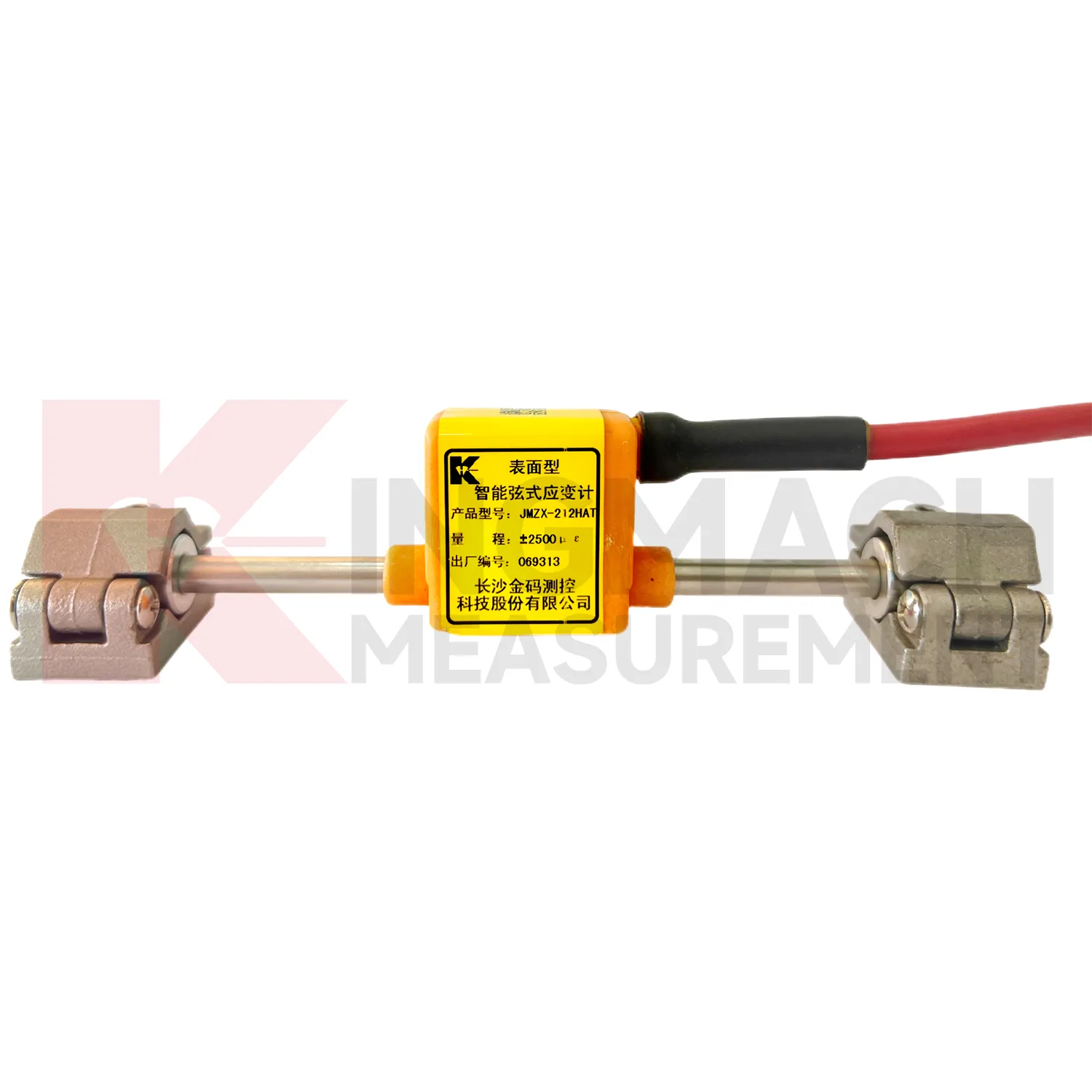
Where Strain Gauges Are Used in Construction — Six Critical Applications
1. Bridges and Elevated Structures
Surface-mount and surface-welded strain gauges on bridge girders, deck slabs, and bearing zones track live load response, thermal cycling, and long-term creep. For aging bridges facing increased traffic loads or seismic retrofitting, this data informs load rating decisions with actual structural evidence rather than conservative engineering assumptions. It also identifies sections experiencing anomalous strain concentrations — the first indicator of localized fatigue damage.
2. Concrete Pours and Mass Structures
Embedment strain gauges are cast directly into fresh concrete during construction. They monitor curing stresses, thermal gradients within mass concrete, and long-term settlement — all processes that are completely inaccessible after the pour is complete. In dam construction, thick bridge abutments, and large foundation slabs, internal thermal gradients during hydration can generate tensile stresses that crack concrete from the inside. Embedded gauges detect these conditions in real time, allowing contractors to adjust curing procedures before damage is done. This makes embedment monitoring a quality-control tool during construction, not just an inspection tool after it.
3. Deep Foundations and Pile Systems
Rebar strainmeters are installed in-line with reinforcing bars during pile cage assembly, then cast into the pile. They measure the actual load transfer from the pile head to the bearing layers below — data that is otherwise impossible to obtain after the pile is concreted. This directly validates the geotechnical design assumptions made during the project's foundation design phase. For high-rise buildings, bridge piers, and any structure where foundation performance is critical, this verification step closes the gap between what the model predicted and what the ground is actually delivering.
4. Retaining Walls and Excavation Support
Urban areas face their most dangerous monitoring challenges during deep excavation work. Strain gauges on soldier piles, sheet piles, and tieback anchors provide continuous readings throughout the excavation sequence. They identify changes in soil pressure and building movement before any physical changes become apparent. The data helps construction teams determine necessary protective steps while deciding how fast to excavate and when to install supporting structures in subway construction sites and basement excavation sites next to existing buildings.
5. Tunnels and Underground Works
Gauges mounted on tunnel linings and rock bolt assemblies detect overburden-induced convergence — the gradual reduction in tunnel diameter caused by ground pressure over time. They resolve changes at the millimetre scale, making them capable of identifying developing instability long before the condition becomes apparent to inspectors. In soft-ground tunnelling through urban areas, where surface settlement must remain within millimetre tolerances, this resolution is not a technical refinement. It is a safety requirement.
6. Wind Towers and Tall Structures
Surface-welded strain gauges on wind turbine tower flanges and base sections monitor fatigue accumulation under the cyclic loading that dominates a wind tower's service life. Every rotation of the rotor applies a small stress cycle to the tower. Over twenty years, those cycles number in the billions. Strain data allows operators to calculate remaining fatigue life with precision — moving from fixed-interval inspection schedules to condition-based maintenance programmes that are both safer and more cost-effective.
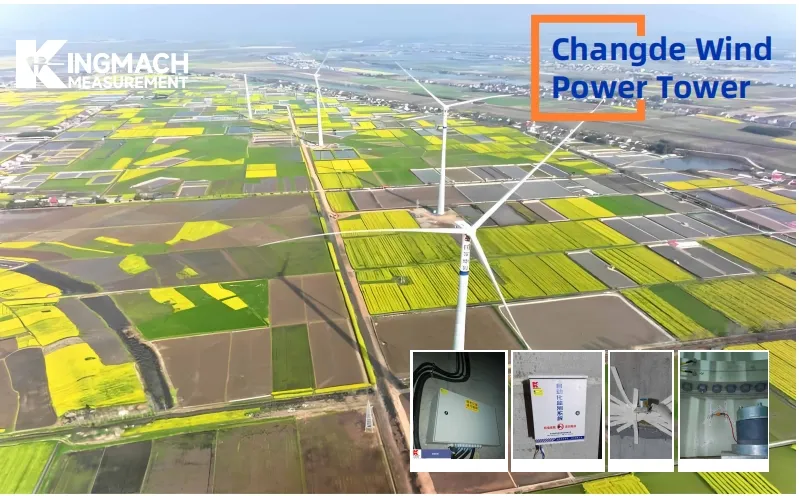
Six Key Benefits of Strain Gauge Monitoring in Construction Projects
Understanding the applications is useful. Understanding why those applications justify the investment is what enables project teams to make the case internally and to clients. These are the six benefits that matter most.
Benefit 1: Early Detection of Structural Distress
Strain gauges detect anomalous load patterns weeks or months before macroscopic symptoms — cracking, deflection, settlement — become visible. This lead time converts emergency response into planned intervention. The financial difference between a controlled repair and an unplanned structural closure is typically an order of magnitude. The safety difference is absolute. Early detection does not simply save money. It buys time for engineers to make informed decisions rather than reactive ones.
Benefit 2: Validation of Engineering Design Assumptions
No structural model is a perfect replica of reality. Soil behaviour, load distribution, connection performance, and material variability all introduce gaps between what design calculations predict and what a structure actually experiences. Strain gauge data from real loads provides the feedback that closes those gaps. This validation is especially valuable on first-of-type projects, complex ground conditions, or innovative structural geometries — exactly the situations where design uncertainty is highest and the cost of being wrong is greatest.
Benefit 3: Continuous Real-Time Data Across the Full Asset Life Cycle
Periodic manual inspection provides a snapshot. A networked array of strain gauges provides a continuous film. Connected to data loggers and visualization platforms, gauges deliver 24/7 readings with configurable alert thresholds. Project owners can monitor structural health from any location, which is a significant operational advantage for international asset owners managing infrastructure across multiple geographies. Remote monitoring also reduces the frequency of costly on-site expert visits — a direct saving on large, geographically dispersed projects.
Benefit 4: Support for Regulatory Compliance and Safety Reporting
Regulators in many jurisdictions now require documented structural monitoring as a condition of operating licences for dams, major bridges, and high-rise foundations. Strain gauge systems produce the timestamped, calibrated data records that satisfy these requirements. They also provide the evidentiary record needed for incident investigation, insurance claims, and liability assessments. For project owners operating in multiple regulatory environments, a consistent monitoring protocol built on internationally calibrated sensors simplifies compliance considerably.
Benefit 5: Extended Asset Life Through Data-Driven Maintenance
Structures maintained according to actual condition data rather than fixed time intervals avoid two symmetric errors: premature retirement (decommissioning a structure that still has years of safe service life remaining) and delayed intervention (continuing to operate a structure past the point where maintenance costs more than replacement). Sensor-informed maintenance strategies have consistently extended infrastructure service life by years or decades on major infrastructure programmes worldwide. The return on the sensor investment compounds over the asset's operating life.
Benefit 6: Reduction in Insurance and Liability Exposure
This benefit receives less attention in technical literature than it deserves. Documented structural monitoring programmes are increasingly recognised by project insurers, concession financiers, and infrastructure bond rating agencies as evidence of active risk management. This recognition has measurable effects: reduced insurance premiums, more favourable lending terms, and stronger investor confidence in long-term infrastructure concessions. For project developers, the sensor system is not only a technical tool. It is a financial governance instrument.
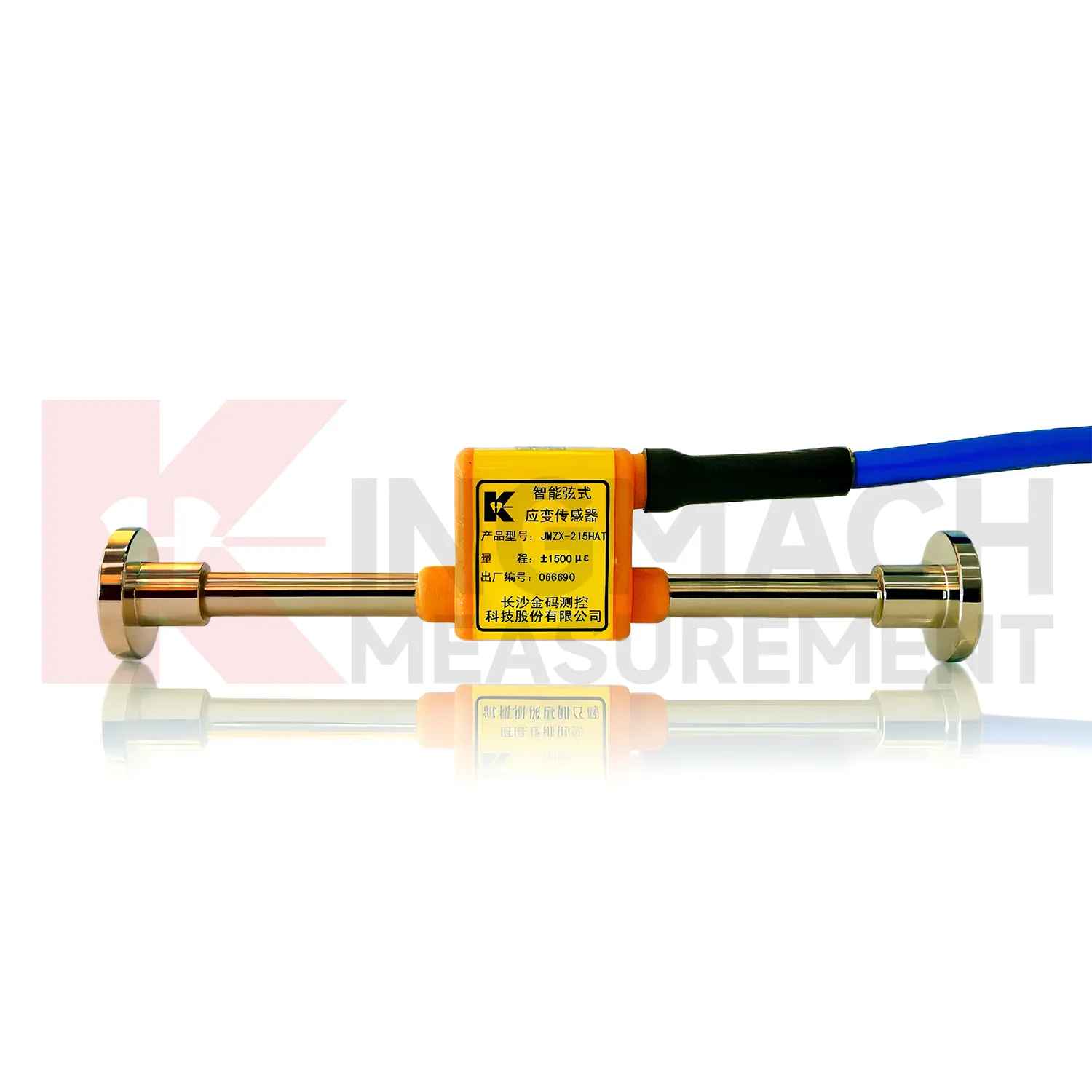
Choosing the Right Strain Gauge for Your Construction Project
Selecting the correct gauge type follows two questions: When will it be installed relative to construction? What material and structural element is it monitoring?
| Project Scenario | Recommended Gauge Type | Key Reason |
|---|---|---|
| New concrete pour (foundations, dams, slabs) | Embedment VW strain gauge | Installed before pour; no access after |
| Existing concrete or structural timber | Surface-mount VW strain gauge | Bolted or bonded without structural intervention |
| Steel members, bridge girders, tower flanges | Surface-welded VW strain gauge | Welded bond withstands vibration and cyclic loads |
| Rebar and pile reinforcement monitoring | Rebar strainmeter | Measures axial load directly within the bar |
Beyond type selection, two further considerations apply to most international projects. First, smart and digital output variants — models with RS-485 output and on-board temperature compensation — integrate directly with IoT data loggers and centralised monitoring platforms. Many infrastructure tender specifications now explicitly require digital sensor outputs, particularly on smart-city and major transport projects. Second, factory calibration certificates are essential for regulatory compliance and insurance documentation. Buyers should confirm calibration traceability before procurement, particularly when sourcing sensors across borders.
For engineers specifying strain gauges for infrastructure projects, Kingmach's vibrating wire strain gauge range covers surface, embedment, welded, and rebar strainmeter configurations — with smart digital output options designed for integration with modern monitoring systems.
Conclusion
A structure under load is always communicating. It communicates through micro-deformations that no inspector's eye can detect and no visual survey can quantify. Strain gauges are the instruments that make that communication intelligible — translating mechanical stress into the data that engineers and asset owners need to make sound decisions.
The benefits extend well beyond the instrumentation room. Early detection saves lives and budgets. Design validation improves the quality of future projects. Continuous monitoring enables remote oversight at any scale. Regulatory compliance becomes documentable rather than assumed. Maintenance extends asset life. And financial risk management improves in ways that are visible to insurers and investors alike.
The right sensor, correctly specified and properly installed, does not simply record what a structure is doing. It gives every stakeholder — engineer, owner, regulator, and insurer — the confidence to know that the structure is behaving as it should, and the warning they need when it is not.
If you are specifying sensors for an upcoming project, contact Kingmach's technical team with your project parameters for a sensor selection recommendation tailored to your structural type, installation conditions, and monitoring objectives.
FAQ
1. What types of strain gauges are most commonly used in civil construction?
Vibrating wire (VW) strain gauges are the dominant choice for permanent civil and geotechnical monitoring applications. They are available in surface-mount, embedment, surface-welded, and rebar strainmeter configurations to suit different structural elements and installation conditions. Their frequency-output principle delivers stable, long-term readings that resistive foil gauges cannot reliably sustain over multi-year monitoring programmes.
2. How long do embedded strain gauges last inside concrete structures?
High-quality VW embedment gauges are designed for service lives exceeding 25 to 30 years when correctly installed and protected with appropriate cable routing. Many dam and bridge monitoring installations have produced consistent data for over two decades. Long-term performance depends on installation quality, cable protection, and the calibration stability of the sensing element — all factors that should be confirmed with the manufacturer before procurement.
3. Can strain gauges operate in submerged or fully waterlogged conditions?
Yes. Most civil-grade VW strain gauges carry IP68 waterproof ratings and are specifically designed for submerged operation in marine environments, water-retaining structures, and saturated ground conditions. The embedment models used in dam and coastal foundation monitoring routinely operate below the water table or within the body of water-retaining structures for their full design life.
4. What is the difference between a surface-mount and an embedment strain gauge?
A surface-mount gauge is installed on the outside of an existing structure — bonded with epoxy or bolted through brackets — after construction is complete. It measures strain at the structural surface. An embedment gauge is cast directly into fresh concrete during construction and measures strain within the body of the structural element. Embedment gauges provide data on the internal stress state of mass concrete, which surface instruments cannot access, and they remain in place permanently as part of the structure.
5. How do strain gauges integrate with modern structural health monitoring platforms?
Smart VW strain gauges with digital RS-485 output connect directly to compatible data loggers, which transmit readings to cloud-based or on-premises monitoring platforms via cellular, satellite, or wired networks. These platforms display real-time strain data, apply alert thresholds, and generate automated reports for compliance and maintenance teams. The integration requires compatible data logger hardware and network connectivity at the monitoring site — both of which should be specified alongside the sensor selection at the project planning stage.