
 EN
 ar
 bg
 hr
 cs
 da
 nl
 fi
 fr
 de
 el
 hi
 it
 ko
 no
 pl
 pt
 ro
 ru
 es
 sv
 tl
 iw
 id
 lv
 lt
 sr
 sk
 sl
 uk
 vi
 et
 hu
 th
 tr
 fa
 ms
 hy
 ka
 ur
 bn
 mn
 ta
 kk
 uz
 ku
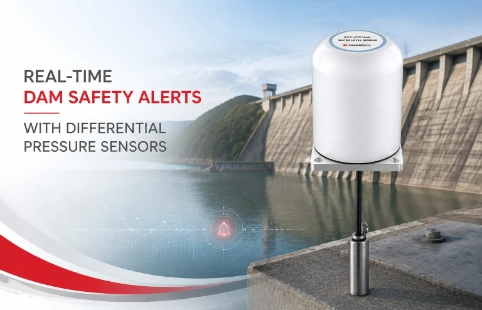
Real-Time Dam Safety Alerts with Differential Pressure Water Level Sensors
Key Takeaways An alert chain needs more than a sensor: define field in...

Weir Type Flow Meter: Simple Open Channel Flow Measurement
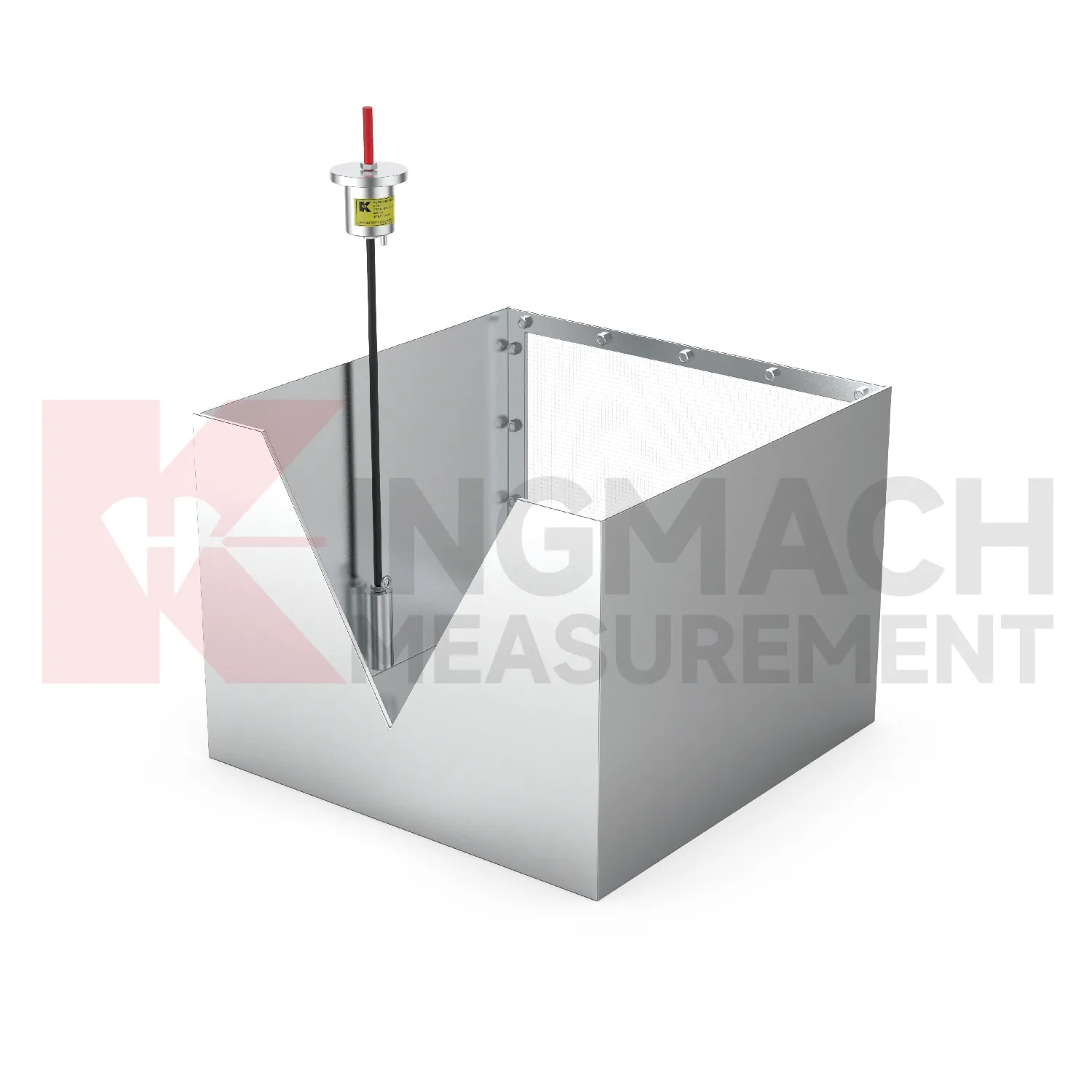
A weir type flow meter works by measuring the water level upstream of a notch or barrier. It’s a straightforward method for open channel flow, and when built and installed correctly, it delivers consistent results without complex electronics. Kingmach offers these meters as part of a wider monitoring portfolio, often integrating them with data loggers or telemetry for remote sites where mains power isn’t available. The design suits everything from small irrigation ditches to wastewater plant channels, and because the parts are simple, maintenance is usually just keeping the weir crest clean and free of debris. Custom sizing and material choices mean the same basic principle can be adapted to high-flow stormwater channels or low-flow laboratory flumes.
Technical Detail
Weir type flow meters from Kingmach use a time-tested hydraulic principle: the height of water passing over a sharp crest relates directly to flow rate. Standard configurations include rectangular, V-notch, and trapezoidal weirs, each better suited to different flow ranges. For instance, a 90-degree V-notch handles smaller flows with better resolution, while a rectangular weir with end contractions works for larger, steadier discharges. The sensors used for level measurement—typically ultrasonic or submersible pressure transmitters—are chosen based on site conditions like foam, debris, or fluctuating ambient temperatures. These sensors feed data to a controller or logger, and Kingmach can pre-configure the system to calculate flow using the specific weir coefficient for your installation. Mounting brackets and stilling wells are often included to dampen turbulence and keep the measurement zone stable. Because the company’s background is in geotechnical and environmental monitoring, the enclosures tend to be robust for outdoor use, and support for RS-485 or Modbus protocols is standard, making integration into SCADA straightforward. Installation support documentation covers crest leveling, approach channel requirements, and periodic checks—things that matter more than the hardware itself for accuracy.
News
Key Takeaways An alert chain needs more than a sensor: define field in...
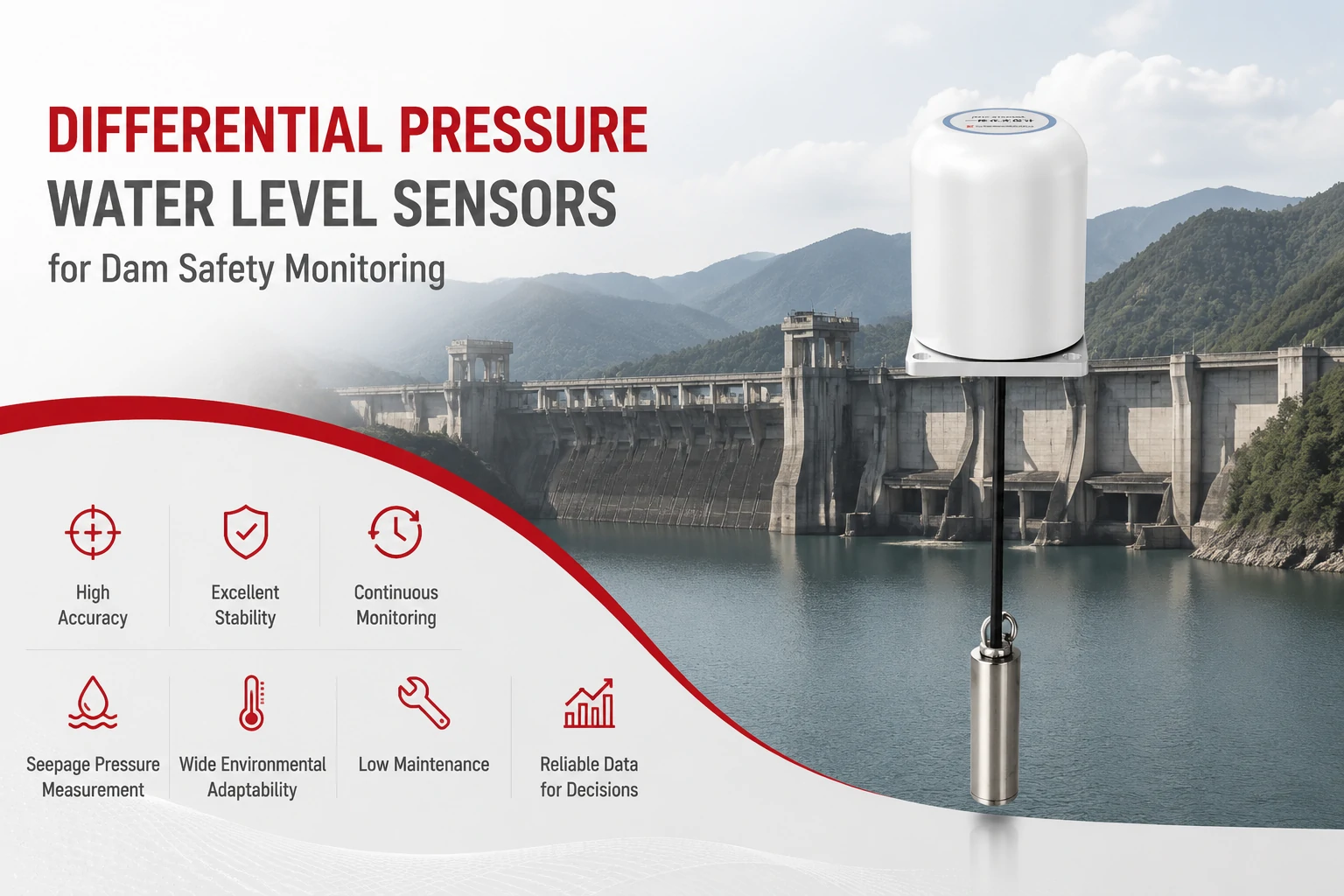
Key Takeaways The strongest fit is usually a confined, submerged, or s...
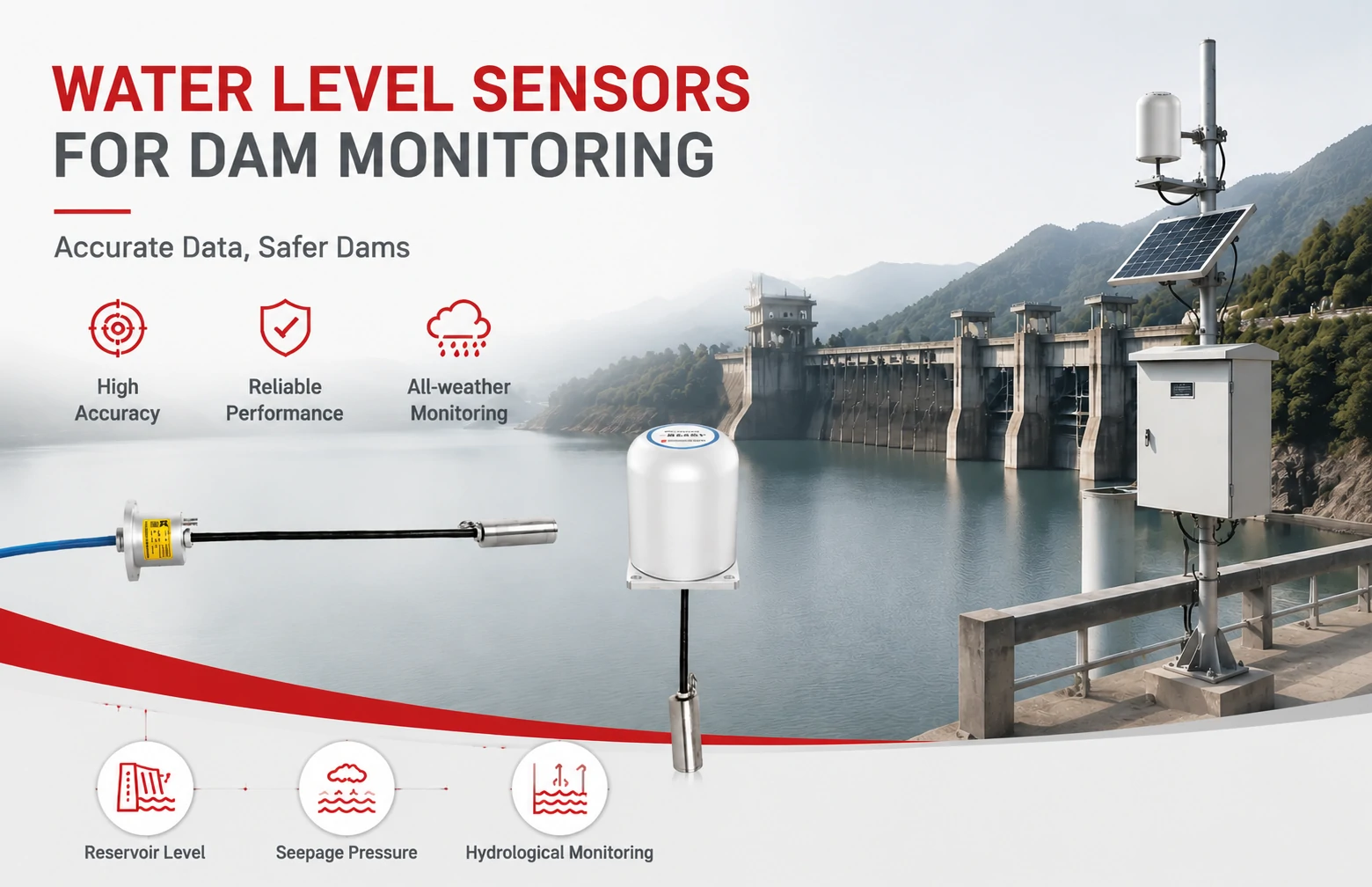
Kingmach Water Level Sensors for Dam Monitoring: A Buyer's Guide to Differential Pre...
Products
FAQ
It depends on the flow variability. A V-notch weir—usually 90 degrees—provides good accuracy at low flows because a small change in head produces a measurable flow change. For larger, relatively steady flows, a rectangular weir with full width or end contractions is easier to construct and less sensitive to slight level errors. If you have very wide flow ranges, a compound weir combining sections can help, but it complicates installation. Kingmach typically helps size the weir based on your expected minimum and maximum flows, making sure the crest height and channel dimensions avoid submergence and approach velocity issues.
Not always, but it’s recommended when the surface is choppy or wave action affects the reading. A stilling well is a separate column connected to the channel via a small inlet; the water inside remains calm, so the level sensor gets a stable surface. Ultrasonic sensors can sometimes work without one if you use a damping pipe, but submersible pressure sensors almost always need a stilling well to filter out waves. It’s one of those details that makes a big difference in data consistency, especially in outdoor sites exposed to wind.
The main task is keeping the weir crest clean and checking for damage. In clean water, you might just inspect it quarterly; in wastewater or sediment-heavy flows, weekly cleaning could be necessary to prevent buildup that changes the crest profile. The level sensor—whether ultrasonic or pressure—should have its calibration verified every few months. Kingmach’s setup guides include a simple dip test using a known reference point to confirm the zero offset hasn’t drifted.
It’s not common because normal weirs need a well-formed approach channel with uniform velocity. In a pipe, the flow pattern at the discharge can be asymmetric, which affects the head-flow relationship. Sometimes a short flume or transition section is added at the pipe outlet to create a channel before the weir. If space is tight, a flume-style meter might work better, but weirs can be adapted with proper entrance conditioning if there’s room.
Under good conditions—properly built weir, accurate level sensor, and minimal approach velocity—it’s reasonable to expect ±2% to ±5% of actual flow. The weir formula itself is fairly precise, so the main error sources are level measurement uncertainty, crest deformation over time, and not accounting for submergence or debris. Kingmach’s documentation walks through these factors and suggests ways to estimate total uncertainty based on your installation.
Share your product type, target capacity, and application requirements. Our team can review the details and recommend a practical next step.
If you are interested in our products or want to become our partner.
Please leave your contact information, our team will contact you as soon as possible.
Mail: [email protected]
Contact Us: +8613808434127
Address: No. 188 Tongzipo West Rd, Changsha, Hunan, China