
 EN
EN
 ar
ar bg
bg hr
hr cs
cs da
da nl
nl fi
fi fr
fr de
de el
el hi
hi it
it ko
ko no
no pl
pl pt
pt ro
ro ru
ru es
es sv
sv tl
tl iw
iw id
id lv
lv lt
lt sr
sr sk
sk sl
sl uk
uk vi
vi et
et hu
hu th
th tr
tr fa
fa ms
ms hy
hy ka
ka ur
ur bn
bn mn
mn ta
ta kk
kk uz
uz ku
ku
How Do Vibrating Wire Strain Gauges Work? Principles and Applications
In terms of engineering safety monitoring, it must be noted that all changes may not be apparent at the surface level. Prior to cracks, displacements, or other damage becoming apparent, there may already be signs that a bridge girder is undergoing abnormal stresses, a section of the dam is responding abnormally, or a tunnel lining is subject to loading variations. For project stakeholders, including project owners, constructors, consultants, and integration specialists, it is important to detect these changes early on.
That is precisely why strain monitoring is so vital in civil engineering. The amount of strain in a material, which corresponds to elongation and compression, reveals its performance when subjected to loads. In many cases, vibrating wire strain gauges have proven to be one of the most reliable tools in the field.
From bridges and dams to slopes, buildings, tunnels, wind towers, underground works, and transport infrastructure, vibrating wire technology is widely used where monitoring stability and durability matter. Contact us for more information on how vibrating wire strain gauges work, why they are valued in engineering projects, and where they are commonly applied. We also introduce a surface-mounted solution for structural monitoring projects.
Why Vibrating Wire Strain Monitoring Is Widely Used in Civil Engineering
In large infrastructure projects, monitoring conditions are often demanding. Sensors may be exposed to outdoor weather, temperature changes, moisture, dust, vibration, and long service periods. In these environments, engineers are not simply looking for a sensor that works in a laboratory. They need a sensing method that can deliver stable data over time under real field conditions.
This is one of the main reasons vibrating wire technology is so widely used in engineering safety monitoring.
The measurement technique of vibrating wire sensors shows better long-term stability, measurement accuracy, and measurement consistency than other measurement techniques. The system works best for extended monitoring periods, which need steady output during multiple months or multiple years instead of short testing intervals.
The reliability of this system, which provides essential monitoring functions for bridges, dams, retaining systems, tunnels, wind towers, and underground works. The projects require monitoring data, enabling safety assessment, trend analysis, and maintenance planning throughout the entire lifespan of the structure.
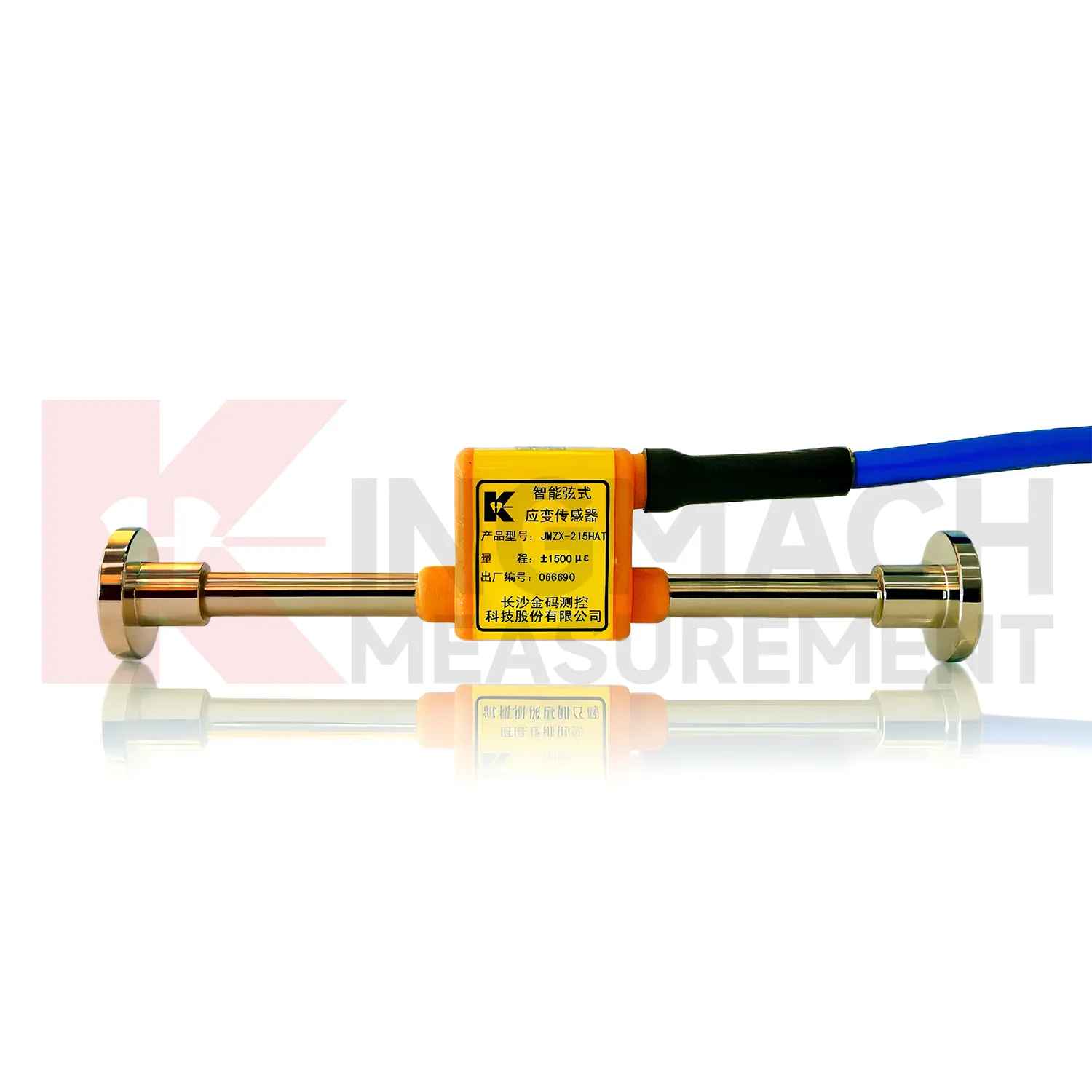
What Is a Vibrating Wire Strain Gauge?
A vibrating wire strain gauge functions as a strain measurement sensor that detects wire tension changes to determine strain levels.
The sensor contains a wire that extends between two unchanging points. The sensor body transmits any deformation that occurs to the monitored structure. The wire tension undergoes alteration because of this process. The wire vibration frequency changes according to wire tension, which results in structure strain, causing a synchronized frequency shift.
This frequency can then be measured by a reading unit or data logger and converted into engineering data for analysis.
In simple terms, a vibrating wire strain gauge turns structural movement into a frequency signal that can be used to monitor stress-related behavior. The system becomes essential for engineering projects that need long-term, accurate, and trustworthy strain measurements.
How Do Vibrating Wire Strain Gauges Work?
The working principle of the system requires a step-by-step demonstration for complete understanding.
1. Structural Deformation Occurs
A bridge member, steel support, concrete surface, tunnel lining, or tower section experiences load, temperature changes, ground movement, vibration, or other structural impacts. The material shows measurable strain because even tiny deformations create permanent changes.
2. The Sensor Responds to That Movement
When the vibrating wire strain gauge is installed on the structure, it follows the deformation of the monitored surface. If the structure stretches, the sensor stretches. If it compresses, the sensor responds accordingly.
3. Wire Tension Changes
Inside the gauge, the internal wire is under tension. As the structure deforms, the mechanical condition of the wire changes. This changes the tension level in the wire.
4. Vibration Frequency Changes
The wire is excited to vibrate, and its natural frequency is measured. Because frequency is related to wire tension, any strain-induced change in tension results in a change in frequency.
5. Frequency Is Converted into Monitoring Data
The measured frequency is collected by an instrument or monitoring system. The data can then be processed into strain values and used by engineers to observe trends, evaluate structural response, and identify unusual changes.
One important advantage of this method is that frequency-based measurement is highly suitable for field monitoring, especially where long cable runs or complex site environments are involved. For large infrastructure projects, this practical benefit can be very valuable.
Why Surface-Mounted Vibrating Wire Strain Gauges Are Useful
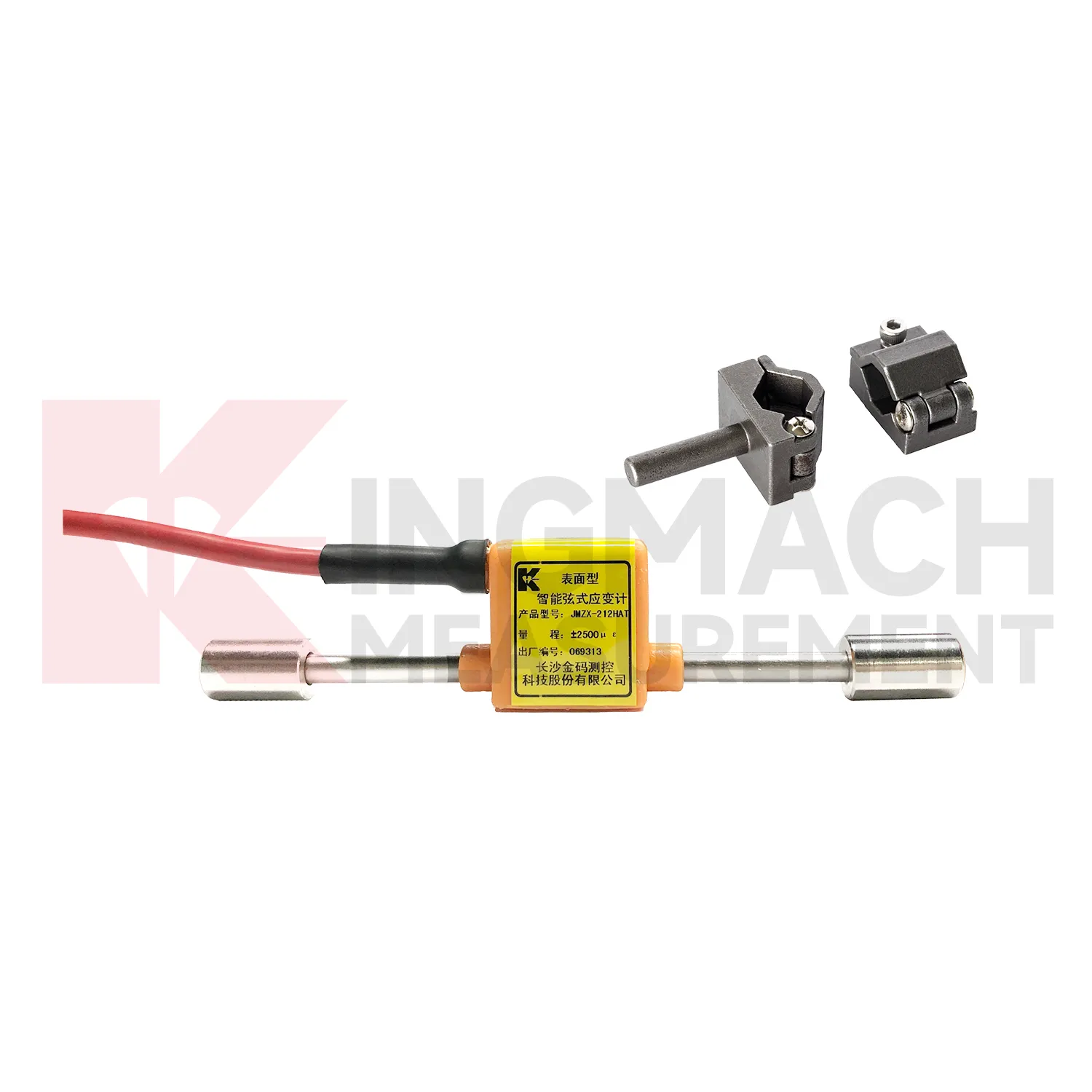
Not all projects allow for embedded instrumentation. In many real-world applications, engineers need to monitor existing structures, rehabilitated assets, or accessible structural surfaces after construction has already begun or been completed. In these situations, a surface-mounted vibrating wire strain gauge can be an effective solution.
A surface model is especially useful when the goal is to monitor strain directly on the outside of structural elements such as steel members, concrete surfaces, support frames, tower sections, and other exposed parts. It provides flexibility in deployment and can be suitable for both newly built and already operating structures.
This makes surface-mounted vibrating wire strain gauges particularly relevant for:
- structural condition assessment
- retrofitting and strengthening evaluation
- maintenance-related monitoring
- post-construction observation
- long-term safety monitoring of accessible components
For engineering buyers, this means a practical sensor option that can fit a wide range of project conditions without requiring embedded installation.
What Engineers Can Learn from Vibrating Wire Strain Data
A strain gauge does more than generate numbers. Its real value lies in what those numbers reveal about the structure.
With vibrating wire strain monitoring, engineers can better understand:
- how structural members respond to load
- whether actual behavior matches design expectations
- how stress changes during construction stages
- whether reinforcement or repair measures are performing as intended
- how temperature, cyclic loading, or settlement affects the structure over time
- whether abnormal trends may indicate developing risk
In many projects, the greatest value of strain monitoring is not a single reading, but the pattern over time. Trend analysis helps identify whether a structure is behaving normally or whether further inspection and engineering action may be needed.
For this reason, vibrating wire strain gauges are often integrated into long-term structural health monitoring systems where reliability and continuity are essential.
Typical Applications in Engineering Safety Monitoring
Bridges
Engineers use vibrating wire strain gauges in bridge projects to monitor the structural components, which include girders, steel members, and deck-related elements, as well as the areas that are vulnerable to fatigue damage. The devices enable engineers to assess how the structure reacts to loads that occur during vehicle movement and to environmental impacts.
Dams
Strain data provides crucial information for monitoring dam safety because it enables engineers to study how structures respond to water pressure and temperature variations and extended operational conditions. This process plays a vital role in both performance evaluation and safety control procedures.
Slopes and Retaining Structures
Engineers use strain monitoring equipment to study how slope stabilization systems and retaining structures react to soil pressure, support loads, and movement forces.
Buildings and High-Rise Structures
Structural engineers employ vibrating wire strain gauges in buildings and towers and reinforced structural systems to measure stress distribution and load transfer, and evaluate strengthening techniques.
Tunnels and Underground Engineering
The sensors installed in tunnels and underground construction sites enable engineers to measure how the tunnel lining system, support structures, and construction activities perform during various construction phases. The system proves particularly useful when continuous stress monitoring needs to occur.
Wind Towers
Wind tower structures are subject to repeated dynamic loading. Strain monitoring helps engineers understand operational stress behavior, fatigue response, and structural performance over time.
Roadbeds and Transport Infrastructure
In transport-related engineering, strain gauges can be applied to support elements and infrastructure components to assess repeated loading effects and long-term structural response.
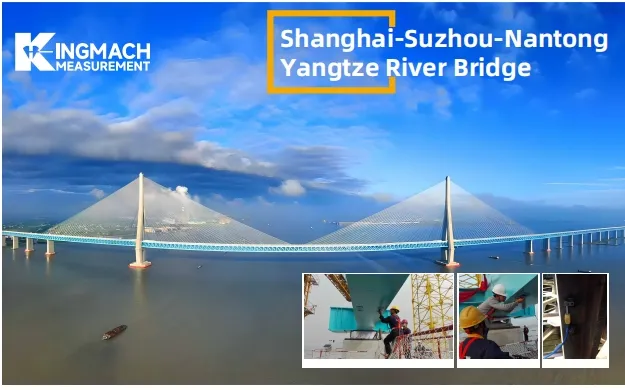
Kingmach Project- Shanghai-Suzhou-Nantong Yangtze River Bridge
What to Consider Before Selecting a Vibrating Wire Strain Gauge
Choosing a strain gauge should always be based on the actual monitoring objective and site condition. Before purchasing, project teams should consider several key questions:
- What material will the gauge be mounted on?
- Is the structure new, existing, or being strengthened?
- Is the monitoring short-term, periodic, or continuous?
- Will the sensor operate outdoors or in a humid environment?
- Does the project require automatic data acquisition?
- How important are cable routing and transmission distance?
- What protection level is needed against weather, vibration, or site disturbance?
A sensor may appear technically suitable on paper, but if it does not match the installation method, environmental condition, or monitoring system, project performance may be affected. This is why many buyers prefer working with suppliers that can provide application-based support, not just product listings.
A Practical Solution for Structural Surface Strain Monitoring
For projects requiring dependable strain monitoring on structural surfaces, our Smart Vibrating Wire Strain Gauge, Surface Model is a practical option.
Designed for engineering safety monitoring applications, this product is suitable for field deployment where long-term data stability and surface installation are important. It can be applied in a wide range of infrastructure and construction projects, including bridges, dams, tunnels, slopes, buildings, wind towers, underground works, and transport structures.
Its value lies in combining the advantages of vibrating wire sensing technology with the practicality of a surface-mounted configuration, making it a strong choice for accessible structural elements and project-based monitoring systems.
You can explore the product here: Smart vibrating wire strain gauge
As an export-oriented supplier serving engineering safety monitoring applications, we understand that international buyers often need more than a sensor alone. They need responsive communication, suitable product matching, and support for project-based procurement. Whether you are a contractor, monitoring integrator, distributor, or consulting team, we are ready to help you find a suitable strain monitoring solution.
Conclusion
Vibrating wire strain gauges function as vital instruments for modern engineering safety monitoring because they convert minor structural movements into essential monitoring information. The system operates by detecting frequency changes that occur when wire tension fluctuates, and this method delivers practical benefits for extended outdoor applications.
Engineers can use surface-mounted vibrating wire strain gauges to monitor structural behavior and track load response and performance changes in bridges, dams, and slopes, buildings and tunnels, wind towers, and underground facilities and roadbed infrastructure systems.
Our team will help you choose a dependable strain monitoring sensor for your upcoming project while we provide export supply services. We will recommend the best solution for your needs after you provide us with your project type, structure material, and monitoring requirements.
FAQ
1. What is a vibrating wire strain gauge used for?
A vibrating wire strain gauge is used to measure structural strain in engineering projects. It is commonly applied in bridges, dams, tunnels, buildings, slopes, wind towers, underground works, and other infrastructure monitoring systems.
2. How does a vibrating wire strain gauge work?
It works by measuring changes in the vibration frequency of an internal tensioned wire. When the monitored structure deforms, the wire tension changes, which changes the vibration frequency. This frequency is then converted into strain-related data.
3. Why are vibrating wire strain gauges suitable for long-term monitoring?
They are widely used for long-term monitoring because vibrating wire technology offers stable performance, good repeatability, and suitability for harsh civil engineering environments such as outdoor, humid, and temperature-variable sites.
4. What is the advantage of a surface-mounted vibrating wire strain gauge?
A surface-mounted model is useful for existing structures, retrofit projects, and accessible structural parts where embedded installation is not possible or not necessary. It provides flexible deployment for field monitoring.
5. How do I choose the right vibrating wire strain gauge for my project?
You should consider the structure material, installation location, monitoring duration, environmental condition, cable routing, and whether the sensor will connect to an automatic monitoring system. Working with an experienced supplier can help ensure the product matches your actual project needs.