
 EN
EN
 ar
ar bg
bg hr
hr cs
cs da
da nl
nl fi
fi fr
fr de
de el
el hi
hi it
it ko
ko no
no pl
pl pt
pt ro
ro ru
ru es
es sv
sv tl
tl iw
iw id
id lv
lv lt
lt sr
sr sk
sk sl
sl uk
uk vi
vi et
et hu
hu th
th tr
tr fa
fa ms
ms hy
hy ka
ka ur
ur bn
bn mn
mn ta
ta kk
kk uz
uz ku
ku
What Is a Foil Strain Gauges? Principle, Types, and How It Works Explained
In modern engineering safety monitoring, understanding how a structure responds to load, stress, deformation, and environmental change is essential. Whether the project involves a bridge, dam, slope, tunnel, high-rise building, wind tower, underground structure, or roadbed, reliable monitoring data helps engineers evaluate structural behavior and make informed maintenance or safety decisions.
Among many sensing technologies used in structural monitoring, the foil strain gauge remains one of the most widely applied and practical tools. Although small in size, it plays a major role in measuring how materials deform under force. For project contractors, monitoring integrators, consulting engineers, and distributors, understanding the principle and selection of foil strain gauges is important when planning a monitoring system.
In this article, we explain what a foil strain gauge is, its working principle, the main types of foil strain gauges, and how it is used in real engineering projects. We also highlight why selecting the right supplier matters for infrastructure and construction monitoring applications.
What Is a Foil Strain Gauge?
A foil strain gauge operates as a sensor that detects the strain occurring on an object's outer surface. Strain exists as an engineering term that describes the minor changes in length that occur when a material experiences tension, compression, or bending or torsion forces.
A foil strain gauge works by converting this mechanical deformation into a measurable electrical signal. Even though the change in shape of a structure may be extremely small, it can reveal important information about stress distribution, load response, fatigue condition, and structural performance over time.
This is why engineering experts frequently implement foil strain gauges to monitor safety in their projects. The structural components test their performance under actual service conditions, which enables engineers to assess their real-world performance against the expected design results.
Why Strain Measurement Matters in Engineering Projects
The measurement of strain becomes essential because most structural issues start from undetectable minute changes that occur in structures. A structure shows its initial signs of damage through subtle strain patterns, which engineers can measure and analyze before visible cracking, displacement, or total failure occurs.
In bridges, foil strain gauges can help monitor girder stress under traffic load. In dams, they can support stress observation in concrete or steel components. In slopes and retaining structures, strain monitoring helps engineers understand load transfer and deformation-related response. In tunnels and underground projects, strain data can show how the lining or support system performs during excavation or long-term service.
For these reasons, foil strain gauges are commonly used in:
- bridge health monitoring
- dam safety monitoring
- slope and geotechnical engineering
- building and high-rise structure monitoring
- tunnel and underground works
- wind tower monitoring
- railway, roadbed, and infrastructure projects
In all of these applications, accurate strain data helps improve safety evaluation, maintenance planning, and long-term asset management.
Foil Strain Gauge Principle: How Does It Work?
The fundamental concept underlying the foil strain gauge can be explained by means of a change in resistance of an electric current.
In cases where foil strain gauges are attached to the surface of any structure, the deformation takes place along with that of the surface itself. If the material expands or contracts, there will occur an equivalent expansion or contraction of the foil strain gauge. The physical variation in size results in a slight change in its resistance.
The resulting change in resistance is measured in the form of an electric current circuit that usually includes the Wheatstone bridge arrangement. The signal is amplified, collected by data acquisition equipment, and converted into strain values for monitoring and analysis.
In simple terms, the process works like this:
1. The structure experiences load or deformation
2. The foil strain gauge deforms with the structure
3. Its electrical resistance changes
4. The measurement system captures and converts that change into usable data
Because the signal variation is very small, proper installation and signal conditioning are essential. The accuracy of strain measurement depends not only on the sensor itself, but also on bonding quality, surface preparation, temperature compensation, wiring, and environmental protection.
Main Types of Strain Gauges
Engineers need different strain gauge designs for their various work environments. The correct type selection improves both measurement accuracy and system durability throughout its operational time.
1. Foil Strain Gauges
Foil strain gauges remain one of the most preferred strain gauge types among users. The device consists of a metallic foil pattern, which engineers attach to a backing material. The gauges provide high sensitivity together with dependable operation across many different use cases.
The devices find common application in laboratory testing, structural assessment, and engineering monitoring as they enable precise surface strain measurement.
2. Wire Strain Gauges
Wire strain gauges use fine resistance wire as the sensing element. The device maintains its traditional design, but people use it for specific structural and monitoring purposes.
Wire gauges become an option for projects that require specific measurement setups or specific environmental conditions.
3. Weldable Strain Gauges
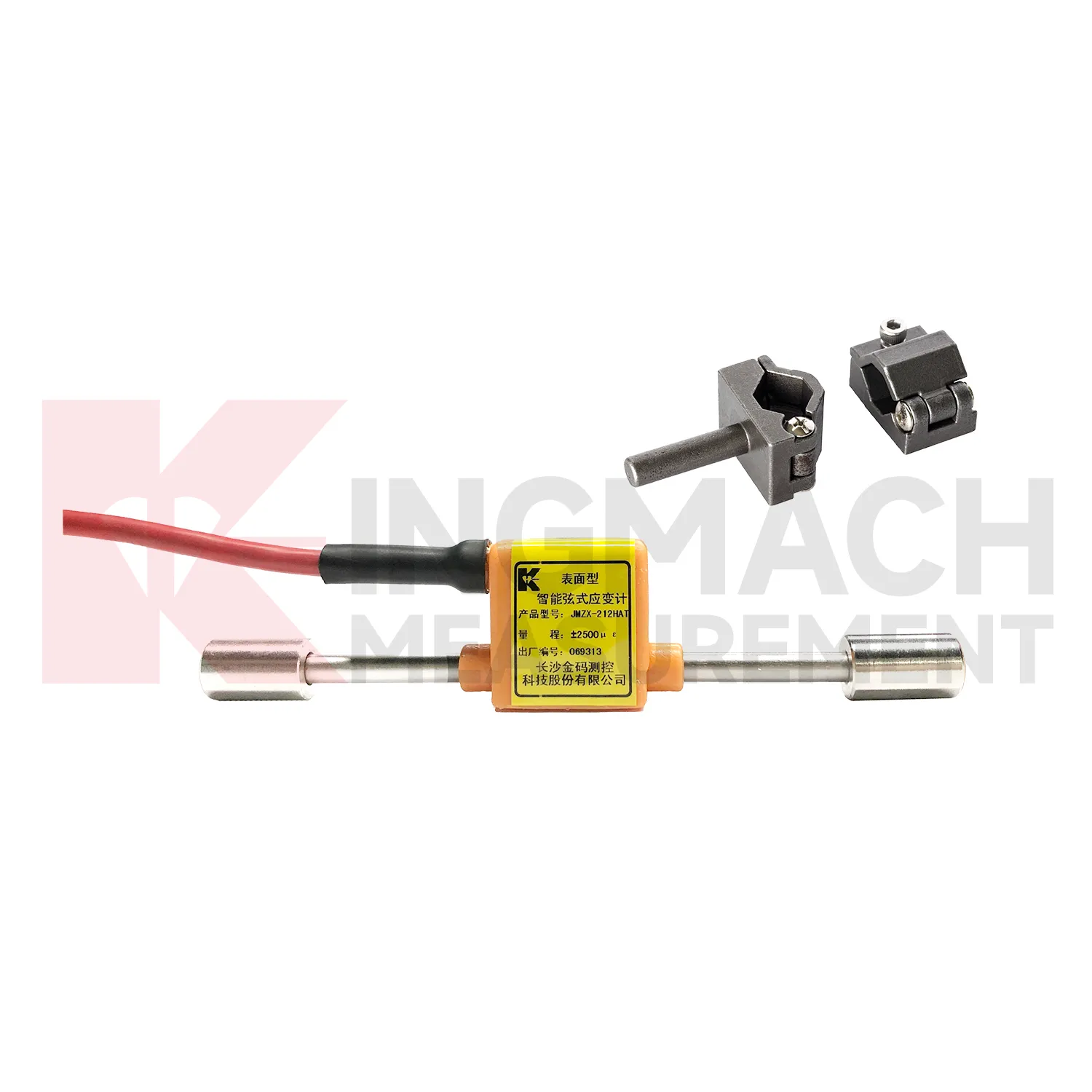
Weldable strain gauges enable attachment to metal surfaces that adhesive bonding methods cannot effectively handle. The gauges find extensive application on steel structures, bridges, industrial machinery, and other metallic components.
Weldable gauges provide project teams who work in outdoor environments with an installation method that ensures secure installation.
4. Embedded or Specialized Strain Gauges
Some projects require specialized gauges that can be embedded in concrete and geotechnical structures, as well as in special construction materials. The products function in situations that need permanent structural monitoring beyond the capabilities of direct surface installation.
The construction industry uses these materials for major projects, which include dams, tunnels, foundations, and underground engineering works.
5. Temperature-Compensated Strain Gauges
The outdoor engineering structures experience temperature fluctuations, which decrease measurement accuracy. The use of temperature-compensated strain gauges helps to decrease this impact while enhancing data precision.
The technology proves beneficial for bridge projects, wind tower constructions, and dam projects, and steel or concrete structures that face outdoor conditions.
How Foil Strain Gauges Work in Real Engineering Monitoring
In actual projects, foil strain gauges are attached to or integrated into structural components where stress behavior needs to be monitored. After installation, they detect strain changes caused by loading, vibration, settlement, thermal movement, or stress redistribution.
For example:
- For bridge structure assessment, foil strain gauges may be deployed in girder, deck, or steel members in order to evaluate the effect of applied traffic loading.
- For dam monitoring, they can help track stress variation caused by water pressure, temperature change, or long-term structural behavior.
- For slope structures, they are instrumental in the evaluation of structural responses of retaining structures, anchors, or structural members.
- For buildings and high-rise structures, foil strain gauges can be used to assess load transfer, reinforcement performance, or strengthening effects.
- For tunnel structures, they assist in evaluating the structural responses of lining members, support members, and structural responses during construction stages.
- For wind towers, foil strain gauges may be helpful for evaluating stresses and fatigue under wind loading conditions.
- For roadbed and railway structures, foil strain gauges assist in evaluating responses due to repetitive loading from traffic loads.
By converting these physical responses into measurable data, foil strain gauges give engineers a clearer picture of how a structure behaves over time. This makes them valuable tools for both short-term testing and long-term health monitoring.
Key Factors When Choosing a Foil Strain Gauge
For engineering buyers and monitoring contractors, selecting a foil strain gauge is not only about sensor availability. It is about matching the product to the project condition.
Important selection factors include:
- the material of the monitored structure
- expected strain range
- static or dynamic measurement requirement
- indoor or outdoor application
- surface condition and installation method
- temperature variation
- long-term durability requirement
- compatibility with monitoring instruments
- cable protection and sealing needs
- project environment such as moisture, corrosion, or vibration
For example, a bridge project exposed to weather and cyclic loading may require a different solution from an embedded gauge used in a concrete dam or tunnel lining. A proper selection process helps avoid installation problems, unstable signals, or reduced sensor life.
Common Challenges in Foil Strain Gauge Applications
Although foil strain gauges are widely used, performance can be affected by several practical issues.
One common problem is poor surface preparation. If the mounting surface is not clean and properly treated, the gauge may not bond correctly, which can affect data accuracy.
Another challenge is installation error. Incorrect alignment, unsuitable adhesive use, or inadequate protection can all lead to unstable readings.
Temperature influence is another major factor, especially in outdoor structures. Without proper compensation, temperature variation may introduce signal drift or false readings.
In harsh environments, moisture, corrosion, dust, and cable damage can also affect measurement stability. This is why many project buyers prefer working with suppliers that understand real engineering conditions and can recommend suitable products rather than offering only standard catalog items.
Why Supplier Experience Matters
For bridges, dams, tunnels, slopes, buildings, wind towers, and underground engineering projects, monitoring reliability depends on both product quality and application support. Buyers often need more than a sensor — they need help with selection, technical communication, delivery coordination, and export service.
At Kingmach, we supply foil strain gauges for engineering measurement and structural safety monitoring applications. Our product range is designed to support a variety of project needs across infrastructure, construction, and industrial monitoring sectors.
For overseas customers, this means access to:
- foil strain gauge products for different monitoring applications
- support for project-oriented product selection
- supply capability for contractors, distributors, and integrators
- export experience for international orders and technical communication
If you are sourcing sensors for structural health monitoring or engineering instrumentation, choosing a professional supplier can help improve both procurement efficiency and project performance.
Explore our product range here: Strain Gauges
Conclusion
The foil strain gauge functions as an insignificant part of the system. However, it serves a vital function in engineering safety assessment. The instrument measures minimal structural changes to assist engineers in evaluating stress patterns and assessing operational capacity while identifying potential hazards across various infrastructure projects.
Foil strain gauges function as essential and effective measurement instruments for contemporary monitoring systems, which include bridges, dams, and tunnels, slopes, buildings, wind towers, underground facilities, and roadbeds. The buyers need to understand product principles and different types and application differences because this knowledge will enable them to make better project decisions.
If you are looking for reliable foil strain gauge solutions for your monitoring project, Kingmach is ready to support your sourcing needs. Contact us with your project type, structure material, and monitoring requirements, and our team will help recommend suitable products for your application.
FAQ
1. What is a foil strain gauge used for?
A foil strain gauge is used to measure the small deformation of a material or structure under load. It is commonly applied in bridges, dams, tunnels, buildings, slopes, wind towers, and other engineering monitoring projects.
2. How does a foil strain gauge work?
A foil strain gauge works by detecting changes in electrical resistance when it stretches or compresses with the surface of the monitored object. This resistance change is converted into measurable strain data.
3. What are the main types of strain gauges?
Common types include foil strain gauges, wire strain gauges, weldable strain gauges, embedded strain gauges, and temperature-compensated strain gauges. Different types are suitable for different project conditions.
4. Why is strain monitoring important in structural engineering?
Strain monitoring helps engineers understand structural stress behavior, detect abnormal load response, assess fatigue condition, and support long-term safety evaluation before visible damage occurs.
5. How do I choose the right foil strain gauge for my project?
You should consider the structure material, installation method, temperature condition, measurement range, monitoring duration, and environmental exposure. Working with an experienced supplier can help ensure the gauge matches your project requirements.