
 EN
EN
 ar
ar bg
bg hr
hr cs
cs da
da nl
nl fi
fi fr
fr de
de el
el hi
hi it
it ko
ko no
no pl
pl pt
pt ro
ro ru
ru es
es sv
sv tl
tl iw
iw id
id lv
lv lt
lt sr
sr sk
sk sl
sl uk
uk vi
vi et
et hu
hu th
th tr
tr fa
fa ms
ms hy
hy ka
ka ur
ur bn
bn mn
mn ta
ta kk
kk uz
uz ku
ku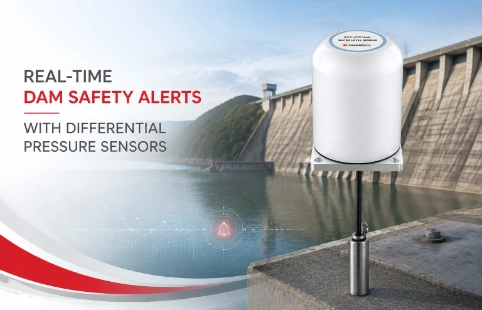
Real-Time Dam Safety Alerts with Differential Pressure Water Level Sensors
Key Takeaways An alert chain needs more than a sensor: define field in...

5G DTU: Industrial-Grade Connectivity for Monitoring
When sensor data needs to travel from a remote landslide monitoring station to your office, every second of delay or data loss can matter. For geotechnical and structural health projects, a stable transmission link is not optional. The rise of 5G DTU (Data Transfer Unit) technology changes what’s possible at the edge. Kingmach’s 5G DTU modules connect your tiltmeters, inclinometers, piezometers, and other survey instruments directly to the cloud. Unlike earlier cellular generations, 5G brings ultra-low latency and the capacity to handle dense sensor networks. You get near-real-time alerts on settlement, vibration, or water level. Installations that used to require local loggers and periodic manual downloads can now stream continuously. Engineers can monitor construction sites, tunnels, and dams from anywhere. The higher bandwidth also allows for on-demand high-frequency sampling during critical events. Kingmach integrates these 5G units into its monitoring solutions with an eye on field toughness: wide temperature tolerance, surge protection, and simple DIN-rail mounting. No need to be a telecom expert; the units are pre-configured for major networks. Whether you are adding connectivity to existing instruments or building a new network from scratch, a 5G DTU can cut down site visits and give you data when you need it.
Technical Detail
Kingmach 5G DTU units act as a bridge between field sensors and your data platform. Designed for the demands of geotechnical and structural monitoring, they handle the data from instruments like crack meters, strain gauges, and weather stations. A typical site might have dozens of sensors scattered over a large area. The DTU collects data over RS485 or RS232 and sends it upstream via the 5G network. This avoids the complexity and cost of running cables. Our DTUs support packet retransmission and keep-alive mechanisms, so a temporary network dropout doesn’t mean lost records. The built-in watchdog timer can restart the unit if it hangs, which matters when you are a hundred kilometers from the nearest technician. Power consumption is kept low for solar-powered setups. You can choose between always-on mode or scheduled wake-up to save energy. Configuration is done through a simple web interface or Kingmach’s own device manager software. The metal housing and industrial-grade components stand up to heat, dust, and humidity. With global 5G band support, these modules ship to project sites across the world. They also integrate easily with Kingmach’s data collection platform, or you can push data to third-party MQTT, HTTP, or FTP servers. For projects that need customization—say, a specific data protocol or VPN tunnel—our engineering team works closely with yours to adapt the firmware. After-sales support includes remote diagnostics and timely replacement. If you are already using 4G DTUs, upgrading to 5G is often just a matter of swapping the unit and reconfiguring the APN, because the power and cabling usually stay the same. Beyond basic data transfer, the higher throughput lets you stream waveform data from dynamic sensors like accelerometers. This opens up advanced analytics like modal analysis on a remote bridge. In short, a 5G DTU is not just a faster modem; it is a way to make your monitoring truly real-time and reduce the total cost of ownership by cutting site trips.
News
Key Takeaways An alert chain needs more than a sensor: define field in...
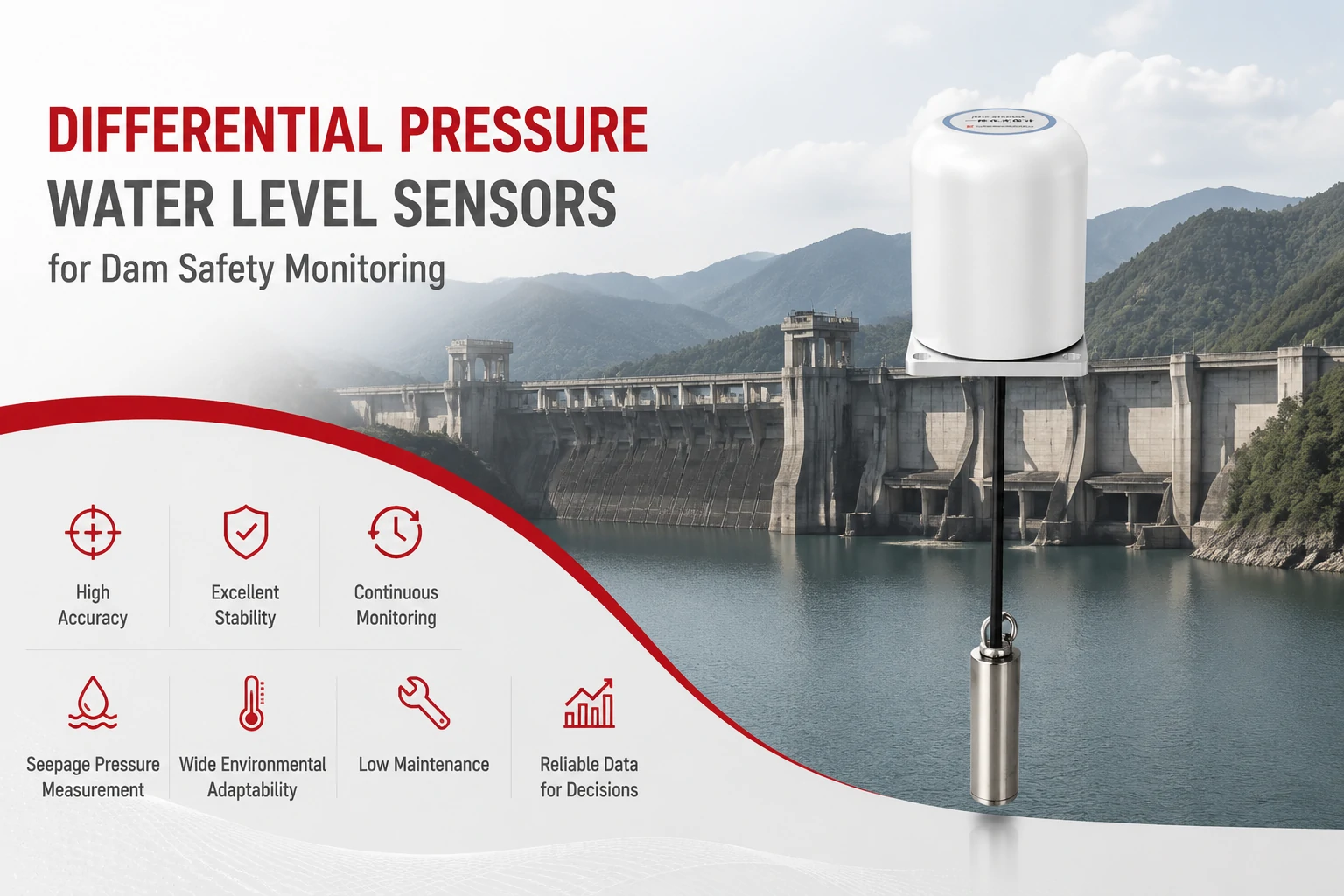
Key Takeaways The strongest fit is usually a confined, submerged, or s...
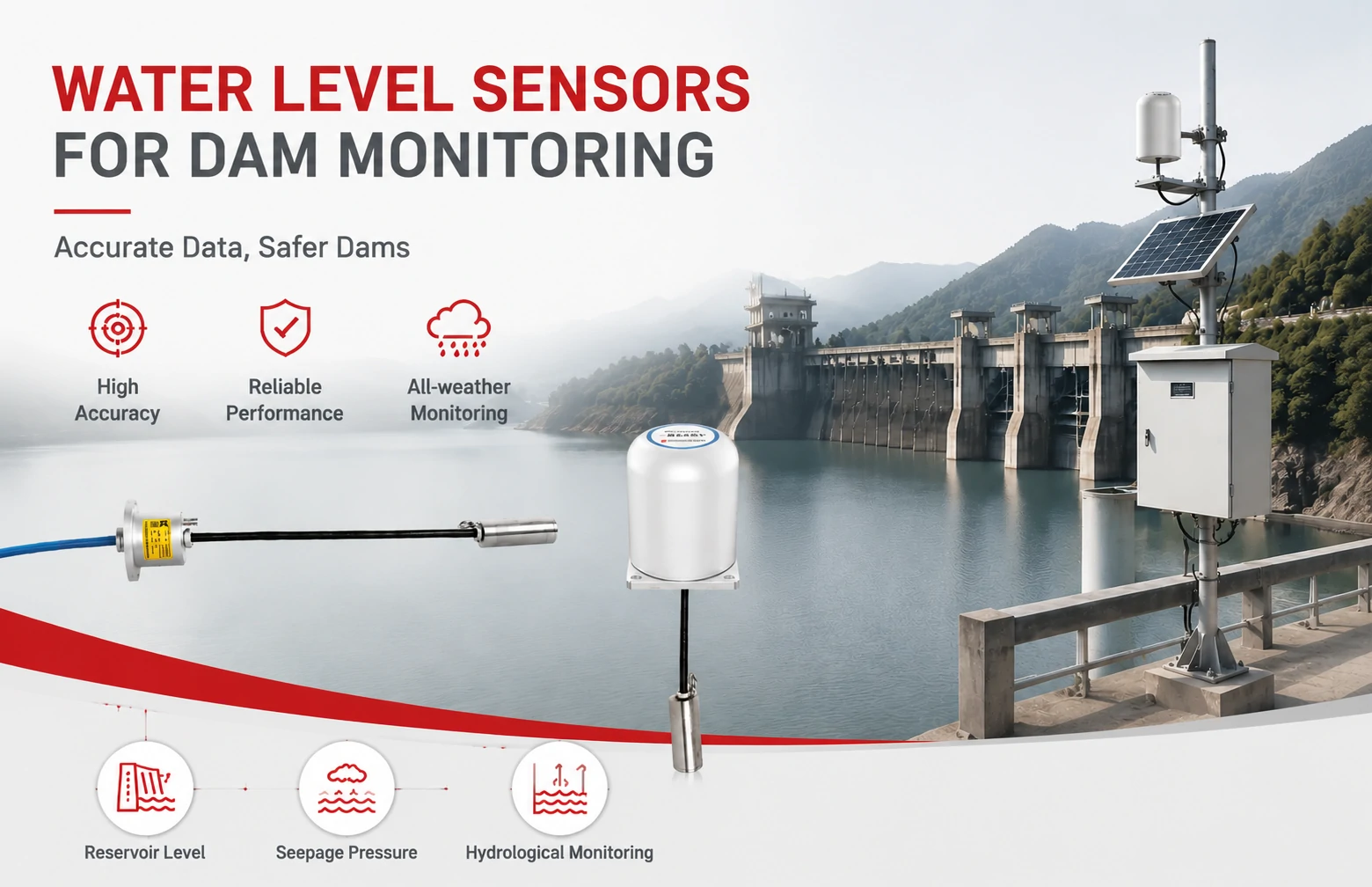
Kingmach Water Level Sensors for Dam Monitoring: A Buyer's Guide to Differential Pre...
Products
FAQ
The main difference is latency. 5G networks can drop end-to-end latency below 10 milliseconds under good conditions, compared to 30–50ms typical for 4G. This matters if you are doing dynamic monitoring, like capturing vibration from an accelerometer. 5G also supports many more devices per cell, so dense sensor arrays won’t congest the link. In practice, for static readings like daily settlement, 4G is often enough. But if you need fast alarms or millisecond-precision time stamps, 5G is worth the upgrade.
Yes. Kingmach 5G DTUs talk standard industrial protocols over RS485 and RS232. Most third-party sensors that output Modbus RTU or raw ASCII strings will work out of the box. You just map the data registers in the DTU’s configuration. If your sensor uses a custom protocol, our support team can help script a parsing routine or offer a customized firmware build. The goal is to get your data into the cloud, regardless of what instrument is on the other end.
The DTU takes a standard Nano-SIM from any major 5G network operator. For most monitoring jobs, a plan with 500 MB to a couple of gigabytes per month is plenty—typical readings every few minutes use only a few dozen megabytes. If you plan to stream high-frequency data or video from a camera, you’ll need more. We recommend a static IP or a VPN-compatible SIM if you need to reach the DTU from your server. The unit can be set to use dual APNs, so you can have a fallback if the primary network has issues.
The DTU has two antenna connectors, so you can fit high-gain or directional antennas if needed. If 5G coverage is spotty, the module automatically falls back to 4G or 3G without dropping the VPN tunnel. The unit logs signal strength and connection quality, which you can read remotely to decide if an antenna upgrade would help. In extremely remote areas, a low-earth-orbit satellite terminal might be a better choice, and the DTU can send data over the terminal’s Ethernet port as a backup path.
Power consumption is a common concern. Under continuous transmission, a typical 5G DTU draws around 3–5 watts. With a suitable sleep schedule—for example, waking up every 15 minutes to send data—the average draw can drop below 0.5 watts. You can also have the unit power the sensor rails only when needed. A small 20–50 watt solar panel and a 12 Ah battery are usually enough for such setups. We can share typical power profiles from past projects to help size your system.
Share your product type, target capacity, and application requirements. Our team can review the details and recommend a practical next step.
Related Keywords
If you are interested in our products or want to become our partner.
Please leave your contact information, our team will contact you as soon as possible.
Mail: [email protected]
Contact Us: +8613808434127
Address: No. 188 Tongzipo West Rd, Changsha, Hunan, China