
 EN
EN
 ar
ar bg
bg hr
hr cs
cs da
da nl
nl fi
fi fr
fr de
de el
el hi
hi it
it ko
ko no
no pl
pl pt
pt ro
ro ru
ru es
es sv
sv tl
tl iw
iw id
id lv
lv lt
lt sr
sr sk
sk sl
sl uk
uk vi
vi et
et hu
hu th
th tr
tr fa
fa ms
ms hy
hy ka
ka ur
ur bn
bn mn
mn ta
ta kk
kk uz
uz ku
ku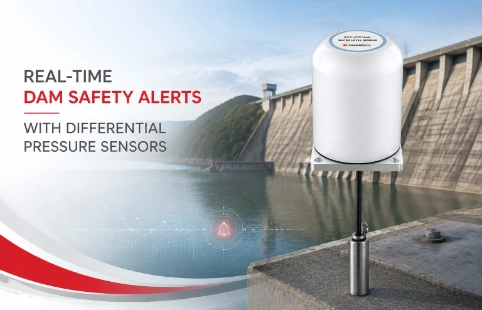
Real-Time Dam Safety Alerts with Differential Pressure Water Level Sensors
Key Takeaways An alert chain needs more than a sensor: define field in...

Reliable Tiltmeter Measures for Geotechnical Monitoring
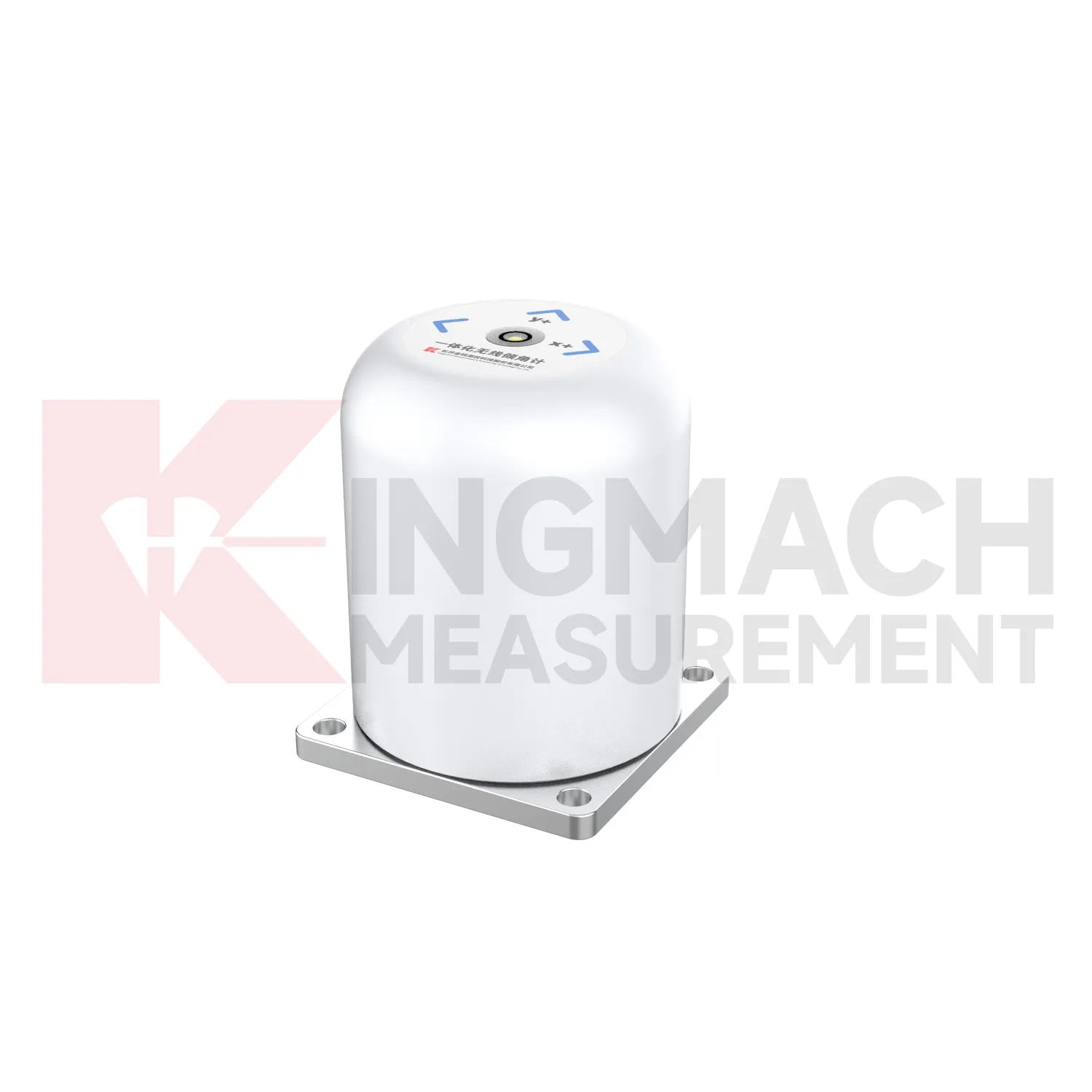
When a retaining wall shifts by just a fraction of a degree, the consequences can be severe. This is where tiltmeter measures become invaluable. Kingmach’s tiltmeters capture these subtle movements, giving engineers the data they need to act before small tilts turn into big problems. Unlike traditional manual surveys, automated tiltmeter measures deliver continuous, real-time feedback. That means site managers spot trends early, reduce inspection costs, and avoid lengthy shutdowns. The core principle is simple: a high-precision MEMS or electrolytic sensor tracks angular deviation relative to gravity. Over time, that stream of tiltmeter measures paints a clear picture of structural behavior – whether it’s a dam, a bridge, or a deep excavation. Kingmach builds its instruments around this idea, combining sensor accuracy with rugged packaging so they stay reliable in wet, dusty, or vibrating environments.
Technical Detail
Kingmach Measurement & Monitoring Technology Co., Ltd. has spent years refining tiltmeter measures for real-world geotechnical and structural monitoring. The key to dependable data lies in the sensor element itself. Our tiltmeters use proven MEMS technology, which offers stable readings with typical resolutions down to 0.001° and repeatability within ±0.002°. That level of precision matters when you’re tracking the slow creep of a landslide or the settlement around a deep foundation. Beyond the sensor, the electronics must handle field conditions. Kingmach tiltmeters are sealed to IP67 as standard, with optional surge protection for lightning-prone areas. Measurement ranges vary from ±5° for high-sensitivity monitoring to ±60° for general slope stability, giving engineers the flexibility to match the instrument to the expected movement. Output options like RS485, 4-20mA, and LoRa radio make integration straightforward, whether you’re adding a single point to an existing logger or building a wireless network across a remote site. Because every project has its own constraints, Kingmach offers customization: special cable lengths, mounting brackets for concrete or steel, and even factory calibration for specific temperature ranges. After dispatch, our technical team helps with installation guidance and troubleshooting, so the focus stays on collecting useful tiltmeter measures rather than chasing setup issues.
News
Key Takeaways An alert chain needs more than a sensor: define field in...
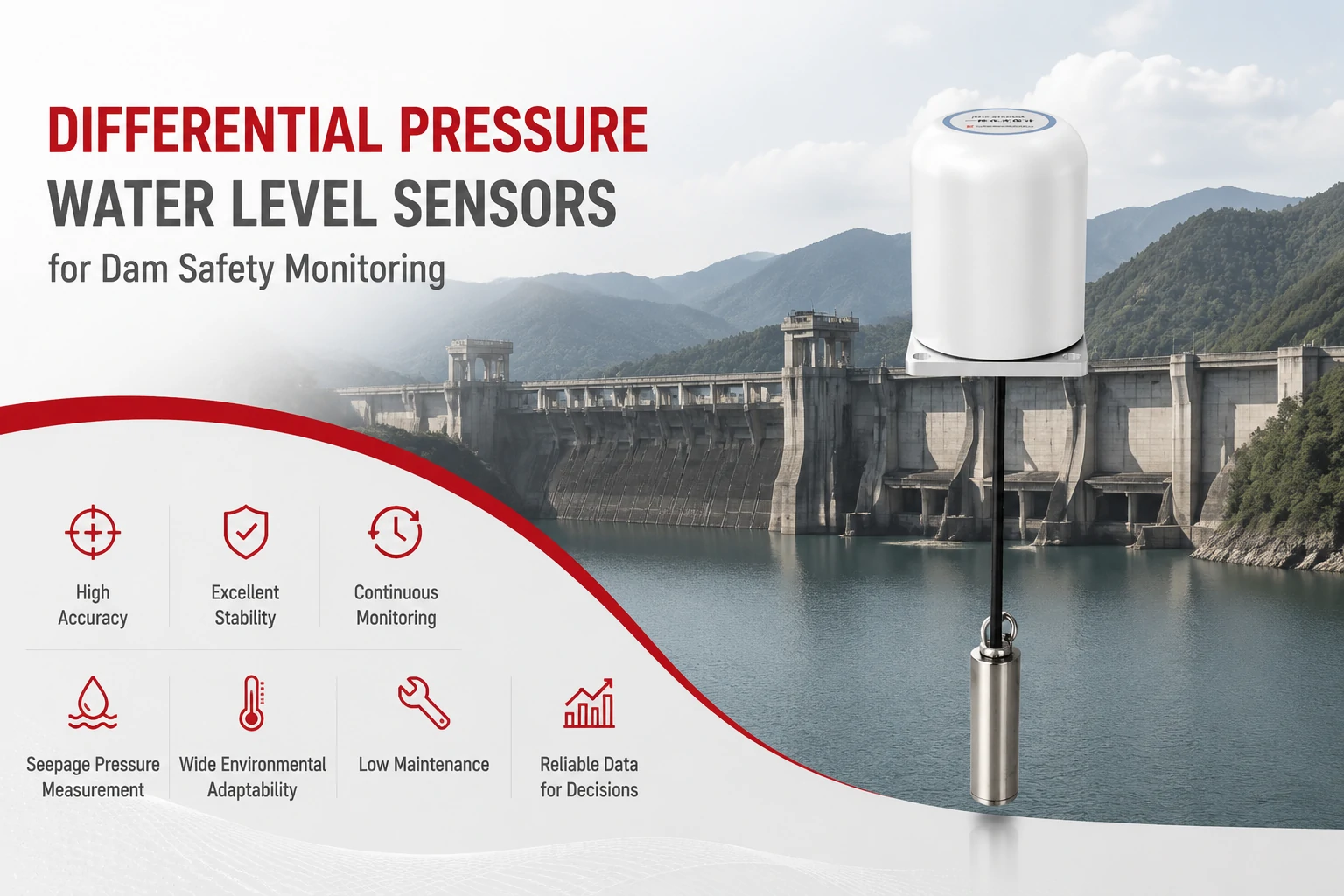
Key Takeaways The strongest fit is usually a confined, submerged, or s...
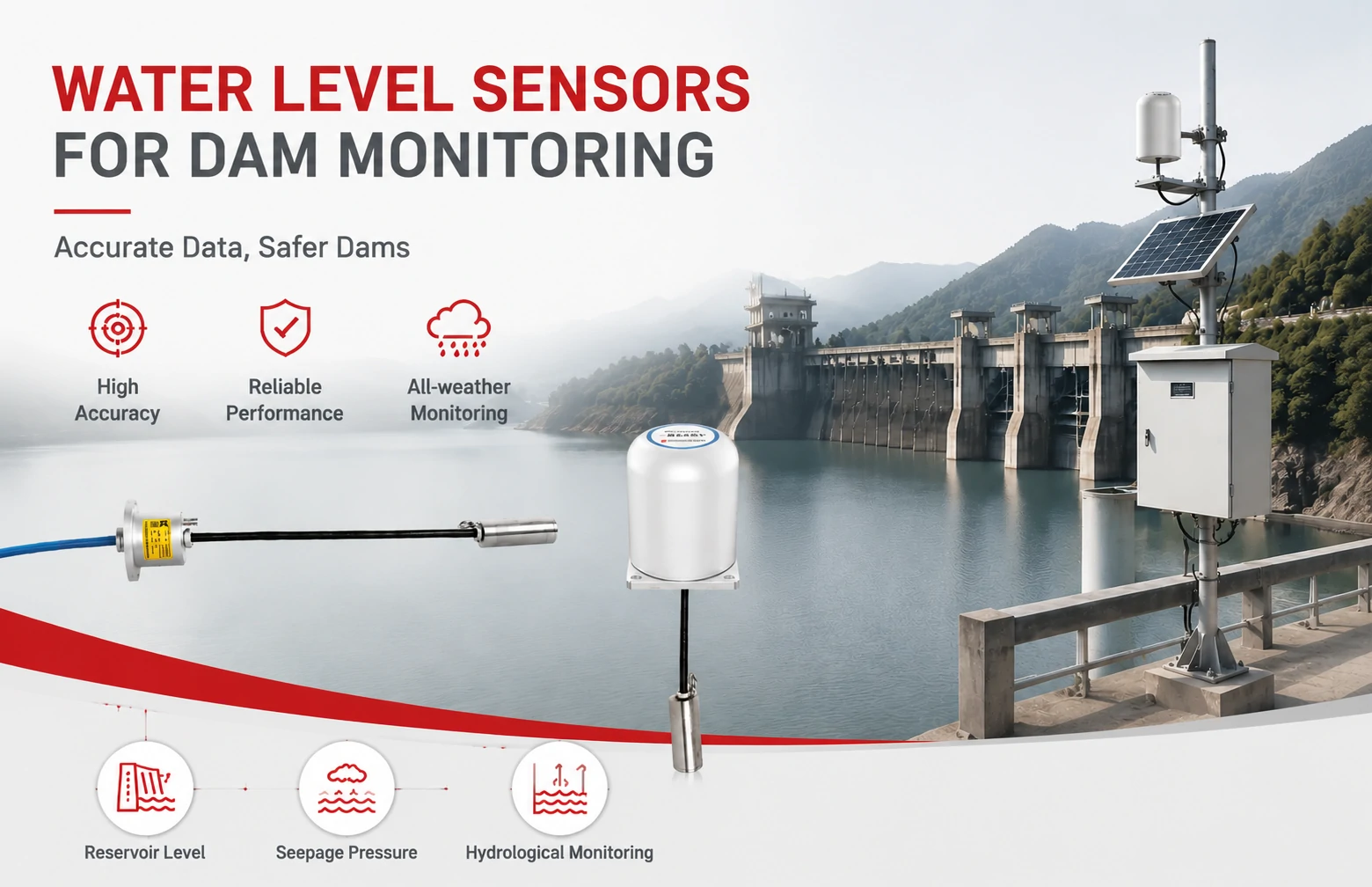
Kingmach Water Level Sensors for Dam Monitoring: A Buyer's Guide to Differential Pre...
Products
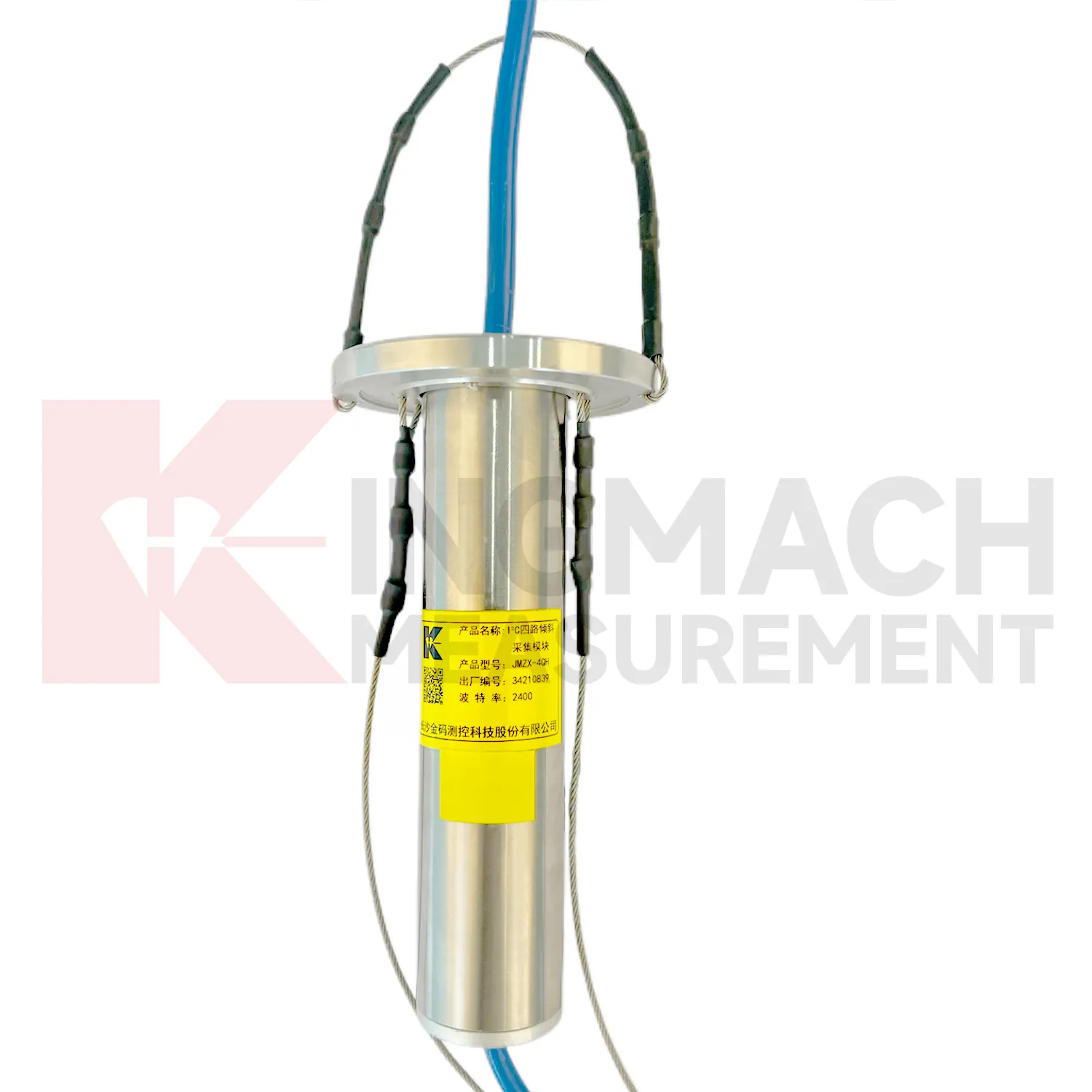
I²C 4-Channel Inclination Acquisition Module JMZX-4QH
View Details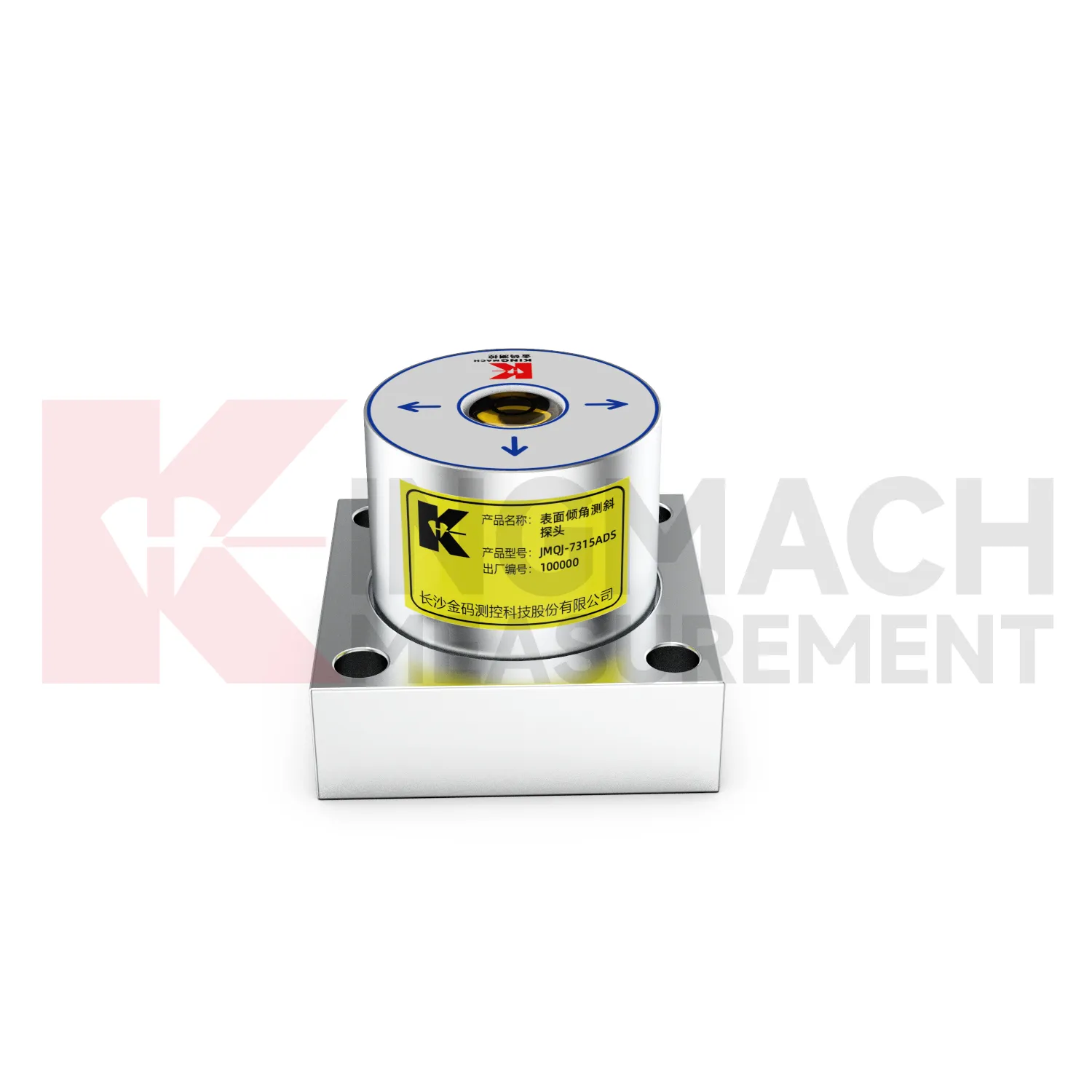
FAQ
Most modern tiltmeters, including Kingmach’s, use a MEMS accelerometer inside a sealed housing. The sensor measures the component of gravity along its sensitive axis. When the instrument tilts, the output changes proportionally to the sine of the angle. The onboard electronics convert this into an angular reading, typically in degrees, with temperature compensation to maintain accuracy across the working range.
A uniaxial tiltmeter measures tilt in one plane – think of a fenceline leaning sideways. A biaxial unit captures movement in two orthogonal directions simultaneously, which is useful for monitoring the compound tilt of a bridge pier or a retaining wall corner. Kingmach provides both types. If you expect movement mainly in one direction, a uniaxial model saves cost; if the structure can shift unpredictably, biaxial data gives a complete picture.
Yes. Our standard tiltmeters are rated IP67, meaning they are dust-tight and can handle temporary immersion in water. The aluminum or stainless steel housings resist corrosion, and internal potting protects the electronics from condensation. For extreme conditions like heavy lightning or sub-zero temperatures, we offer optional surge protectors and extended temperature calibrations.
Integration depends on the output signal you choose. Models with 4-20mA output connect directly to most PLCs or data loggers. RS485 digital outputs (Modbus RTU protocol) allow multiple sensors to share a single cable and are easy to interface with portable readouts or cloud-connected gateways. For large, remote sites, LoRa wireless versions send data over kilometers without cellular infrastructure, reducing cabling costs.
Manual surveys happen every week or month, so you might miss a rapid movement event triggered by heavy rain or excavation nearby. Continuous tiltmeter measures catch those surges in real time and can trigger alarms before visible damage appears. The consistent data stream also lets you build a long-term behavior model, distinguishing seasonal thermal effects from genuine structural drift.
Share your product type, target capacity, and application requirements. Our team can review the details and recommend a practical next step.
If you are interested in our products or want to become our partner.
Please leave your contact information, our team will contact you as soon as possible.
Mail: [email protected]
Contact Us: +8613808434127
Address: No. 188 Tongzipo West Rd, Changsha, Hunan, China