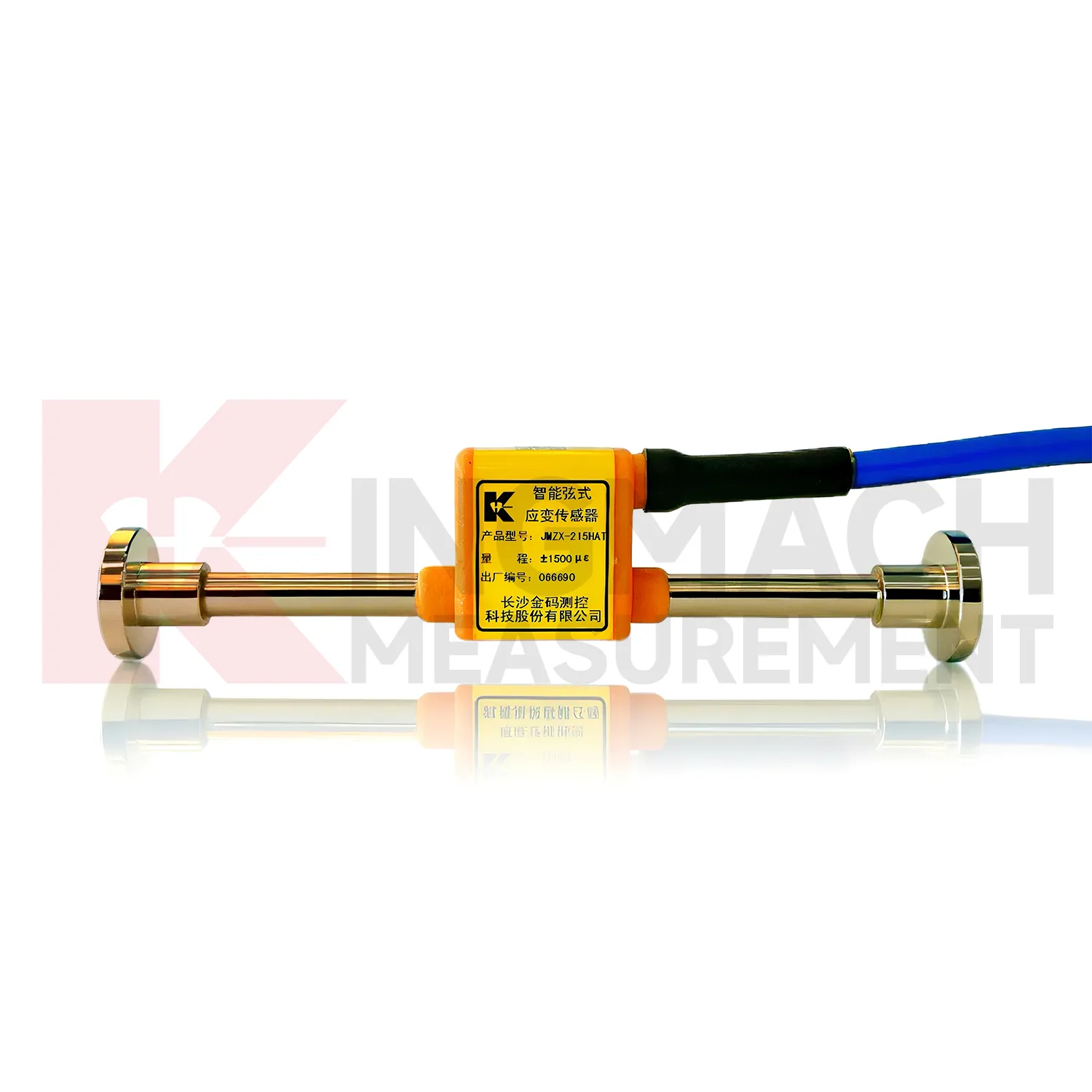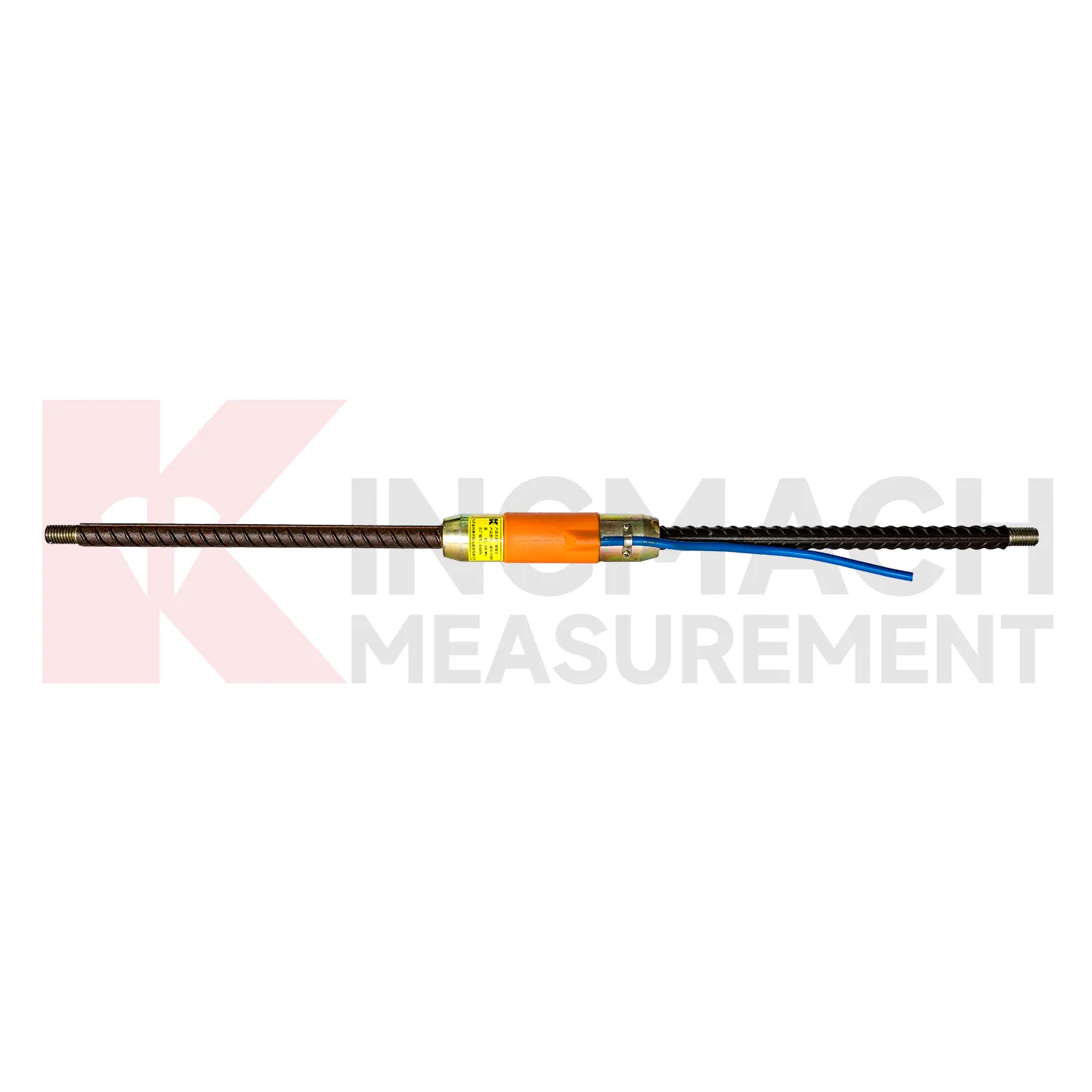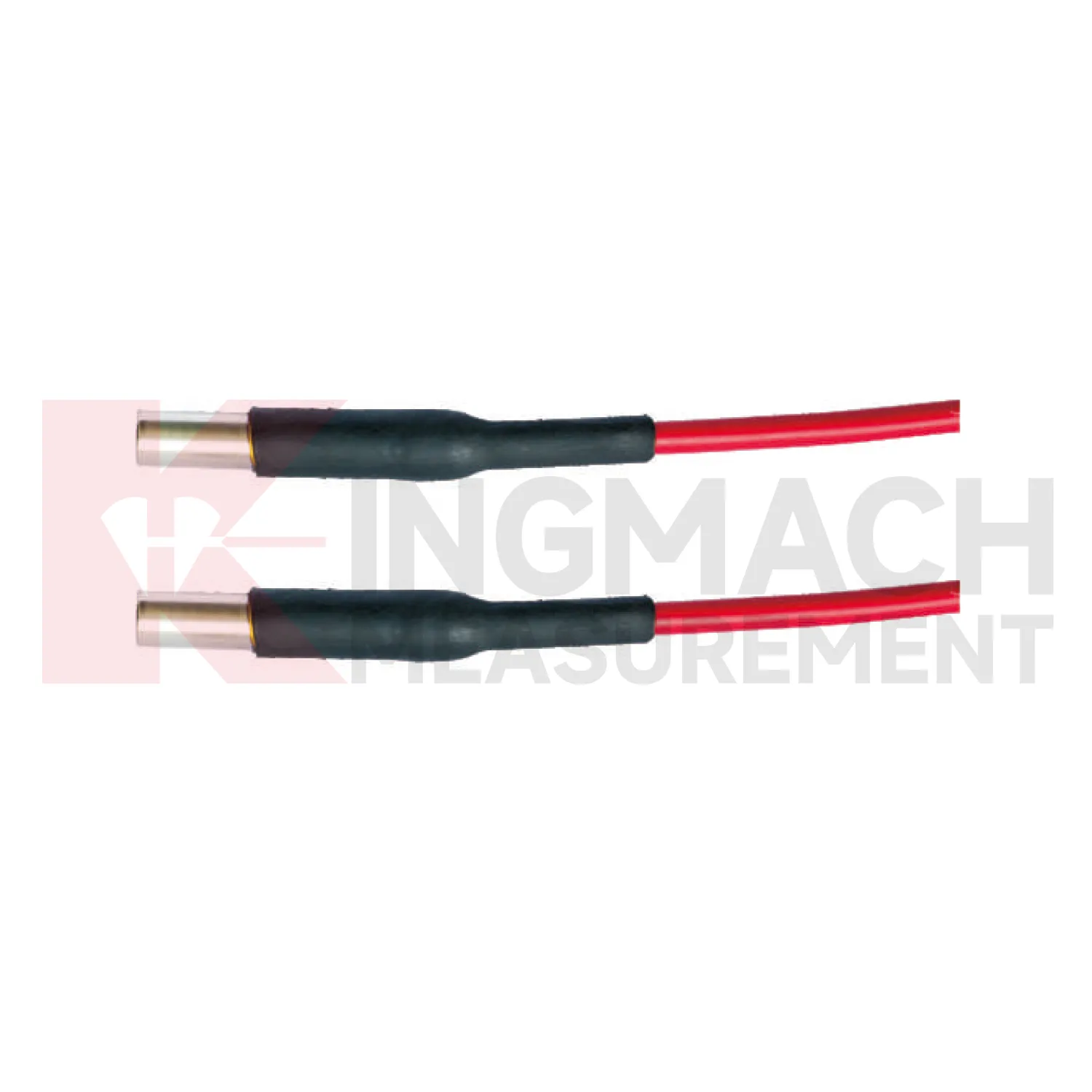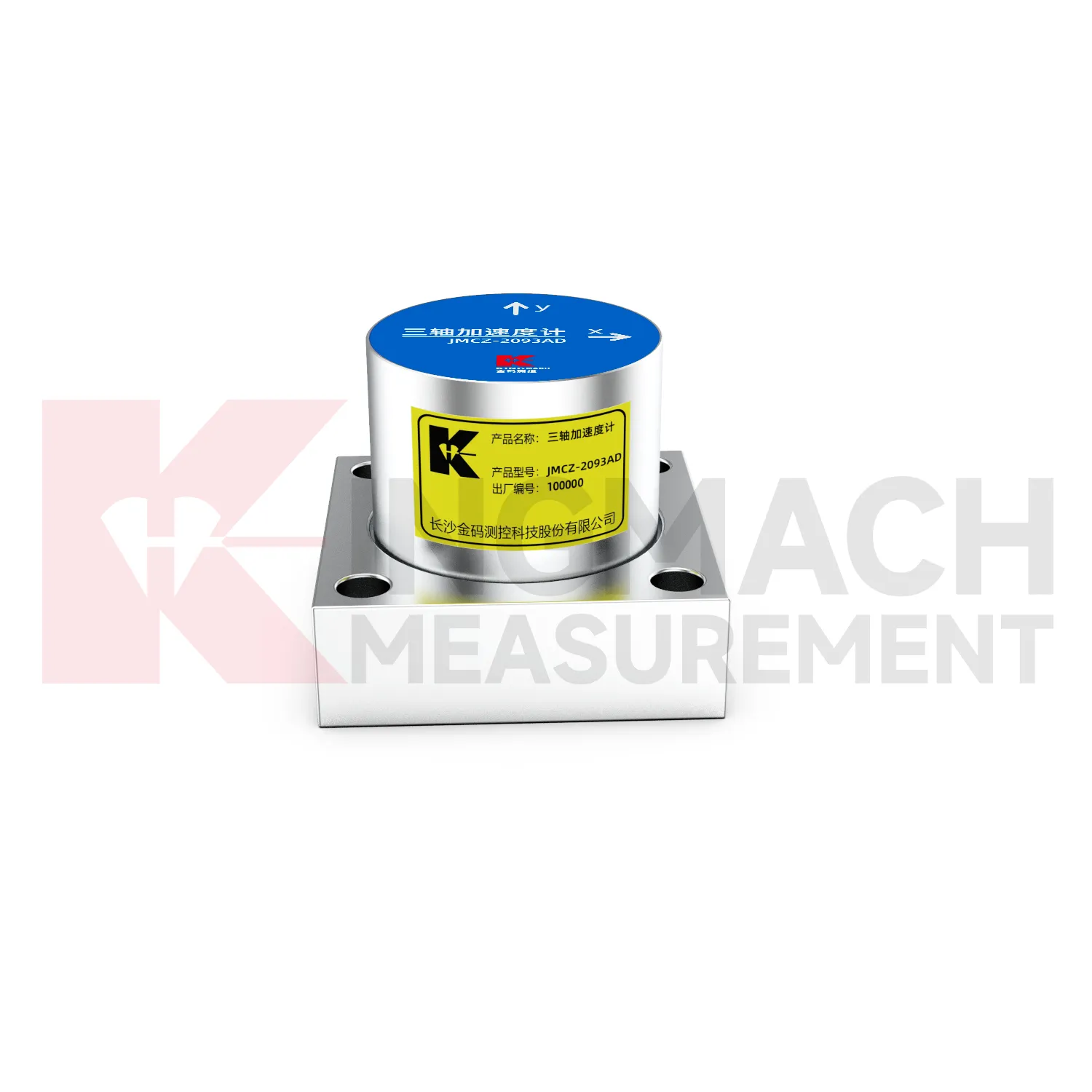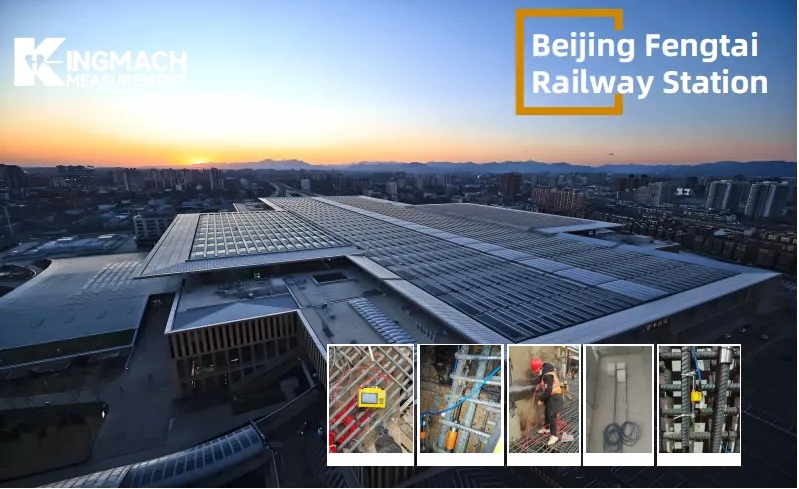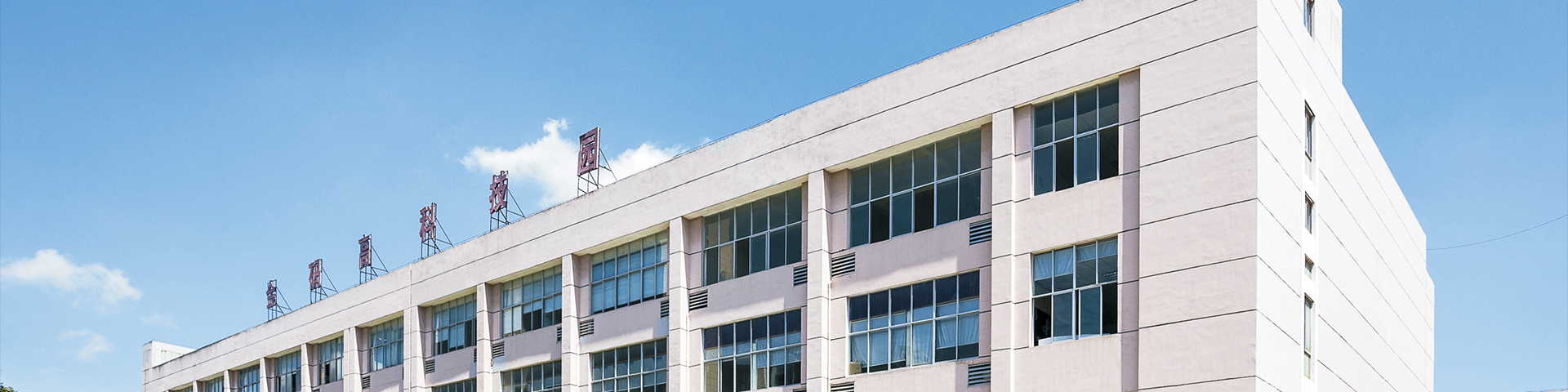
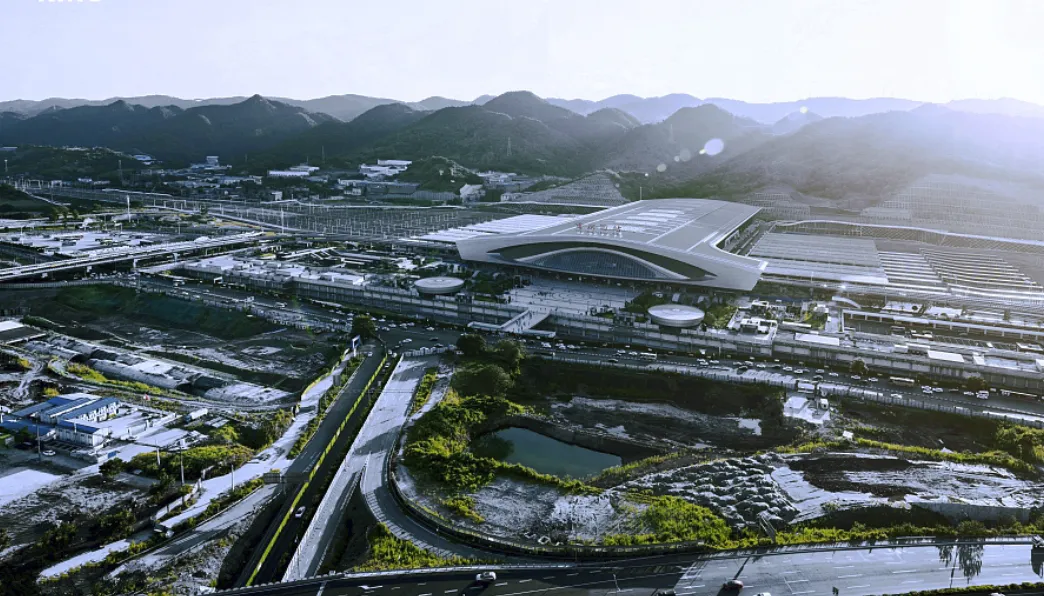
The steel structure monitoring project for station buildings aims to comprehensively ensure structural safety, operational reliability, and passenger comfort through multi-dimensional and multi-parameter collaborative sensing. Specifically, roof environment monitoring uses wind pressure and temperature sensors to capture real-time wind load distribution and thermal stress effects, preventing roof instability or joint damage under extreme weather conditions; the main roof structure utilizes hydrostatic level gauges and vibrating wire strain gauges to accurately monitor deflection deformation and strain distribution, identifying stiffness degradation and fatigue risks of main trusses; the rail-bearing layer dynamically tracks the dynamic deflection of track beams, wheel-rail impact stress, and crack propagation trends through hydrostatic level gauges, vibrating wire strain gauges, and surface-mounted crack gauges, ensuring safe train operation and track smoothness; vibration and noise monitoring in the waiting hall relies on acceleration and noise sensors to quantify floor vibration spectra and environmental noise levels, optimizing vibration and noise reduction measures to improve passenger comfort. Through multi-source data fusion and a threshold early warning mechanism, a closed-loop system of "environmental load - structural response - operation and maintenance decision-making" is established to realize preventive maintenance and intelligent management and control throughout the structural life cycle, ultimately achieving the comprehensive goals of safe, durable, and humanized operation.
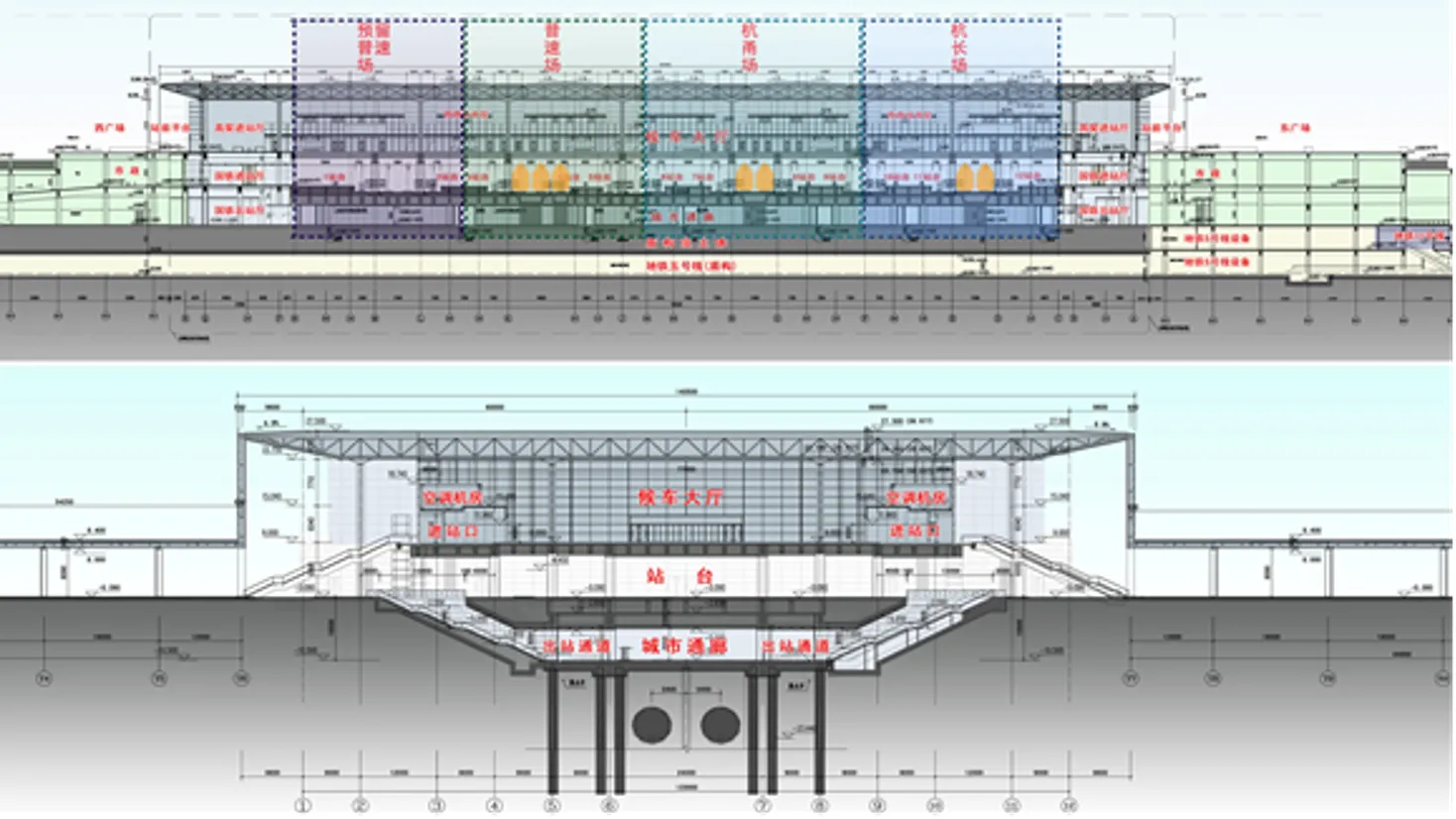
1、It provides monitoring of parameters such as structural stress, displacement, and vibration during the operation of station buildings, enabling the grasp of the working status of high-speed railway station buildings and the key mechanical performance parameters of the structure during the construction process.
2、It promptly evaluates and predicts the structural response under conditions such as long-term train operation, monitors changes in structural performance status before and after abnormal events, assesses damage or degradation throughout the structural life cycle, and issues early warnings for abnormal states that endanger structural safety and normal use, ensuring the safe operation of the structure.
3、It obtains the stress and temperature conditions of main section steel components at key parts of the steel structure of the station building project, monitors the status of completed projects during the operation phase, collects control parameters, and compares theoretical calculations with measured results, thereby controlling the entire station building structure to remain in a safe state when bearing operational environmental loads. During the operation phase, the structural stress remains in line with the ideal design state even after long-term load action, thus ensuring the quality and safety of the structure.
4、At the initial stage of railway operation, the track surface smoothness is excellent and the wheel-rail force level is low. As the operation time increases, various track defects gradually appear and accumulate, and the wheel-rail dynamic force intensifies. This is also the reason why vehicle-induced vibration and noise problems become prominent 1-2 years after operation. By monitoring the stress and strain conditions of key parts of the rail-bearing layer during the operation phase, it is verified whether the structural stress meets the design requirements after railway operation, thereby ensuring the quality and safety of the station building structure.
5、 By monitoring wind pressure data in real time, the stress status of the roof under different weather conditions can be understood, thereby evaluating its wind resistance and stability. This is crucial for preventing structural damage or potential safety hazards caused by strong winds. At the same time, wind pressure monitoring data also helps optimize the design of high-speed railway stations, improve their wind resistance performance, and provide a safer and more comfortable waiting environment for passengers. In addition, these data can also provide a scientific basis for the maintenance and management of high-speed railway stations, ensuring their normal operation under various weather conditions.
Construction monitoring


If you are interested in our products or want to become our partner.
Please leave your contact information, our team will contact you as soon as possible.
Mail: [email protected]
Contact Us: +8613808434127
Address: No. 188 Tongzipo West Rd, Changsha, Hunan, China

 EN
EN
 ar
ar bg
bg hr
hr cs
cs da
da nl
nl fi
fi fr
fr de
de el
el hi
hi it
it ko
ko no
no pl
pl pt
pt ro
ro ru
ru es
es sv
sv tl
tl iw
iw id
id lv
lv lt
lt sr
sr sk
sk sl
sl uk
uk vi
vi et
et hu
hu th
th tr
tr fa
fa ms
ms hy
hy ka
ka ur
ur bn
bn mn
mn ta
ta kk
kk uz
uz ku
ku