
 EN
EN
 ar
ar bg
bg hr
hr cs
cs da
da nl
nl fi
fi fr
fr de
de el
el hi
hi it
it ko
ko no
no pl
pl pt
pt ro
ro ru
ru es
es sv
sv tl
tl iw
iw id
id lv
lv lt
lt sr
sr sk
sk sl
sl uk
uk vi
vi et
et hu
hu th
th tr
tr fa
fa ms
ms hy
hy ka
ka ur
ur bn
bn mn
mn ta
ta kk
kk uz
uz ku
ku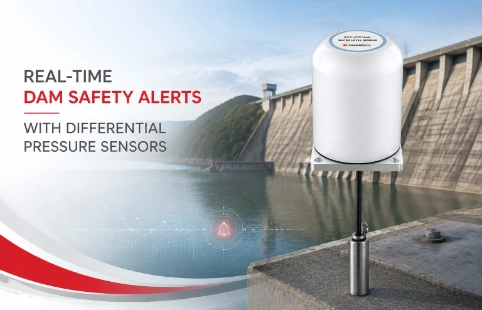
Real-Time Dam Safety Alerts with Differential Pressure Water Level Sensors
Key Takeaways An alert chain needs more than a sensor: define field in...

Data Acquisition Systems for Geotechnical Monitoring
When a monitoring project calls for collecting readings from dozens of sensors spread across a site, the data acquisition system (DAQ) becomes the central piece. It does the work that a technician with a notebook simply cannot keep up with—scanning vibrating wire piezometers, inclinometers, load cells, and crack meters at the same time, on schedule, without missing a beat. Kingmach builds DAQ units for exactly this kind of fieldwork. As a manufacturer focused on geotechnical instruments, we design systems that talk to our own sensors as well as many third-party devices. That matters because real sites are rarely uniform; you often inherit a mix of sensor types installed years ago. Our approach is to keep the hardware modular and the communication protocols open, so you can add channels or swap sensor types without replacing the entire cabinet. This introduction walks through how we handle data acquisition in practice, from setting up a temporary tunnel monitoring job to a permanent dam safety installation.
Technical Detail
Kingmach data acquisition systems are built to sit between field sensors and the engineer's dashboard, and that position shapes everything about the design. The front end supports multiple excitation and readout methods: vibrating wire, 4-20 mA loop, half-bridge and full-bridge strain, thermistor, and linear potentiometer. This means one logger can handle a mixed array of piezometers, joint meters, and temperature sensors without separate signal conditioners. Channel count is configurable, typically starting from 8 and scaling up to 64 or more with expansion modules. For a medium-scale slope stability project, that might translate to one main unit plus two satellite nodes connected over RS-485. Sampling intervals can be set independently per channel group; a rainfall gauge might log every minute while a thermistor chain records every hour. Data is stored locally in non-volatile memory and pushed to a remote server via 4G, Ethernet, or radio. The protocol stack is standard Modbus TCP/RTU, so integration with SCADA or third-party data management platforms usually takes a few hours rather than days. Power consumption is designed around solar-battery field operation, with deep sleep modes that keep a 30W panel sufficient for all but the most channel-dense setups. Enclosures are IP65 as a baseline, with optional IP67 for temporary works in wet conditions. Because no two sites are identical, we handle custom wiring looms and terminal assignments at the factory. Configuration is done through a desktop utility that scans the bus, identifies connected modules, and lets the operator assign sensor types and calibration factors without writing scripts. The same utility generates a channel map importable into popular analysis software. Calibration data and timestamped readings are stored in clear-text formats, so you are never locked into proprietary viewers. Globally, we deliver through regional distributors who keep spare parts and provide on-site start-up assistance. The system components carry a two-year warranty, and technical support is available by email and phone with engineer-level contacts rather than call center staff. For organizations managing multiple instrumented sites, we offer a centralized data viewing portal that can be branded with the client's logo and user roles. In short, the DAQ line aims to remove the usual friction points: closed protocols, rigid channel assignments, and power budgets that don't align with remote site realities.
News
Key Takeaways An alert chain needs more than a sensor: define field in...
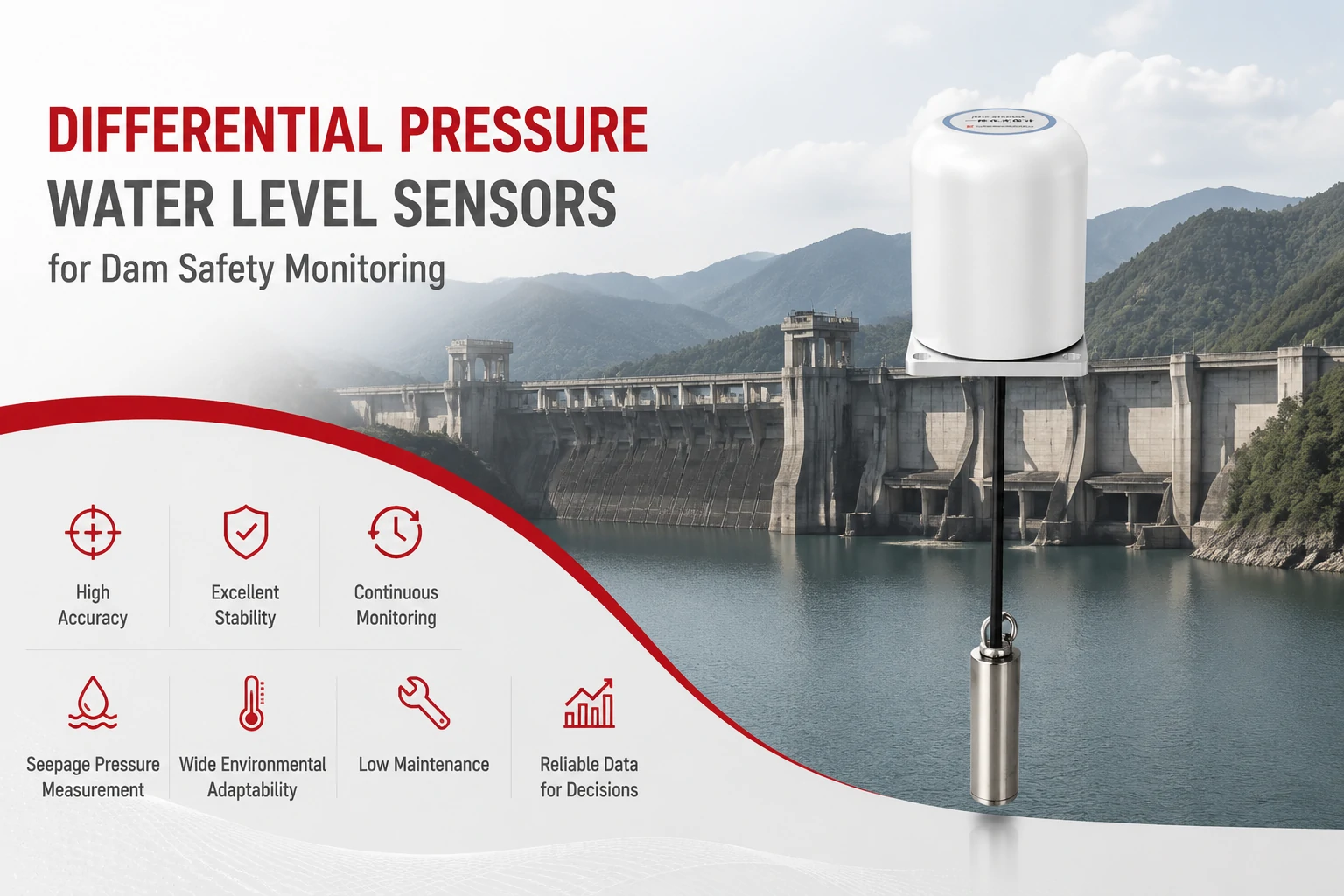
Key Takeaways The strongest fit is usually a confined, submerged, or s...
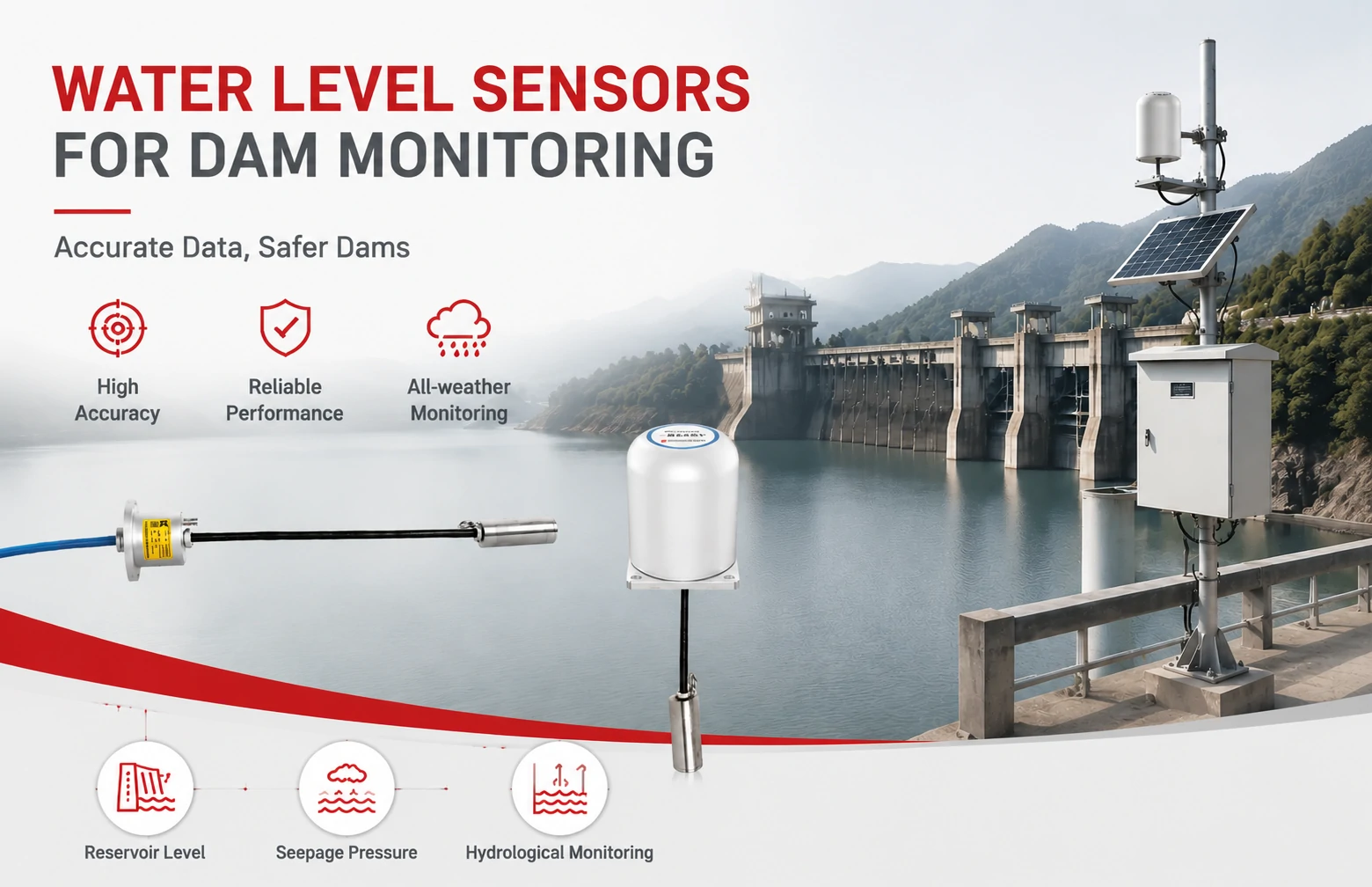
Kingmach Water Level Sensors for Dam Monitoring: A Buyer's Guide to Differential Pre...
Products
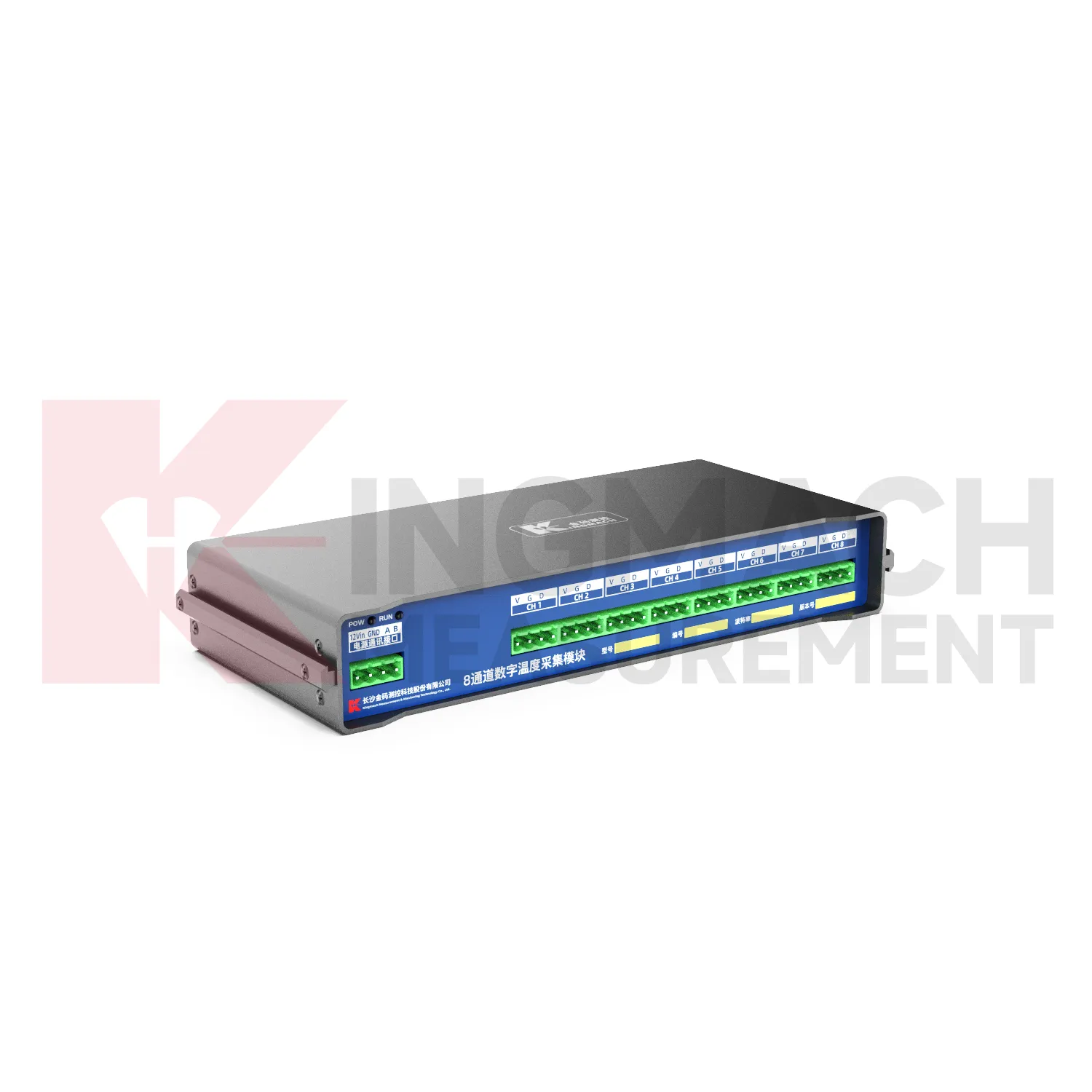
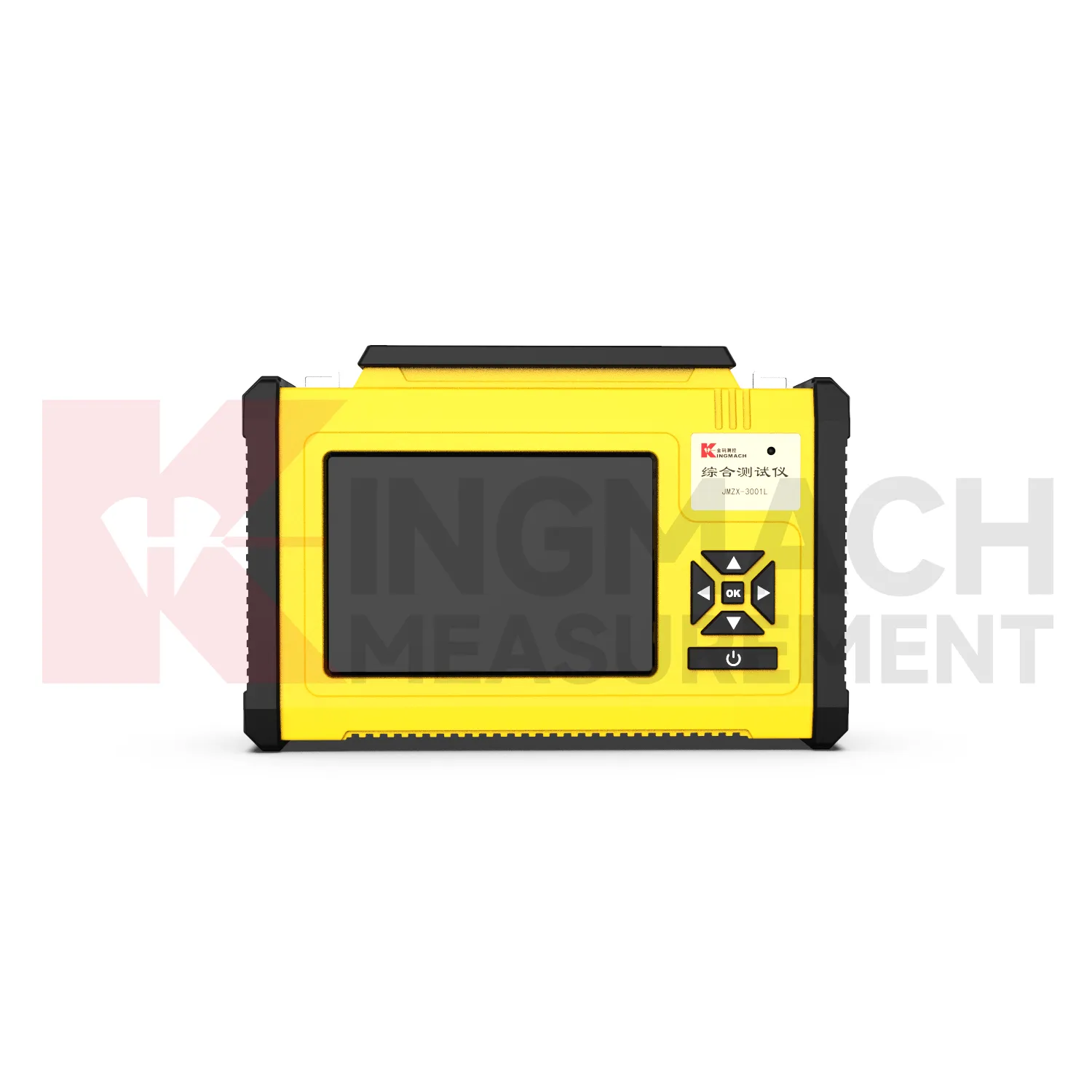
8-Channel Digital Temperature Acquisition ModuleJMWT-8DTH
View Details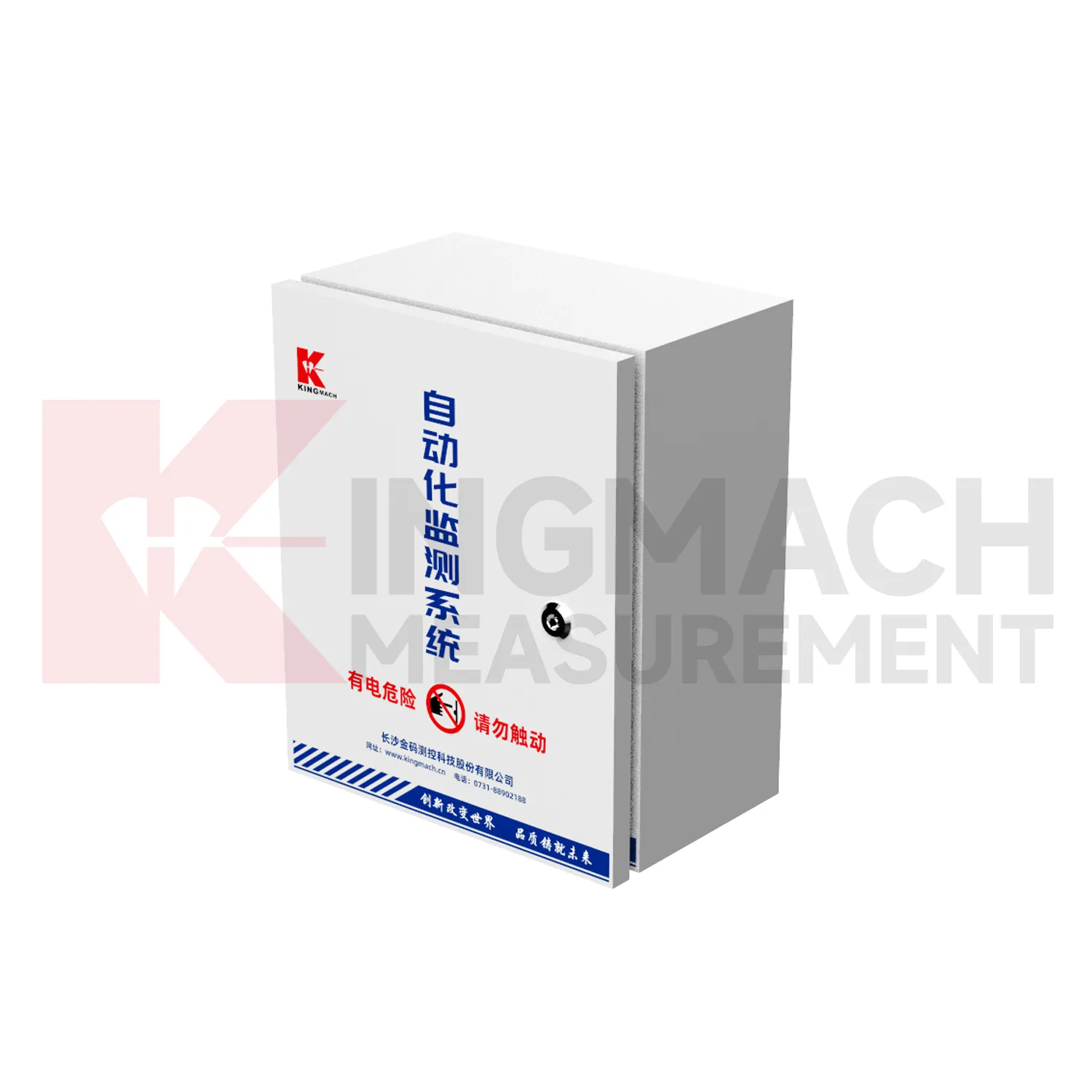
FAQ
The base logger typically starts at 8 channels and can be expanded up to 64 or more using add-on modules. Inputs cover vibrating wire, 4-20 mA, voltage, potentiometer, and thermistor. This means you can mix piezometers, crack meters, load cells, and temperature sensors on the same box without extra signal conditioning hardware.
Yes. The system uses open protocols and standard wiring. If you have existing sensors with a known calibration curve and output type, we can integrate them. We often work on sites where older instruments from different brands are already in place, and the DAQ is configured to read them alongside new sensors.
The included desktop utility handles configuration and manual data downloads. Data is stored in plain CSV files, so you can import it into Excel, MATLAB, or any analysis tool. For real-time remote access, there is an optional web platform that displays readings and triggers alarms on set thresholds.
The hardware is designed for solar and battery operation. It draws very little current in deep sleep between scheduled measurements, so a small solar panel and a sealed lead-acid battery are usually enough. We calculate the power budget for your specific channel count and sampling rate during the quoting stage, so you know the panel and battery sizes to expect.
Custom wiring looms and labeled terminal assignments are part of the factory order process. If your project requires a particular military-style connector or a pre-terminated harness for pre-installed borehole sensors, we can build that into the enclosure before shipping.
Share your product type, target capacity, and application requirements. Our team can review the details and recommend a practical next step.
If you are interested in our products or want to become our partner.
Please leave your contact information, our team will contact you as soon as possible.
Mail: [email protected]
Contact Us: +8613808434127
Address: No. 188 Tongzipo West Rd, Changsha, Hunan, China