
 EN
EN
 ar
ar bg
bg hr
hr cs
cs da
da nl
nl fi
fi fr
fr de
de el
el hi
hi it
it ko
ko no
no pl
pl pt
pt ro
ro ru
ru es
es sv
sv tl
tl iw
iw id
id lv
lv lt
lt sr
sr sk
sk sl
sl uk
uk vi
vi et
et hu
hu th
th tr
tr fa
fa ms
ms hy
hy ka
ka ur
ur bn
bn mn
mn ta
ta kk
kk uz
uz ku
ku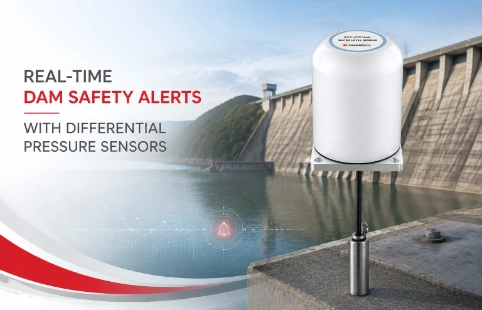
Real-Time Dam Safety Alerts with Differential Pressure Water Level Sensors
Key Takeaways An alert chain needs more than a sensor: define field in...

Wireless Accelerometer for Real-Time Vibration Monitoring
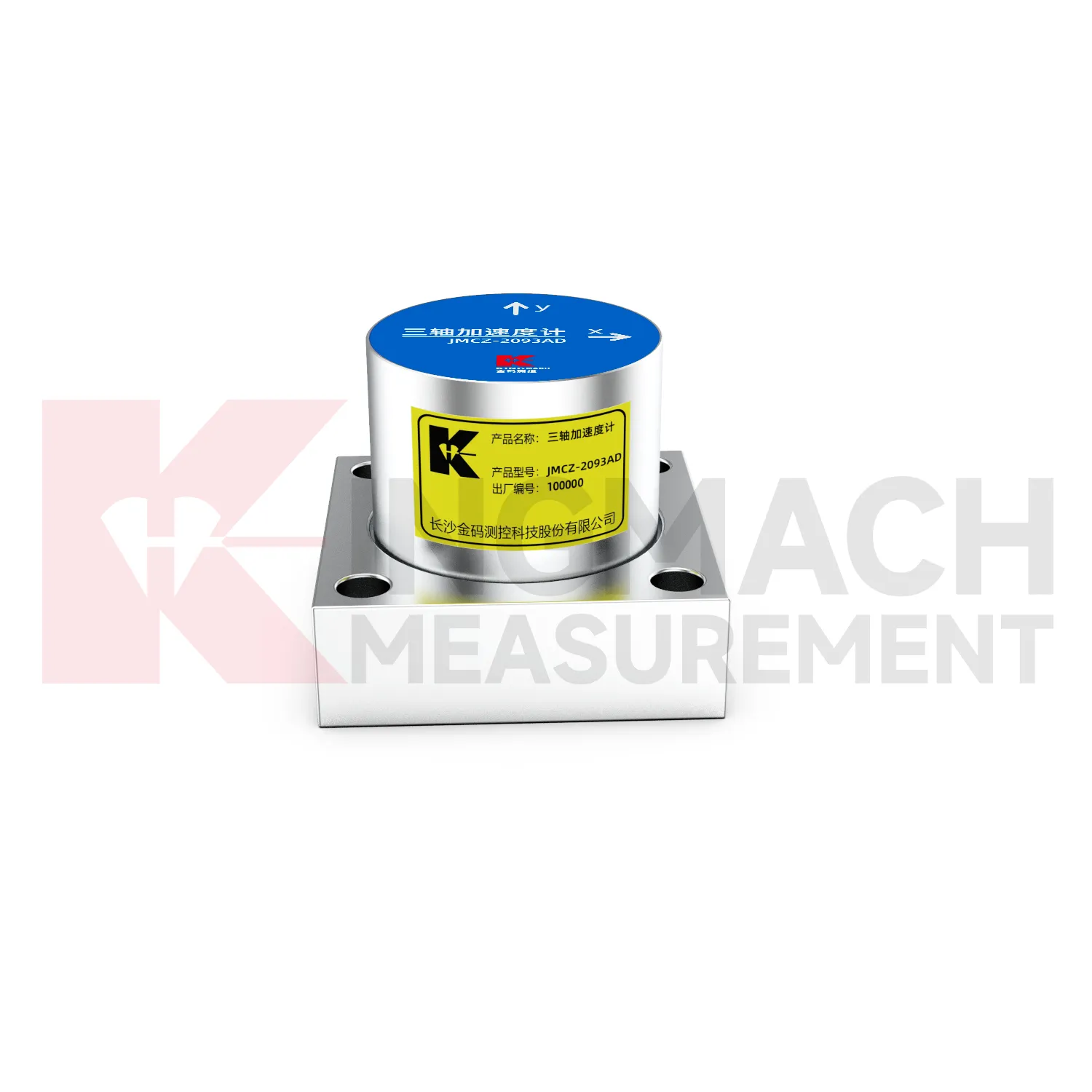
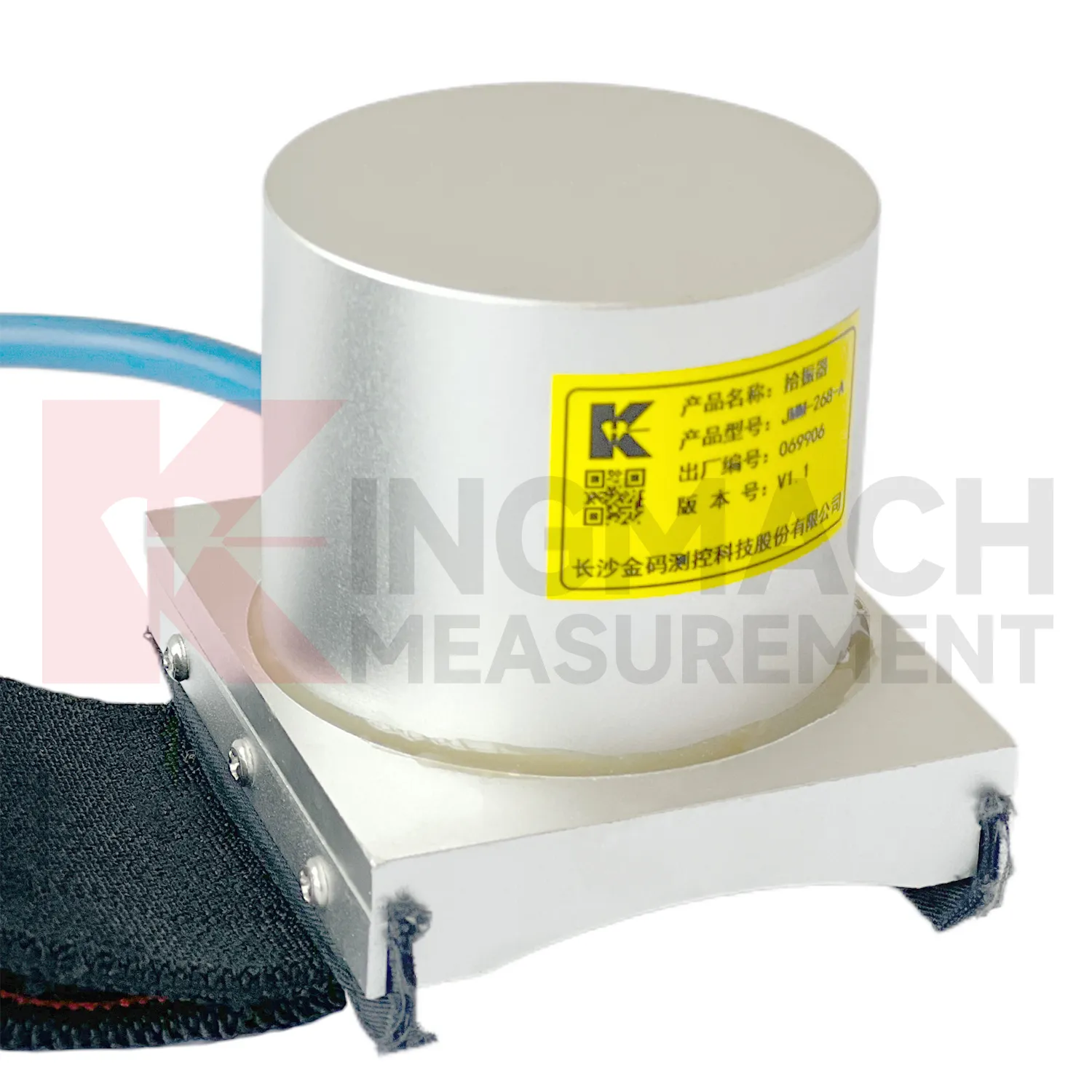
When deploying a monitoring system in the field, the biggest headache is not the sensor itself, but the pile of cables. Wiring is time-consuming, susceptible to environmental interference, and subsequent maintenance is even more troublesome. That's why more and more engineers are turning to wireless accelerometers. Kingmach's wireless accelerometer is specially designed for structural vibration and geological monitoring, eliminating the need for cable restraints and making installation much more flexible. You can install it on bridges, tunnels, mining machinery and even wind turbines to obtain acceleration data in real time. Since the product line covers a variety of measurement ranges and output methods, special projects can also be customized as needed. A global distribution network means technical support can keep up no matter where the project is. We have seen many customers use it to monitor slope stability in remote areas. The data return is stable and the operation is relatively worry-free. For long-term monitoring projects, the low-power design can ensure battery life of several months or even longer, and can be flexibly adjusted according to the collection frequency. In practice, if you are still having trouble with wiring, you may want to consider another approach.
Technical Detail
Wireless accelerometers are increasingly common in structural health monitoring and machinery fault diagnosis. Compared with traditional wired solutions, it reduces construction complexity and is especially suitable for large structures or wild environments where wiring is difficult. As a manufacturer specializing in geological monitoring instruments, Kingmach provides a wealth of wireless accelerometer options for such needs. Our wireless accelerometer has a built-in high-sensitivity MEMS sensing unit that can capture weak vibration signals. The signal is transmitted wirelessly to the gateway or cloud, eliminating the need for long-distance wiring. The products cover a variety of measurement ranges from ±2g to ±50g, and the frequency response range is from DC to hundreds of Hz, which can meet different needs from building micro-vibration to industrial shock monitoring. For outdoor projects, the equipment has IP67 protection level and can work stably in the temperature range of -20°C to 60°C. In terms of power supply, it has a built-in replaceable lithium battery, and with adjustable sampling intervals, the battery life can exceed one year under regular monitoring. It is worth mentioning that Kingmach not only provides standard models, but also supports OEM/ODM customization. If you require a specific communication protocol (such as LoRa, Zigbee or 4G), or other special features, we can adapt the hardware and firmware to project requirements. The global technical support team will assist with deployment and post-maintenance to ensure the system runs smoothly. In past cases, our wireless accelerometers have been used in scenarios such as bridge cable force monitoring, tunnel convergence deformation monitoring, and rotary excavator vibration analysis. Through real-time data, engineers can quickly grasp the status of the structure and provide early warning of potential risks.
News
Key Takeaways An alert chain needs more than a sensor: define field in...
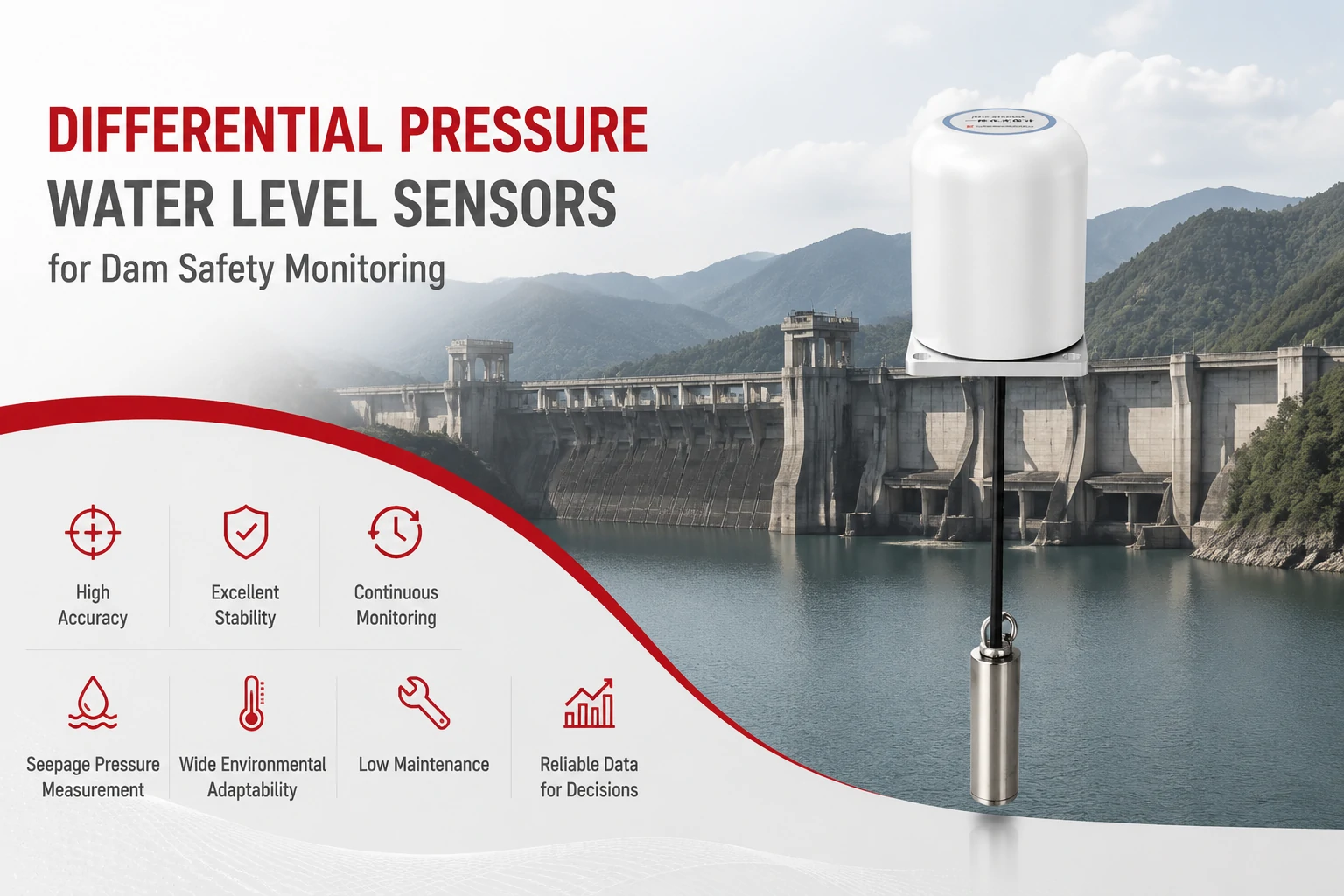
Key Takeaways The strongest fit is usually a confined, submerged, or s...
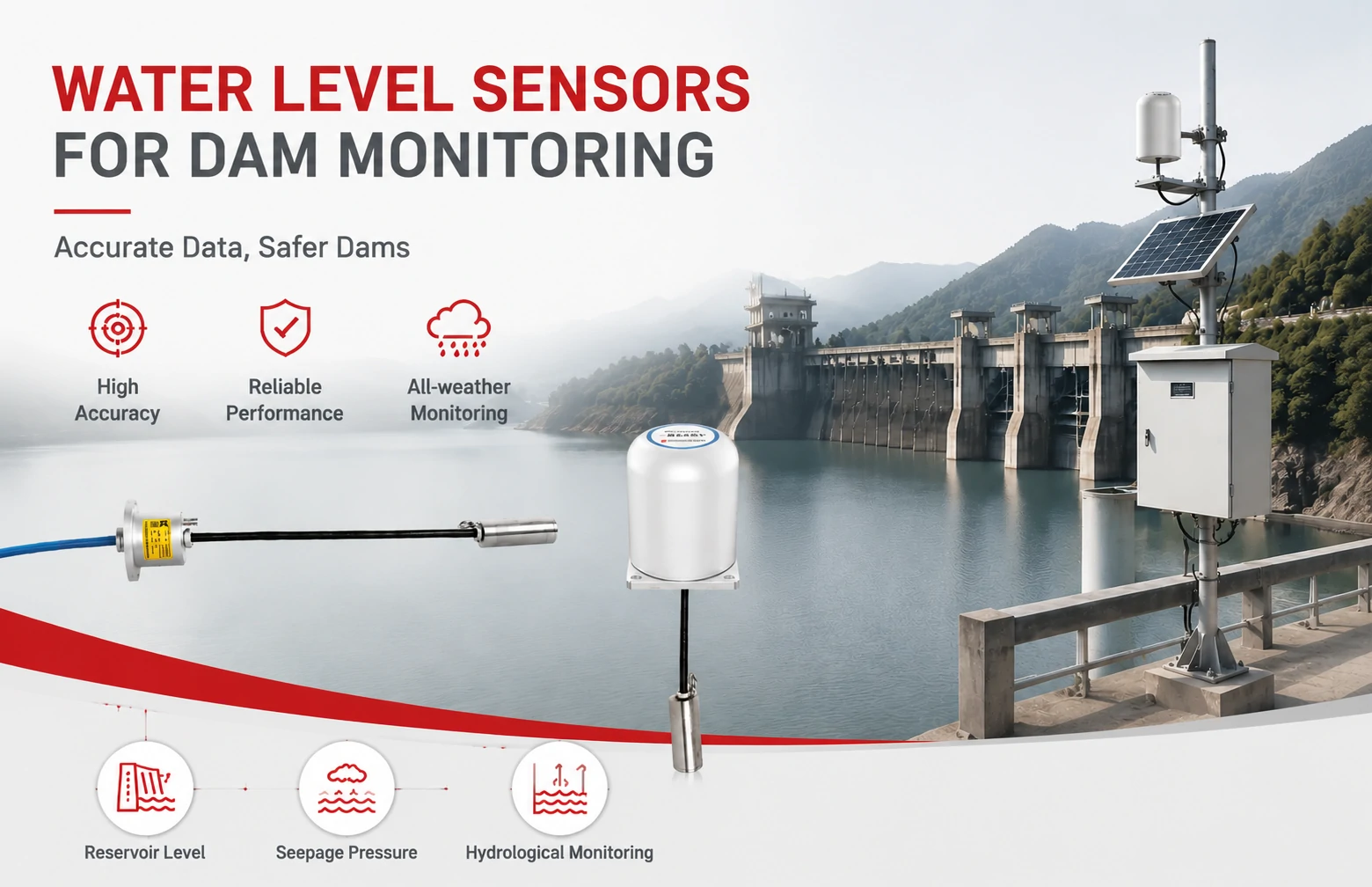
Kingmach Water Level Sensors for Dam Monitoring: A Buyer's Guide to Differential Pre...
Products
FAQ
The transmission distance is greatly affected by environmental obstruction and antenna type. In open areas, the typical distance can reach several hundred meters; if you need longer transmission, you can choose a version that supports 4G or LoRa, or extend the coverage through a repeater.
This depends on the sampling frequency and transmission interval. Taking collection and transmission every hour as an example, the built-in battery can usually work for more than one year. If high-frequency continuous collection is used, the battery life will be shortened accordingly. The device supports external power supply and is suitable for long-term online monitoring.
Common installation methods include studs, adhesive or magnetic bases. Choose the appropriate method according to the installation surface conditions. We usually recommend processing threaded holes on the structure under test to ensure the accurate transmission of high-frequency vibration.
Each sensor is calibrated before leaving the factory, and the frequency response and amplitude linearity are in line with industry standards. If necessary, a traceable calibration report can be provided.
Yes. We support a variety of communication protocols and can also customize the data format according to your platform interface. We usually connect to the host computer or cloud platform through Modbus TCP or MQTT protocol.
Share your product type, target capacity, and application requirements. Our team can review the details and recommend a practical next step.
If you are interested in our products or want to become our partner.
Please leave your contact information, our team will contact you as soon as possible.
Mail: [email protected]
Contact Us: +8613808434127
Address: No. 188 Tongzipo West Rd, Changsha, Hunan, China