
 EN
EN
 ar
ar bg
bg hr
hr cs
cs da
da nl
nl fi
fi fr
fr de
de el
el hi
hi it
it ko
ko no
no pl
pl pt
pt ro
ro ru
ru es
es sv
sv tl
tl iw
iw id
id lv
lv lt
lt sr
sr sk
sk sl
sl uk
uk vi
vi et
et hu
hu th
th tr
tr fa
fa ms
ms hy
hy ka
ka ur
ur bn
bn mn
mn ta
ta kk
kk uz
uz ku
ku
Kingmach Displacement Meter Specifications Guide
Key takeaways
- Start with the movement type and installation geometry, then choose range, resolution, and accuracy. A high specification cannot compensate for the wrong measurement structure.
- Check the complete signal chain: sensor, cable, power, data logger, enclosure, communication, software, and alarm logic. Compatibility failures often appear after installation.
- Use environmental exposure and access conditions to screen protection, temperature, mounting, maintenance, and remote communication requirements before requesting a quotation.
A displacement meter specification sheet can look simple until the instrument is installed on a bridge joint, tunnel lining, dam, slope, foundation pit, formwork system, or remote GNSS point. The selected instrument must measure the expected movement while its signal survives weather, vibration, long cable runs, and limited site access.
This displacement meter specifications guide explains how engineers should compare range, resolution, accuracy, repeatability, sensing principle, protection rating, temperature, output, power, logger compatibility, installation structure, calibration, documentation, and supplier support. It also maps those decisions to Kingmach displacement transducers for structural and geotechnical monitoring.
Start with the movement you need to measure
Define the displacement mode before comparing datasheets. A crack gauge measuring a 20 mm joint does not solve the same problem as a GNSS unit tracking slope movement, a wire rope sensor measuring long travel, or a multipoint meter reading movement at different rock layers. Range, installation method, and data interpretation all depend on the movement type.
Kingmach's displacement range covers linear displacement, crack width, expansion joint movement, large-scale surface displacement, geogrid deformation, formwork settlement, surrounding rock displacement, and bedrock displacement. Select the measurement structure from the application first, then refine the numerical specification.
- For crack or joint width, check short range, resolution, mounting base, measuring rod, and long-term stability.
- For bridge, dam, railway, or building relative displacement, check accuracy, temperature influence, waterproofing, and acquisition compatibility.
- For slope or landslide monitoring, check range, communication, power, weather resistance, and unattended operation.
- For rock layers or bedrock deformation, check the anchor structure, drilling and grouting method, measuring points, and installation depth.
- For formwork and construction monitoring, check protection, response reliability, temporary mounting, and alarm integration.
Core displacement meter specifications to compare
| Specification | Why it matters | Buying guidance |
|---|---|---|
| Measuring range | Sets the maximum movement the instrument can capture | Allow enough margin for the warning event, but avoid unnecessary oversizing. |
| Resolution | Sets the smallest displayed or detected increment | Match it to the engineering threshold rather than the smallest catalog number. |
| Accuracy | Describes expected error relative to the true value | Check whether it is stated in mm, %FS, or another method. |
| Repeatability | Shows consistency across repeated measurements | Use it when trend comparison and alarm confidence matter. |
| Temperature range | Determines whether the sensor suits the installation microclimate | Compare operating limits and any compensation or low-drift design. |
| Protection rating | Indicates resistance to dust and water ingress | Match IP protection to exposure, cable entry, and installation orientation. |
| Signal output | Controls cable distance, interference risk, and logger choice | Confirm RS485, frequency, 4G, or another required interface. |
| Power supply | Affects logger, battery, and solar system design | Check voltage range, current draw, power consumption, and off-grid needs. |
| Installation method | Controls how structural movement reaches the sensing element | Review brackets, rods, anchors, flanges, wire routing, and grouting. |
| Calibration and memory | Supports traceability and repeatable commissioning | Request calibration coefficients, serial identification, and stored parameters. |
Range: avoid both undersizing and unnecessary oversizing
A sensor with too little range may reach its limit during a major event. A sensor with far more range than the project needs may add cost without improving the visibility of small movements. Estimate normal, seasonal, construction-stage, and warning-level movement before choosing the range.
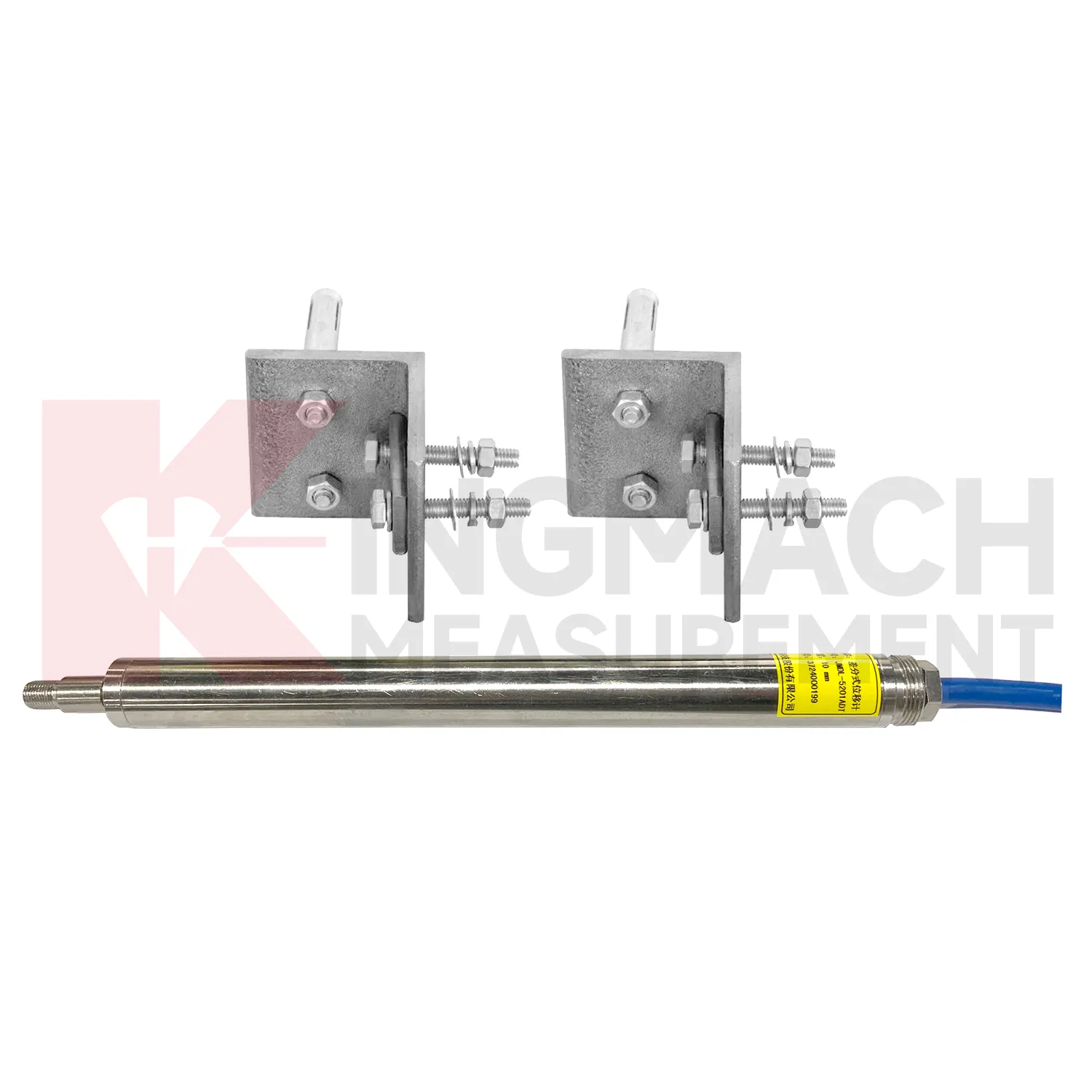
For short structural movement, the Kingmach JMDL-52XXADT Differential Displacement Meter is available in 20 mm, 50 mm, and 100 mm ranges. The JMDL-22XXAT Smart Crack Gauge includes 20 mm, 50 mm, 100 mm, and 200 mm models. For longer travel, the JMLS-22XXADT Wire Rope Displacement Sensor covers 0-500 mm, 0-1000 mm, and 0-2000 mm options.
Add margin for the movement that triggers engineering action, not an arbitrary percentage. The sensor should capture the warning event without operating so far below full scale that the selected range provides little practical value for normal trend monitoring.
Resolution and accuracy answer different questions
Resolution is the smallest displayed increment. Accuracy is the expected difference between the reported value and the true displacement. A meter can display 0.01 mm while its accuracy is expressed as a percentage of full scale, so the two values must be reviewed together.
The JMDL-52XXADT is specified at 0.01 mm resolution and +/-0.1%FS accuracy. The smart general-purpose displacement meter is specified at 0.01 mm resolution and 0.5%FS accuracy. The magnetostrictive model is specified at 0.01 mm resolution and +/-0.05%FS accuracy. Resolution affects small trend visibility; accuracy affects confidence in the absolute value.
Do not set an alarm threshold against the display increment alone. Account for accuracy, repeatability, temperature influence, installation movement, and the project's decision margin to reduce nuisance alarms and false interpretation.
Match the sensing principle to the site
The sensing principle affects drift, durability, installation, maintenance, and signal behavior. Inductive frequency-modulated meters suit many structural displacement and expansion-joint tasks because their digital architecture supports stable long-distance monitoring. Wire rope sensors handle longer travel or indirect movement paths, while GNSS supports large-scale surface movement at remote points.
The JMCW-21XXADT Magnetostrictive Displacement Meter is a complementary non-contact option within the Kingmach displacement portfolio; it is not a vibrating-wire displacement sensor. Its non-contact sensing structure is intended for applications where reduced mechanical wear and absolute linear position measurement are useful. The published specification includes IP67 protection, RS485 communication, and operation from -30 C to +80 C.
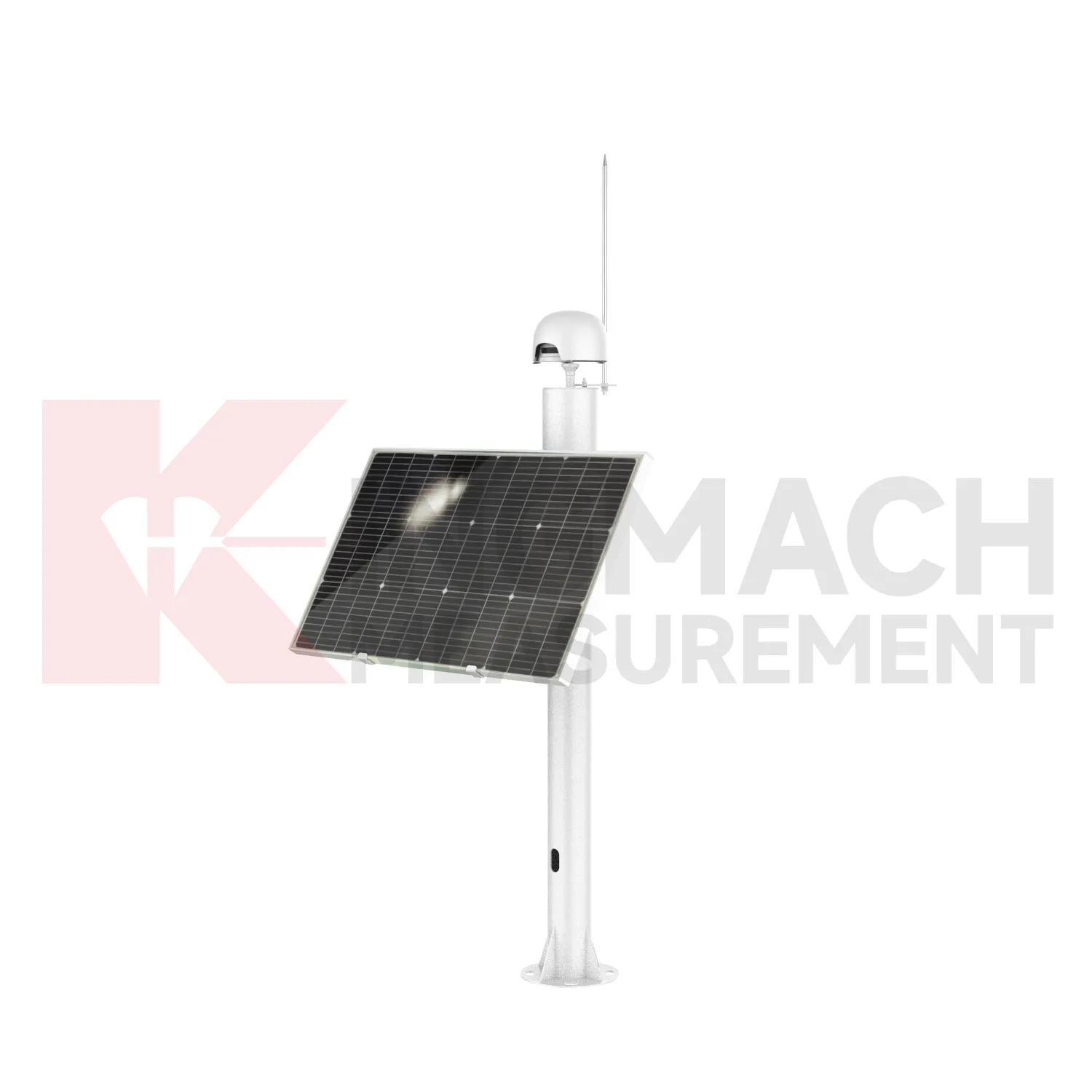
For remote surface movement, the Integrated GNSS JMBD-1050YT supports multi-constellation positioning, 4G and RS485 communication, solar plus lithium battery operation, IP67 protection, and an environmental range of -40 C to +85 C. Select GNSS when the required output is positional movement over a larger area rather than local joint displacement.
Screen temperature, water, dust, and electrical exposure
Civil monitoring sites expose sensors to rain, condensation, dust, mud, vibration, cable pulling, corrosive air, and electrical disturbance. Treat sealing and environmental limits as primary selection criteria. A suitable sensing principle can still fail if the enclosure, connector, cable entry, or mounting orientation does not match the site.
Compare the operating range with the installation microclimate rather than a nearby weather station. A dam gallery, tunnel lining, bridge deck, and exposed slope can have very different temperature and moisture conditions. Review cable protection, connector sealing, drainage, grounding, and surge protection as part of the installation design.
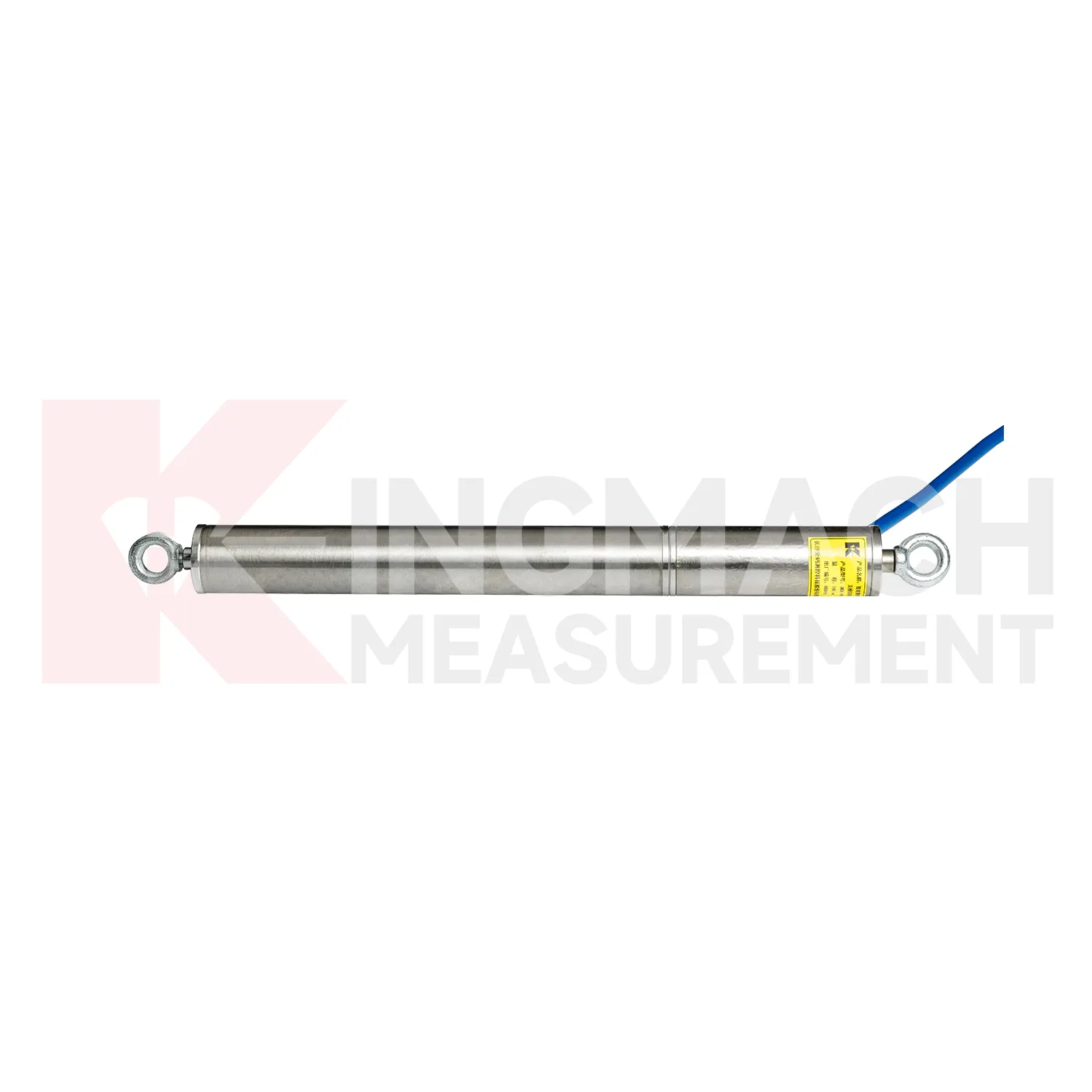
Kingmach's wire rope displacement sensor is specified at IP67 and -30 C to +70 C. The magnetostrictive meter is specified at IP67 and -30 C to +80 C. The JMDL-49XXAT Smart Formwork / Steel Wire Displacement Meter is specified at IP68, which may suit installations with greater water and dust exposure when its measuring structure also fits the project.
Confirm the complete communication and acquisition chain
A displacement meter only creates usable information when the signal reaches a system that stores, checks, and reports the result. Confirm communication mode, cable distance, baud rate where applicable, logger compatibility, power, grounding, surge protection, engineering-unit conversion, time synchronization, and data quality checks before purchase.
RS485 is common in rugged digital monitoring because it supports field integration and longer cable runs. Remote points may also need 4G, solar charging, or battery-backed operation. Review the sensor, cable, logger, enclosure, software, alarm logic, and maintenance access as one system rather than separate line items.
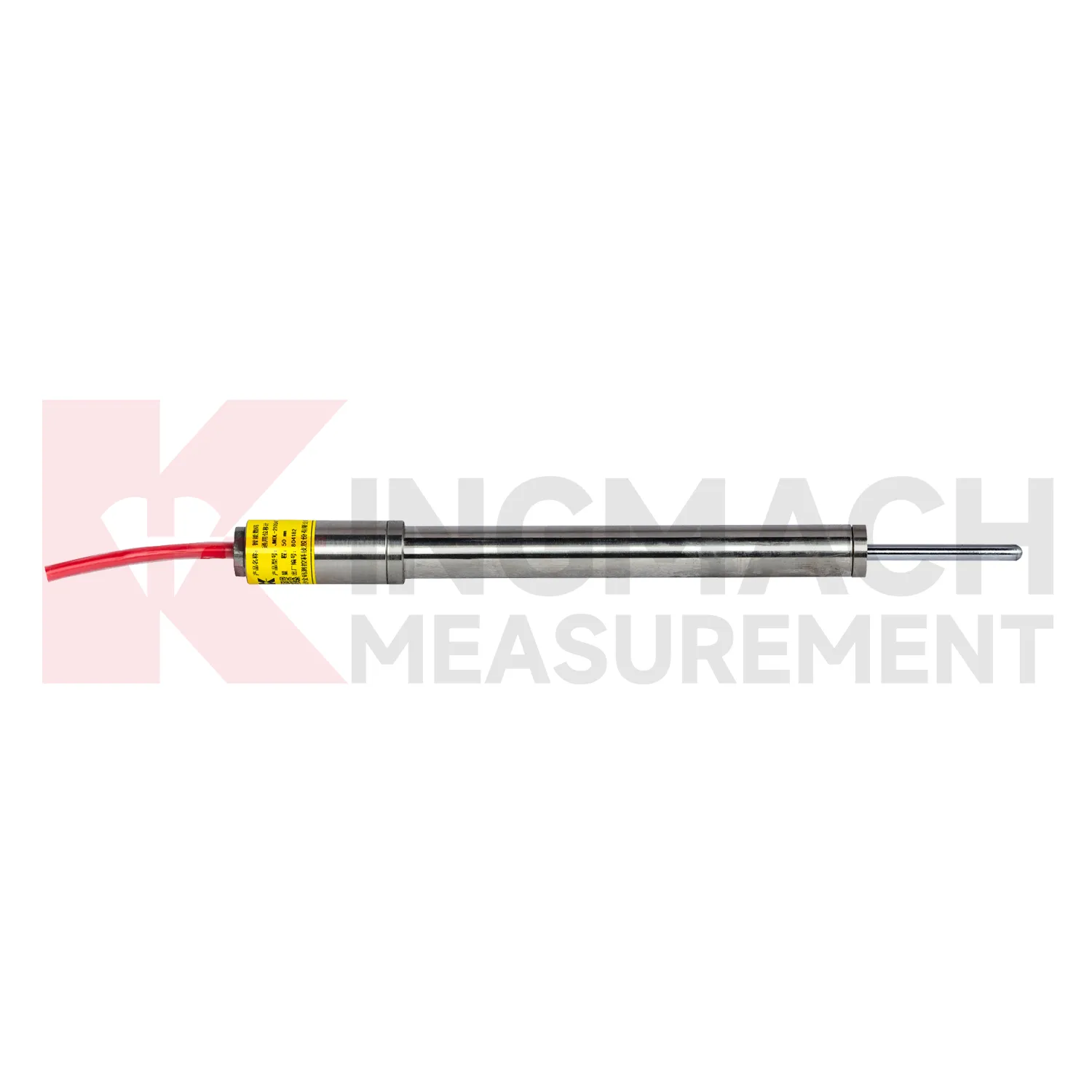
The JMDL-21XXAT Smart General-Purpose Displacement Meter stores sensor identification and calibration information and can work with automatic acquisition for unattended monitoring. During RFQ review, confirm the exact readout or logger, wiring, addressing, software mapping, and commissioning procedure for the selected model.
Treat installation hardware as part of the measurement
Displacement measurement depends on transferring actual movement to the sensing element without looseness, bending error, friction, or unintended restraint. Review the installation drawing before approving a sensor. Mounting geometry, expected direction of movement, cable routing, access for zeroing, and protection against construction damage all affect data quality.
Crack gauges require stable bases and suitable measuring rods. The JMDL-24XXAT Smart Flexible Displacement Meter must deform with the geogrid or reinforced material being monitored. The JMDL-31XXAT Smart Multipoint Displacement Meter uses anchors at different depths with drilling, grouting, protective tubes, and installation hardware.
For bedrock or surrounding-rock movement, the JMDL-32XXAT Smart Single-Point Bedrock Displacement Meter uses a flange, sensor, tie rod, anchor head, and PVC pipe assembly. These components define how the sensor follows rock-mass movement, so they belong in the technical review and quotation rather than being treated as optional accessories.
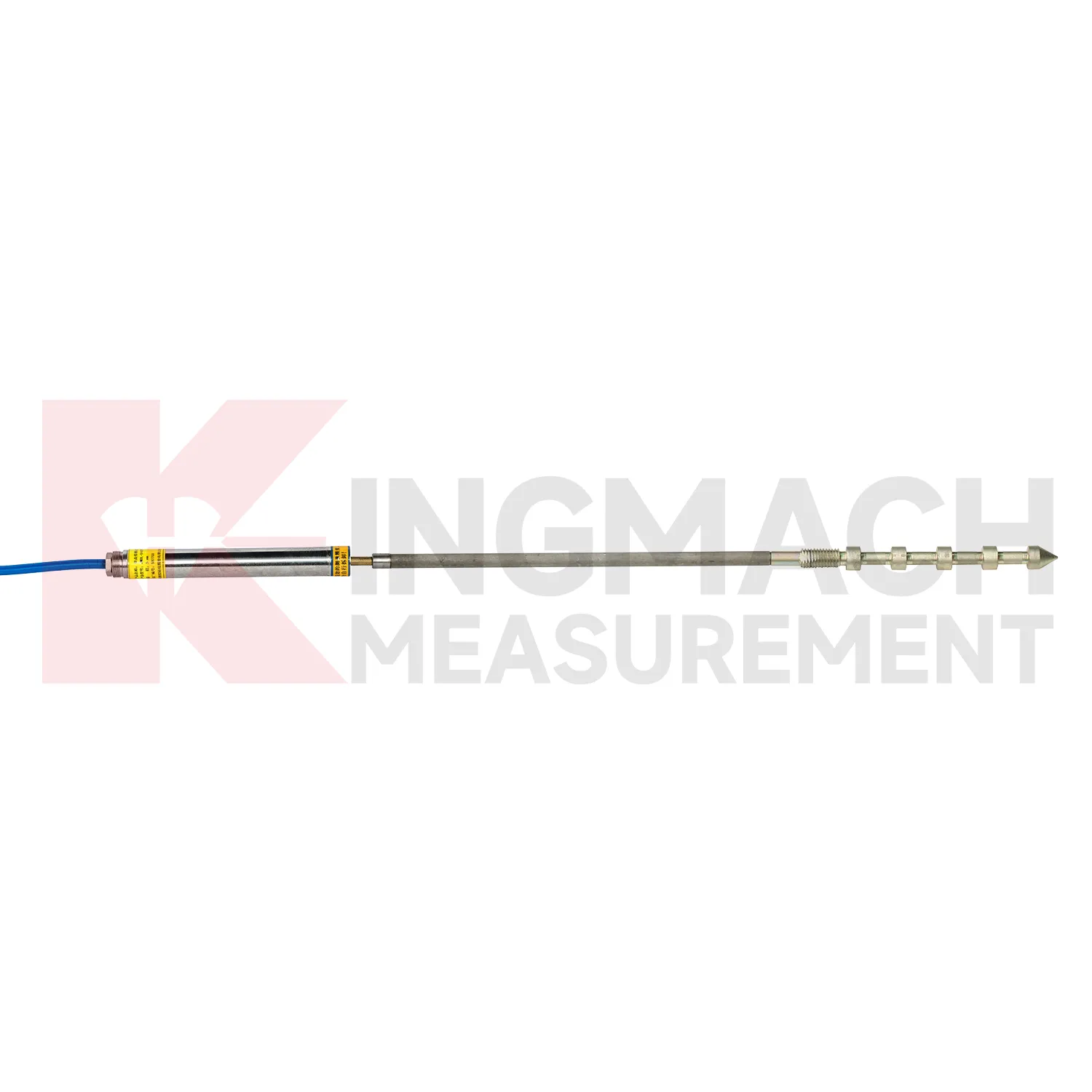
Kingmach displacement meter specification map
| Product type | Typical specification signal | Best-fit engineering use |
|---|---|---|
| GNSS JMBD-1050 | Multi-constellation, multi-frequency positioning; automated monitoring | Slopes, railways, bridges, buildings, mines, and dams |
| Integrated GNSS JMBD-1050YT | 4G/RS485, solar plus lithium battery, IP67, -40 C to +85 C | Remote surface displacement and off-grid monitoring |
| Differential Displacement Meter JMDL-52XXADT | 20/50/100 mm; 0.01 mm resolution; +/-0.1%FS | Expansion joints and high-precision relative displacement |
| Wire Rope Displacement Sensor JMLS-22XXADT | 0-500/1000/2000 mm; 0.1 mm resolution; IP67; RS485 | Long travel, geohazard prevention, and equipment movement |
| Magnetostrictive Displacement Meter JMCW-21XXADT | 0-1000 mm; 0.01 mm resolution; +/-0.05%FS; IP67 | Non-contact absolute linear displacement |
| Smart Crack Gauge JMDL-22XXAT | 20/50/100/200 mm models; 0.01 mm or 0.05 mm resolution | Cracks, joints, and expansion joints |
| Smart Flexible Displacement Meter JMDL-24XXAT | 30/50 mm; 0.01 mm sensitivity; bendable measuring rod | Geogrid deformation and reinforced foundations |
| Smart Formwork / Steel Wire Meter JMDL-49XXAT | 50/100/200 mm; 0.01 mm sensitivity; IP68 | Formwork settlement, steel-pipe movement, and slope sliding |
| Multipoint / single-point displacement meters | Layered or embedded installation with anchors | Tunnels, rock slopes, foundation pits, dam bedrock, and surrounding rock |
Verified Kingmach project examples
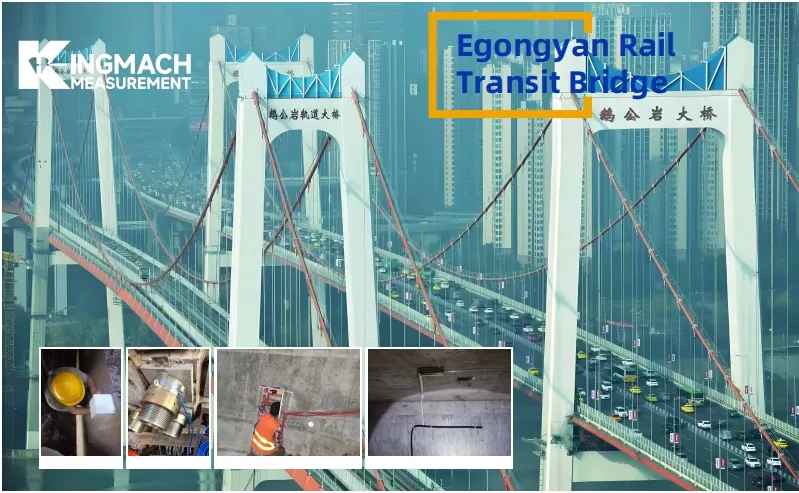
Egongyan Rail-only Bridge, Chongqing (2019)
The Egongyan Rail-only Bridge monitoring project covered cable force, deflection, crack, and environmental monitoring. The project equipment list includes the JMDL-22XXAT Smart Crack Gauge together with strain, load, tilt, acceleration, temperature-humidity, rainfall, wind, and automated acquisition equipment. For a bridge RFQ, this example shows why a crack gauge should be specified as part of a coordinated monitoring chain. Buyers should define the crack or joint range, mounting location, environmental exposure, acquisition interface, and alarm threshold together rather than selecting the gauge by resolution alone.
Record the measurement baseline, protective hardware, inspection access, and handover acceptance criteria for every point before installation starts.
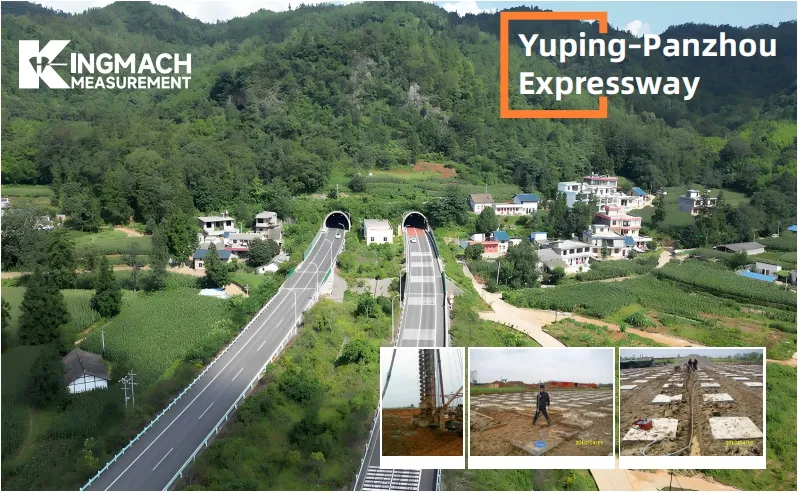
Yuping-Panzhou Expressway, Guizhou (2023)
The Yuping-Panzhou Expressway project included tunnel settlement, arch-waist convergence, crack, and structural strain monitoring. Its application list includes a Smart Crack Gauge and laser displacement measurement alongside hydrostatic level and vibrating-wire strain instruments. The case supports a multi-parameter approach to tunnel deformation: local crack opening, convergence, settlement, and strain answer different engineering questions. For procurement, specify where each displacement point is installed, the expected direction and magnitude of movement, how the reading reaches the monitoring platform, and which threshold initiates inspection or escalation.
The installation plan should also identify the reference point, mounting tolerance, cable protection, commissioning test, and access method for later maintenance.
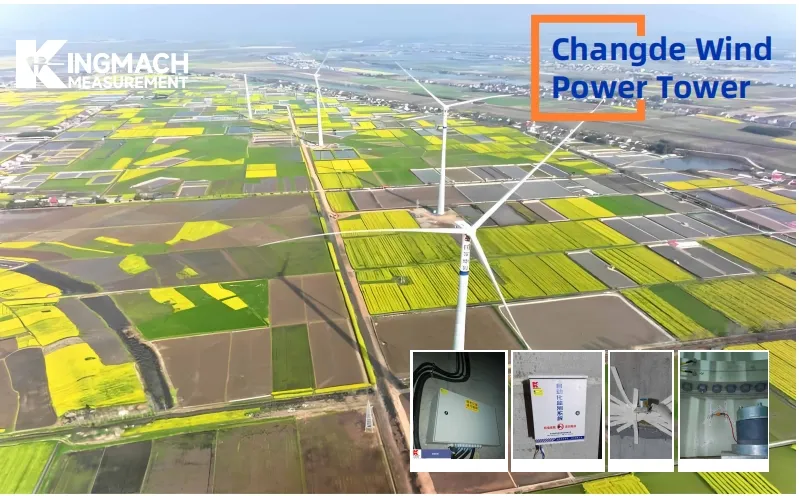
Changde Wind Power Tower, Hunan (2025)
The Changde Wind Power Tower project monitored foundation settlement, stay-cable force, structural vibration, transition-section cracks, and strain. Its related equipment includes the JMLS-22XXADT Wire Rope Displacement Sensor as part of a broader sensor package. This example is useful when long-travel or indirect movement must be monitored with other structural responses. During selection, define the wire path, travel range, return direction, mounting stability, enclosure exposure, communication route, and access for inspection. These details determine whether the sensor follows structural movement without slack, friction, or mechanical interference.
Acceptance should include a controlled travel check, baseline reading, cable inspection, and confirmation that the output reaches the assigned monitoring channel.
Pricing, documentation, and commercial terms
Displacement meter pricing depends on the exact model, range, output, cable length, installation hardware, logger, enclosure, power system, software, quantity, calibration documentation, and delivery scope. A public dollar range would be misleading without those inputs. Request a configuration-based quotation and compare suppliers against the same bill of materials.
For the JMDL-52XXADT, current commercial information indicates a one-piece minimum order, negotiated pricing, T/T in advance, cartons or wooden-case packaging, and shipment within 30 days after full payment. Confirm all commercial terms in the formal quotation because configuration, quantity, customization, and project schedule can change the final offer.
- Provide the application, expected movement, required range, resolution, accuracy, and alarm threshold.
- State operating temperature, water and dust exposure, cable route, power, communication, and data logger requirements.
- List required brackets, rods, anchors, flanges, protective tubes, enclosures, and installation services.
- Request the datasheet, calibration information, wiring definition, installation manual, warranty terms, packaging, lead time, and applicable certification documents.
Pre-purchase checklist for engineers
- Define the displacement type: crack width, joint movement, settlement, long travel, surface movement, rock-layer movement, or bedrock deformation.
- Set the range with margin for normal, seasonal, construction-stage, and warning-level movement.
- Check resolution, accuracy, repeatability, stability, and temperature influence together.
- Confirm water, dust, vibration, corrosion, lightning, and installation orientation at the measurement point.
- Verify output, power, cable distance, logger compatibility, software mapping, and remote communication.
- Review brackets, bases, rods, anchors, flanges, protective tubes, and grouting requirements.
- Request calibration data, serial identification, wiring details, installation drawings, and commissioning guidance.
- Confirm configuration, quantity, packaging, delivery, warranty, payment, and after-sales support before issuing the purchase order.
Request a displacement meter specification review
Send Kingmach the monitoring range, installation site, environmental exposure, cable distance, data acquisition plan, required accessories, and quantity. The engineering team can compare GNSS, differential, wire rope, magnetostrictive, crack, flexible, formwork, multipoint, and bedrock displacement options against the same project requirements.
Contact Kingmach for a project quotationFrequently asked questions
What is the most important displacement meter specification?
Start with the movement type and measuring range, then evaluate resolution, accuracy, environmental protection, signal compatibility, and installation structure. The most important specification is the one that prevents the selected sensor from missing or misrepresenting the project movement.
Is 0.01 mm resolution always better?
No. A 0.01 mm display increment can help reveal small trends, but it must be reviewed with accuracy, repeatability, stability, temperature influence, mounting, and alarm thresholds. Resolution alone does not define measurement quality.
What protection rating should an outdoor displacement meter have?
IP67 or IP68 may be appropriate for exposed civil and geotechnical sites, but the required rating depends on water depth, spray, condensation, dust, cable entry, connector sealing, and mounting orientation. Match the complete installation to the exposure.
When should engineers choose GNSS displacement monitoring?
Use GNSS for large-scale surface movement and remote points such as slopes, dams, mines, bridges, and rail infrastructure where continuous positional monitoring is needed. Use a local displacement sensor when the required output is crack, joint, rod, or wire movement at a specific point.
What should be included in a displacement meter inquiry?
Include the application, movement direction, range, resolution, accuracy expectation, operating environment, installation method, cable distance, power, communication, logger or software, accessories, quantity, documentation, delivery schedule, and required commercial terms.
Final note: Confirm every specification against the project design, local environment, monitoring threshold, installation drawing, and data acquisition architecture before purchase.